
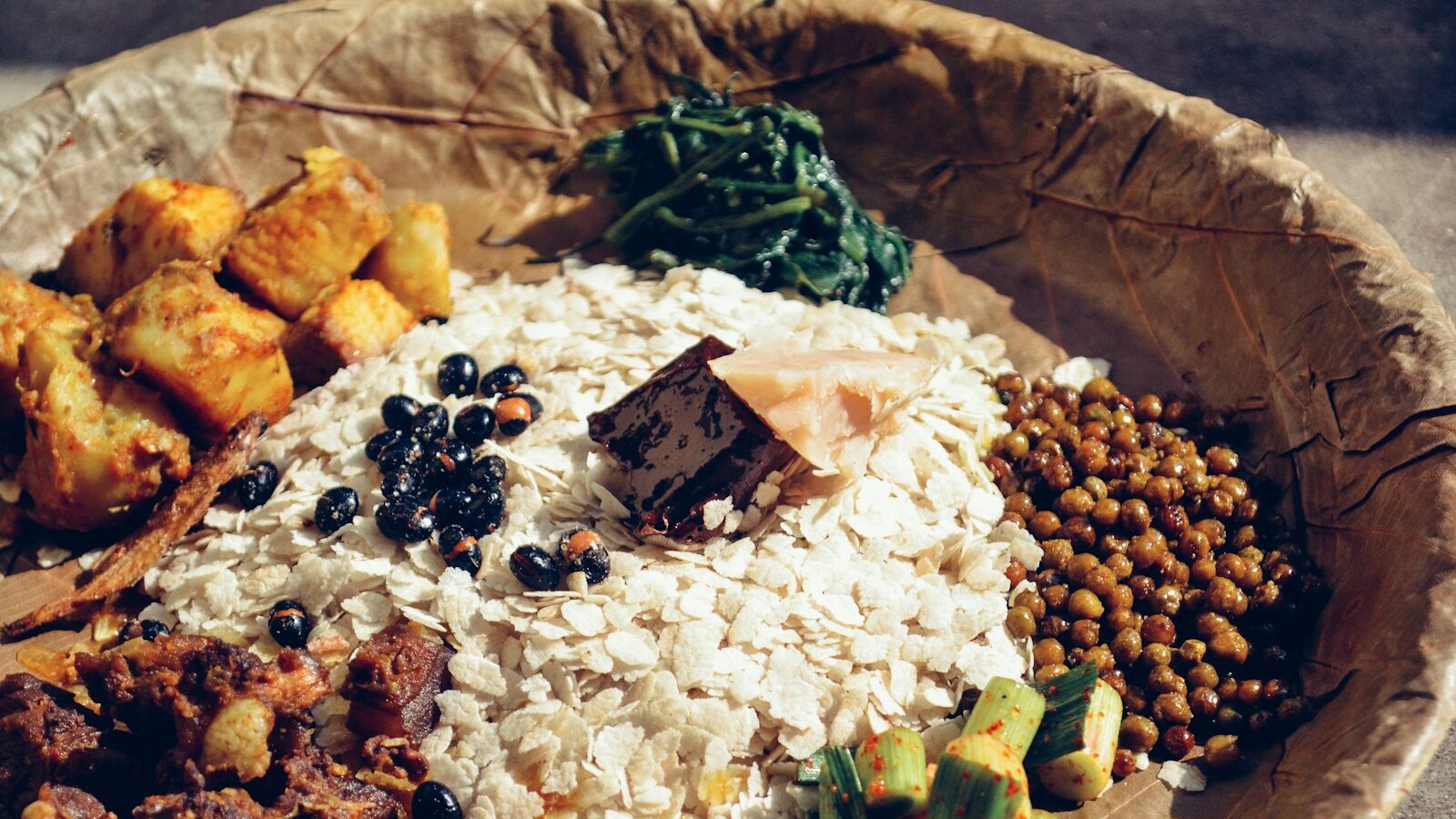
Nonya cuisine is one of Singapore’s most fascinating culinary traditions, born from the marriage of Chinese ingredients and Malay spices in the Peranakan community. Labour-intensive, deeply flavourful and full of history, it is comfort food elevated by generations of craft. This guide introduces Nonya cooking, its signature dishes, and what makes it so special.
What Nonya cuisine is
Nonya, or Peranakan, cuisine comes from the Straits Chinese community, descendants of early Chinese settlers who intermarried and blended cultures with the local Malay population. The word Nonya refers to the women of this community, who were the keepers of the kitchen. The cooking reflects this cultural fusion: Chinese ingredients and techniques combined with Malay spices, herbs and methods, producing dishes that are neither purely Chinese nor purely Malay, but something wonderfully distinct.
At its heart is the rempah, a spice paste pounded from ingredients like shallots, chillies, galangal, lemongrass and more, which forms the flavour base of many dishes. Making rempah by hand is slow, painstaking work, and it is this dedication that gives Nonya food its remarkable depth.
Signature dishes
Nonya cuisine offers a rich repertoire, and a few dishes stand out as icons.
- Ayam buah keluak, chicken braised with the distinctive buah keluak nut, which lends a dark, earthy, almost truffle-like flavour. It is the definitive Peranakan dish.
- Babi pongteh, a comforting braised pork dish with fermented bean paste, savoury and slightly sweet.
- Nonya laksa, rice noodles in a rich, spiced coconut gravy.
- Itek tim, a tangy duck and salted vegetable soup.
- Chap chye, a homely braised mixed vegetable dish.
- Assorted sambals and achar, the pickles and chilli condiments that accompany meals.
Each dish carries the signature Nonya balance of spice, savouriness and layered complexity.
The sweet side: Nonya kueh
No introduction to Peranakan food is complete without its desserts. Nonya kueh are the colourful, often intricate sweet cakes made with ingredients like coconut, pandan, glutinous rice and gula melaka, the fragrant palm sugar. From the layered kueh lapis to pandan-scented treats, these kueh are as beautiful as they are delicious, and they showcase the artistry of Peranakan kitchens. They make a lovely accompaniment to a cup of tea or coffee.
Why it is so labour-intensive
Understanding the effort behind Nonya food deepens the appreciation of it.
| Element | Why it takes work |
|---|---|
| Rempah | Ingredients pounded by hand into a fine paste |
| Slow braises | Dishes cooked low and slow for depth |
| Buah keluak | The nut requires careful preparation before use |
| Kueh | Intricate, multi-step steaming and layering |
This is not fast food. Traditional Nonya cooking is a labour of love, which is part of why it is so treasured and why a well-made Peranakan meal feels special.
How to experience it
Nonya food is best experienced as a shared spread, with several dishes on the table to appreciate the variety and the way flavours complement one another. Ordering a range, from a hero like ayam buah keluak to a vegetable dish and something tangy, lets you taste the balance the cuisine is known for. Finish with a few Nonya kueh, and you have a meal that tells the story of a whole community’s heritage.
Where to find it
Peranakan cuisine can be found in dedicated restaurants and eateries, and the historic Peranakan enclaves such as the Katong and Joo Chiat area are particularly associated with it. These neighbourhoods, with their colourful shophouses, offer both the food and a sense of the culture it comes from. Some family-run establishments have preserved traditional recipes across generations, offering an authentic taste of this heritage cuisine.
Preserving a living tradition
Nonya cuisine faces a quiet challenge: because it is so labour-intensive and was traditionally passed down within families rather than through restaurants or cookbooks, some dishes risk fading as lifestyles change and fewer people have the time for hours of pounding rempah and slow braising. This is part of why Peranakan food is increasingly cherished and celebrated, with a growing appreciation for the heritage it represents. Eating at establishments that keep the traditions alive, and supporting those who still make dishes the old way, helps sustain the cuisine. For anyone curious about Singapore’s cultural roots, exploring Nonya food is not just a treat for the palate but a way of connecting with a distinctive community and its history.
A cuisine of contrasts
Part of what makes Nonya food so compelling is its interplay of contrasts: rich and tangy, spicy and savoury, tender and crisp. A meal might move from the deep earthiness of buah keluak to the bright sourness of a tamarind-based dish, then to the sweet coconut fragrance of a kueh. This balance is deliberate and refined, the product of generations of careful cooking, and it rewards diners who take the time to notice how the dishes complement one another across a shared table.
The takeaway
Nonya cuisine is a delicious testament to Singapore’s multicultural roots, blending Chinese and Malay influences into a tradition all its own. From the earthy depth of ayam buah keluak to the comfort of babi pongteh and the artistry of colourful Nonya kueh, it rewards those who seek it out with layers of flavour built on generations of careful craft. Gather a group, order a shared spread, and take your time, since this is food meant to be savoured slowly, with an appreciation for the history and dedication in every dish.
Explore more: Peranakan culture guide · Singapore laksa guide · Katong and Joo Chiat guide