
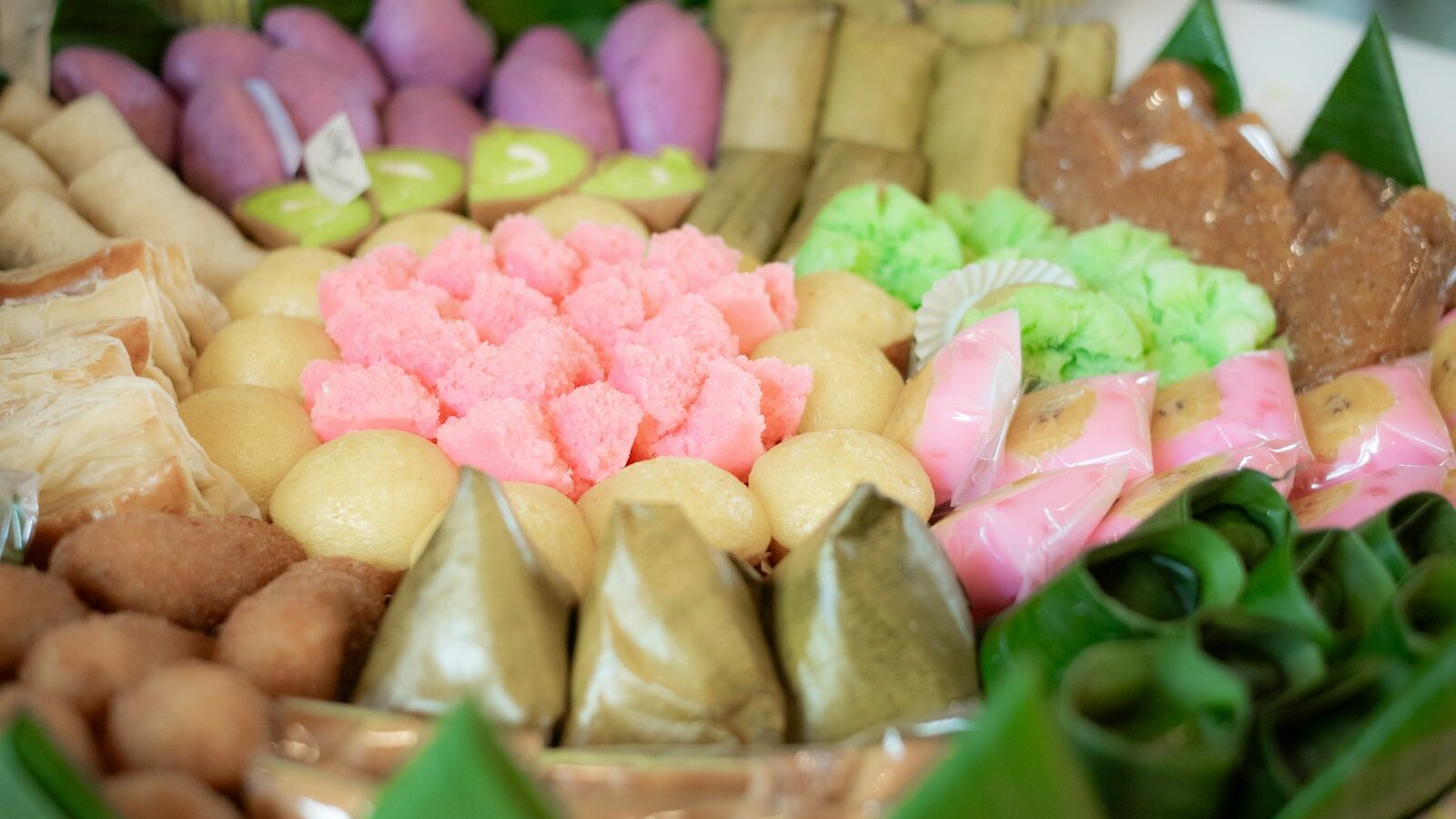
Walk past a busy kueh stall in a Singapore wet market or a neighbourhood coffee shop and you will see rows of small, jewel-bright cakes glistening under the glass. This is the world of nyonya kueh, a family of bite-sized traditional snacks that Singaporeans have loved for generations. Whether you grew up eating them at your grandmother’s table or you have just arrived and are wondering what those colourful little cakes are, this guide will help you understand what kueh is, where it comes from, and how to find your new favourite.
What Exactly Is Kueh?
“Kueh” (also spelt kuih) is a broad term for a huge variety of traditional cakes and snacks found across Singapore, Malaysia and the wider region. Most are small, often no bigger than a couple of mouthfuls, which makes them perfect for grazing with a cup of coffee or tea.
The building blocks are simple and mostly plant-based. Rice flour and glutinous rice flour give kueh their soft, springy or chewy textures. Coconut appears everywhere, either as thick coconut milk stirred into the batter or as freshly grated coconut coating the outside. For sweetness and colour, two ingredients do most of the work:
- Pandan, a fragrant tropical leaf that lends a grassy green colour and a soft vanilla-like aroma.
- Gula melaka, a dark palm sugar with deep caramel and smoky notes that flavours many of the sweeter kueh.
Other natural colours come from butterfly pea flowers (a vivid blue), turmeric (yellow) and various fruits and beans. That is why a tray of kueh looks so cheerful: the colours are part of the tradition, not just decoration.
The Nyonya and Peranakan Tradition
Many of the most beloved kueh belong to the Peranakan, or Straits Chinese, culinary tradition. The Peranakans are descendants of early Chinese settlers who married into local communities across the region, blending Chinese ingredients and techniques with Malay flavours and Southeast Asian produce. The women of these households, known as nyonyas, became famous for their patient, meticulous cooking.
Nyonya kueh is one of the finest expressions of that heritage. These are labours of love: layers steamed one at a time, fillings wrapped by hand, colours built up carefully so each cake looks as good as it tastes. When people talk about peranakan sweets, nyonya kueh is usually what they mean. The care that goes into them is exactly why they remain a treat rather than something churned out by the thousand.
Popular Varieties to Know
Part of the joy of exploring kueh singapore style is learning the names and characters of each type. Here is a friendly rundown of the classics you are most likely to meet.
Sweet Kueh
Kueh lapis is the “thousand layer” cake, its name literally meaning layered cake. The steamed version is soft and chewy, built from many thin coloured layers that you can peel apart one by one, which is half the fun. A richer baked version, kueh lapis legit or spekkoek, is dense, buttery and heavily spiced, and it appears often during festive seasons.
Ondeh ondeh may be the most playful kueh of all. These are little balls of pandan-scented glutinous rice dough with a hidden centre of gula melaka, rolled in freshly grated coconut. Bite into one and the warm palm sugar bursts across your tongue, which is exactly the surprise it is designed to deliver. Ondeh ondeh has become so popular that its flavours now turn up in cakes, ice creams and drinks all over the island.
Ang ku kueh means “red tortoise cake,” named for its glossy red skin and the tortoise-shell pattern pressed onto its dome. The soft, chewy glutinous rice skin wraps a sweet filling, most often mung bean paste, though peanut and other fillings exist too. The tortoise is a symbol of longevity, which is why ang ku kueh carries so much meaning at celebrations.
Kueh salat (sometimes called seri muka) pairs two layers in one square: a base of glutinous rice steamed in coconut milk, topped with a smooth, rich pandan custard. The contrast of savoury sticky rice below and fragrant sweet custard above makes it a firm favourite.
Kueh dar dar (also kueh dadar or ketayap) is a thin, soft pandan crepe rolled around a moist filling of grated coconut cooked in gula melaka. It is basically a small green pancake parcel with a sweet, sticky heart, and it is hard to stop at one.
Savoury Kueh
Not every kueh is sweet. Several savoury types are eaten as snacks or light meals, and they are just as loved.
Soon kueh is a steamed dumpling with a soft, slightly translucent skin, filled with a savoury mix of shredded turnip (bangkuang), bamboo shoots and sometimes mushrooms or dried shrimp. It is usually served with a dab of sweet dark sauce and chilli.
Png kueh (or peng kuih) is easy to spot thanks to its pink, moulded skin, often pressed with the same tortoise pattern as ang ku kueh. Inside is a savoury filling of seasoned glutinous rice, sometimes studded with peanuts, mushrooms and dried shrimp. Sweet on the outside in colour but savoury within, it is a small meal in a single piece.
Sweet Versus Savoury: How to Choose
If you are new to kueh, a simple way to navigate the tray is to think in two camps. On the sweet side sit the coconut-and-palm-sugar treats like ondeh ondeh, kueh dar dar, ang ku kueh and kueh salat, best enjoyed with coffee or tea as a snack or a light dessert. On the savoury side are the filled, dumpling-style kueh like soon kueh and png kueh, which work well as breakfast or a mid-morning bite.
Here is a quick starter guide:
- Want something soft and sweet with a surprise? Try ondeh ondeh.
- Prefer layers and texture? Go for steamed kueh lapis.
- Like custard? Kueh salat is for you.
- Fancy something savoury and filling? Reach for soon kueh or png kueh.
- Curious about tradition? Ang ku kueh carries the most symbolism.
A gentle tip for first-timers: buy one of several kinds rather than a box of one. Kueh is made for sharing and sampling, and mixing a tray is the local way to discover what you love.
Festivals and Meaning
Kueh is woven into the rhythm of celebration in Singapore. Because certain colours and shapes carry symbolic meaning, particular kueh appear at particular moments. Red ang ku kueh, for instance, is a classic gift at a baby’s first-month celebration and at birthdays and religious festivals, standing for good fortune and long life. Layered and spiced kueh lapis often shows up during Lunar New Year and other festive gatherings, its many layers read as a wish for rising prosperity.
Beyond the big festivals, kueh also marks smaller everyday joys: a visit to relatives, an office treat, a weekend market run. This blend of the ceremonial and the ordinary is part of what keeps these snacks so alive.
Where to Find Kueh in Singapore
The good news is that kueh is genuinely everywhere, and you do not need to know any secret address to enjoy it. Look in these general places:
- Dedicated kueh stalls in hawker centres and coffee shops, where trays are laid out fresh each morning. These stalls usually sell a wide mix, so you can point at whatever catches your eye and buy piece by piece.
- Wet markets, where a stall or two almost always offers steamed kueh alongside the produce. Mornings are best, as popular types sell out.
- Traditional bakeries and confectioneries that specialise in Peranakan sweets, often with a broader range and the more elaborate festive cakes.
- Supermarkets, which stock packaged kueh for convenience, handy if you cannot get to a market.
A few practical pointers: most kueh is made to be eaten the same day, since the coconut and rice do not keep well, so buy what you can finish. Prices are modest, and buying a small assortment is both affordable and the friendliest way to taste widely. As a rough guide, kueh sits among the more wallet-friendly treats you can find, which makes exploring easy.
A Snack Worth Slowing Down For
Nyonya kueh is more than a pretty snack. Each little cake carries a story of migration, marriage of cultures and hours of patient handwork, all folded into a few bright, fragrant mouthfuls. For locals, it is comfort and memory. For newcomers, it is one of the most delicious doorways into Singapore’s heritage. So the next time you pass a kueh stall, stop, point at a few colours you do not recognise, and let your taste buds do the exploring. You are unlikely to be disappointed.
Explore more: Peranakan culture guide · Singapore desserts guide