
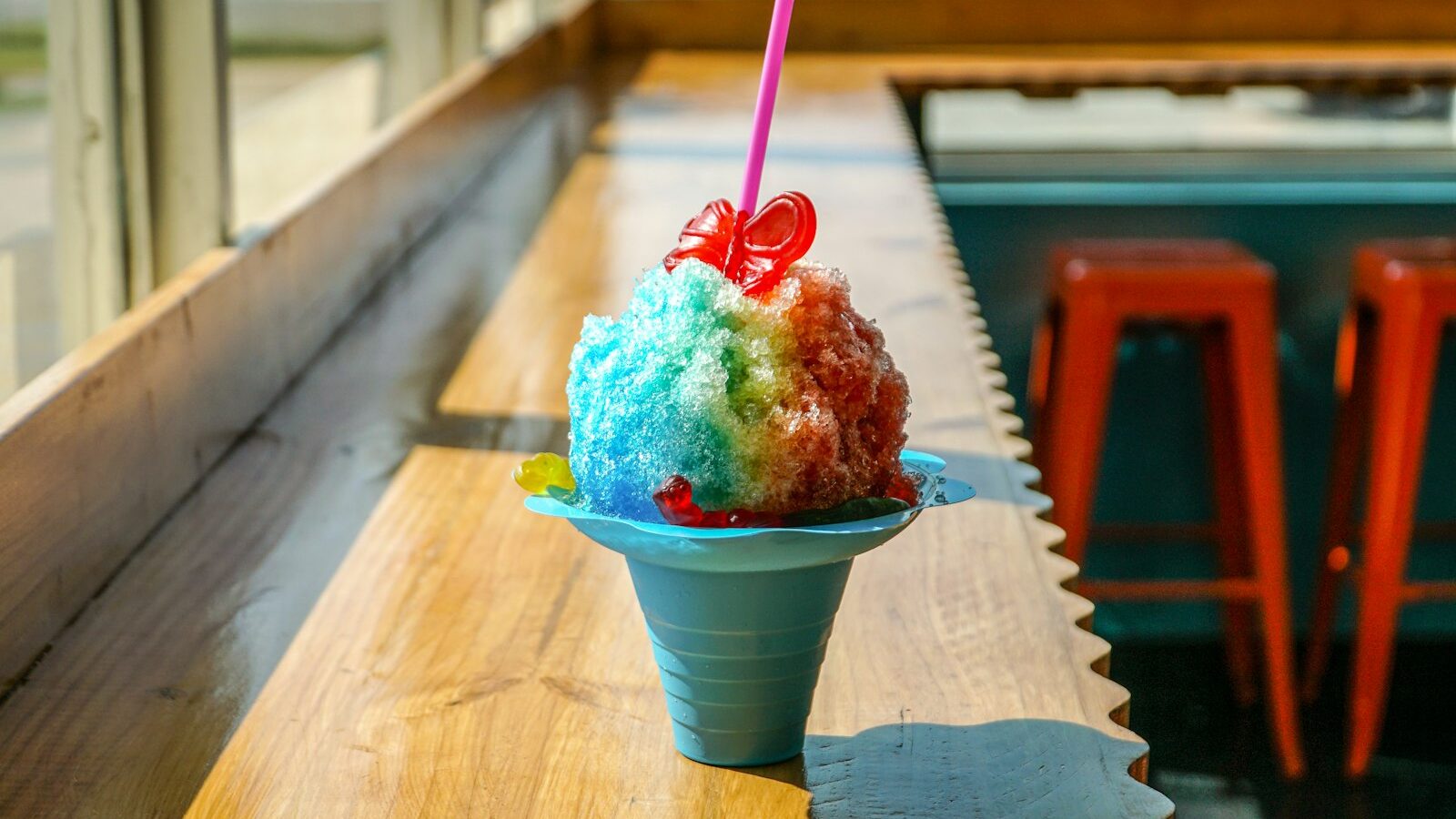
Singapore desserts are their own quiet food adventure. After a plate of something spicy and savoury, locals reach for a bowl of shaved ice, a warm cup of beancurd, or a spoonful of sweet paste to cool down and round off the meal. If you are new here, these sweets can look unfamiliar at first: mountains of ice, jelly-like strands, chewy dumplings in soup. This guide walks you through the beloved local dessert classics, what each one actually is, whether it is served hot or cold, and where to find them.
Where to Find Local Desserts
Before the sweets themselves, it helps to know where to look. Most classic desserts live at hawker dessert stalls, the little counters tucked into hawker centres and coffee shops that specialise in nothing but sweet things. Look for stalls with a row of steel pots, tubs of coloured toppings, and an ice-shaving machine.
You will also meet the ice cream uncles, roving vendors who park their carts near malls, parks and tourist spots. Their pushcarts are a Singapore institution, easy to spot by the bright umbrella and the freezer box on the side. Beyond these, food courts, wet market stalls and old-school confectioners round out the picture. None of it is fancy, and that is exactly the charm.
Cold Desserts: The Ice Bowls
When the weather is hot, which is most of the time, cold desserts do the heavy lifting.
Ice Kachang
Ice kachang is the showstopper. Once a simple bowl of shaved ice with red beans (the name means “bean ice”), it has grown into a colourful mound drizzled with rose syrup, gula melaka (palm sugar) and sometimes evaporated milk. Dig beneath the ice and you will find a treasure hunt of toppings: red beans, sweet corn, chewy attap chee (palm seed), grass jelly and colourful jelly cubes. It is sweet, cooling and meant to be shared or demolished quickly before it melts.
Chendol
Chendol is the other great bowl of ice, and for many people it is the finest of all Singapore desserts. It starts with shaved ice, then adds soft green rice-flour jelly strands, red beans, and a generous pour of coconut milk and gula melaka. The magic is in the balance: the smoky, caramel-like palm sugar against the cool coconut and the slippery green jelly. A good chendol tastes rich without being cloying. It is served cold and is best eaten straight away.
A quick way to tell the two apart: ice kachang is the tall, colourful mountain with many toppings, while chendol is the coconut-and-gula-melaka bowl with green jelly strands.
Warm Comfort: Beancurd and Soups
Not every dessert is icy. A whole family of warm, soupy sweets exists for gentler moments, and most stalls will offer them hot or cold so you can choose.
Tau Huay (Beancurd)
Tau huay, also called beancurd or douhua, is silky soybean pudding served in a bowl with a light sugar syrup. The texture is the point: it should be smooth, wobbly and delicate, sliding off the spoon. Traditional versions come warm with a thin syrup, while modern stalls serve a firmer, colder “extra smooth” style. Its close cousin is soya beancurd drink (tau huay zui), the same soybean base in liquid form. Both are light, comforting and only mildly sweet, which makes tau huay an easy first local dessert for newcomers.
Red Bean and Green Bean Soup
These two humble soups are dessert staples, served warm or chilled.
- Red bean soup (hong dou tang): azuki beans slow-cooked until soft in a lightly sweet broth, often scented with dried tangerine peel or a little pandan. Smooth, warming and homely.
- Green bean soup (luk dou tang): made with mung beans, a touch thinner and considered cooling in traditional thinking. Some stalls add sago pearls, barley or seaweed.
Both are the sort of thing a Singaporean grandmother might make at home, and finding a good bowl at a stall feels just as reassuring.
Ah Balling (Tang Yuan)
Ah balling is the local Hokkien name for tang yuan, chewy glutinous rice-flour balls served in a warm, sweet soup. The balls are often filled with peanut, black sesame or red bean paste, and the soup base might be gingery, peanut, or scented with pandan. Bite in and the soft skin gives way to a warm, fragrant centre. Ah balling is comforting on its own, and it also carries meaning: rounded dumplings symbolise togetherness and reunion, which is why they appear at festive times too.
Rich Pastes and Traditional Sweets
Some Singapore desserts are less about ice or soup and more about texture and richness.
Orh Nee (Yam Paste)
Orh nee is a Teochew classic: smooth, silky yam (taro) paste, traditionally enriched with shallot oil, topped with gingko nuts and sweet pumpkin or sweet potato. It is dense, warm and indulgent, the kind of old-school dessert served at wedding banquets and traditional restaurants. If you like your sweets rich and comforting rather than icy, orh nee is a must-try.
Kueh
Kueh (also spelt kuih) is a whole world of bite-sized traditional cakes, mostly made from rice flour, coconut and palm sugar. They are colourful, often steamed, and each has its own texture. Popular ones to look out for:
- Kueh lapis: brightly layered steamed cake, peeled apart layer by layer.
- Ondeh ondeh: soft pandan-flavoured glutinous rice balls rolled in grated coconut, with a molten gula melaka centre that bursts in your mouth. A favourite for good reason.
- Ang ku kueh: a red, tortoise-shaped cake with a chewy skin and sweet filling, traditionally made for celebrations.
- Kueh salat: a two-layer treat of glutinous rice topped with rich pandan custard.
You will find kueh at market stalls, Nonya (Peranakan) confectioners and dedicated kueh shops, usually sold by the piece.
Ice Cream Sandwich
The simplest treat of all comes from the ice cream uncle. A thick slab of local ice cream, in flavours like red bean, sweet corn, yam, durian or chocolate, is either sandwiched between two colourful wafer biscuits or wrapped in a slice of soft rainbow bread. Cheap, nostalgic and endlessly photogenic, the ice cream sandwich is a rite of passage. Order it wrapped in bread at least once.
Seasonal and Festive Sweets
Some sweets appear mainly at certain times of year, tied to the festivals that shape the local calendar.
- Mooncakes arrive around the Mid-Autumn Festival, dense pastries filled with lotus-seed paste or, in newer snow-skin versions, chilled and fruit-flavoured.
- Tang yuan (ah balling) take centre stage during the Winter Solstice (Dongzhi), eaten to mark reunion and the turning of the year.
- Nian gao, a sticky, sweet steamed cake, appears at Chinese New Year, often pan-fried in slices.
- Kueh and pineapple tarts fill homes and tins during Chinese New Year and Hari Raya, when baking and gifting sweets is part of the celebration.
To understand when these treats appear and what they mean, our festivals guide is a good companion read.
Quick Tips for Ordering Desserts
- Hot or cold? Many stalls offer both for tau huay, red bean soup, green bean soup and ah balling. Just say “hot” or “cold” (or “ice”) when you order.
- Share the big ones. Ice kachang and chendol are generous; splitting one lets you try more.
- Less sweet. You can often ask for “less sweet” if you prefer, and most stalls will oblige.
- Cash helps. Small hawker dessert stalls and ice cream uncles usually prefer cash, though many now take mobile payment too.
- Eat ice desserts fast. Shaved-ice bowls melt quickly in the heat, so do not let them sit.
Start with one cold bowl and one warm one, say a chendol and a tau huay, and you will already understand why locals never quite finish a meal without something sweet. From there, work through the kueh, chase down the ice cream uncle, and time your visits to the festive sweets. The world of Singapore desserts is deep, affordable and genuinely worth exploring bowl by bowl.
Explore more: Must-try hawker food in Singapore and A guide to Singapore’s festivals