
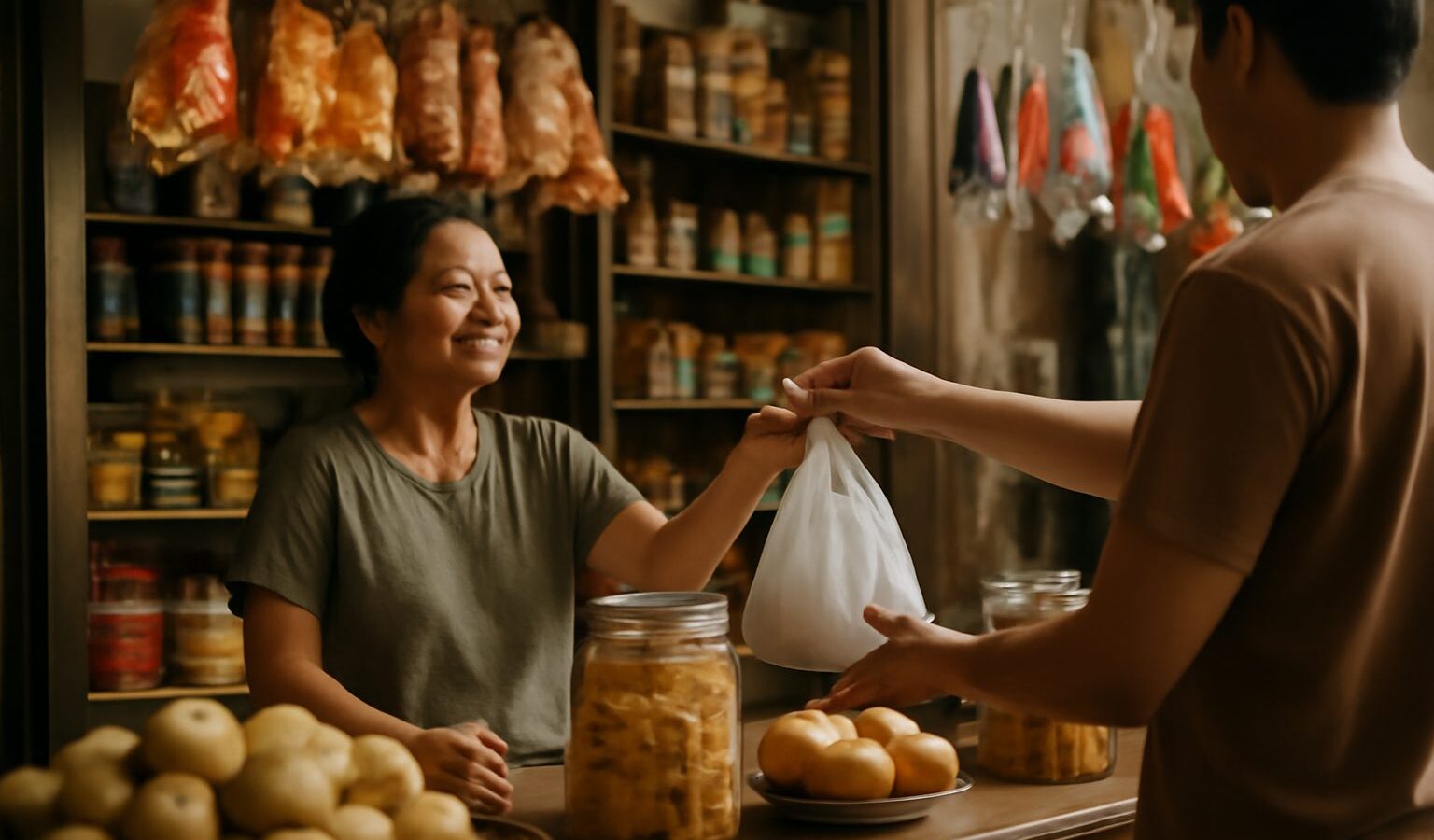
Before there was a convenience store on every corner, there was the mama shop. If you grew up in Singapore in the kampong years or the early decades of HDB living, the mama shop was where you ran to for a bag of sweets, a single cigarette for your father, a cold drink after football, or the salt your mother forgot to buy. Mama shops, and the larger old provision shops they are cousins to, were the beating little hearts of the neighbourhood. This guide looks at what they were, what they sold, and why so many Singaporeans still feel a pang of fondness when they think of them.
What a Mama Shop and a Provision Shop Were
A provision shop is the older, broader term for a small grocery and sundry store, often family run, stocking daily essentials such as rice, oil, canned food, soap, sauces and snacks. In dialect it was sometimes called a “sundry shop”, from the English word for miscellaneous odds and ends. These shops served kampongs, shophouse streets and, later, the void decks of new HDB estates.
A mama shop is a specific and much loved kind of corner shop. The word “mama” comes from Tamil, where it is a friendly term for an uncle or older man, and it came to be used affectionately for the small Indian Muslim run shops that sold sweets, drinks, cigarettes, newspapers and everyday bits and pieces. Over time “mama shop” grew into a general nickname in Singapore for the tiny neighbourhood store, whoever ran it. Not every mama shop was Indian Muslim run, and the name is used warmly rather than as a strict label. It is a small, everyday example of how Singapore’s languages mix into one shared vocabulary.
The two overlap a great deal. A provision shop was usually a proper little grocery. A mama shop was often smaller, closer to a kiosk or a shophouse front, and famous for penny sweets and cold drinks. Both were places where the shopkeeper knew your family by name.
What They Sold and How Shopping Worked
Part of the magic was the sheer variety crammed into a small space. Shelves rose to the ceiling, goods hung from hooks, and glass jars of sweets sat within a child’s reach and budget.
Typical stock included:
- Daily essentials such as rice, cooking oil, sugar, salt, eggs, canned sardines and instant noodles.
- Snacks and sweets sold loose or in small amounts, from penny sweets to preserved fruit and dried cuttlefish.
- Cold drinks in bottles, often the reward at the end of a hot afternoon.
- Household bits such as soap, matches, batteries, string, mosquito coils and school supplies.
- Newspapers, cigarettes and top up cards in the mama shops closest to the pavement.
Shopping was personal and flexible in a way large stores are not. You could buy a single egg or a small scoop of something. Regular families might “buy on credit” and settle at the end of the month, the shopkeeper keeping a running tally in a notebook. Children were sent on errands and trusted to bring back the right change. The shopkeeper was neighbour, cashier, and sometimes the person who kept an eye on the street.
To make the differences clear, here is a simple comparison.
| Feature | Old provision shop | Mama shop |
|---|---|---|
| Typical size | Small grocery, more shelves | Kiosk or shophouse front, compact |
| Best known for | Daily groceries and household goods | Sweets, cold drinks, cigarettes, papers |
| Where you found them | Kampongs, shophouse rows, HDB blocks | Void decks, street corners, near schools |
| Name origin | English “provision”, “sundry” | Tamil “mama”, a friendly term for uncle |
| Shared trait | Family run, personal service, part of the neighbourhood | Family run, personal service, part of the neighbourhood |
Why They Mattered Beyond Shopping
These shops were social infrastructure before anyone used that phrase. In the kampong days, when families lived close and doors stayed open, the provision shop was a gathering point where news travelled and neighbours met. The spirit of looking out for one another, of small daily kindnesses between neighbours, ran straight through the shop counter. If you enjoy that theme, our guide to gotong-royong and the kampong spirit explores it in full.
For children, the mama shop was an early lesson in money, choice and patience, a first taste of independence measured out in twenty cent coins. For the elderly, it was a short, safe walk and a familiar face. For newcomers and new families, it was where you learned what the neighbourhood ate and how it lived.
The shops also reflected Singapore’s multiracial fabric. A Chinese run provision shop, an Indian Muslim mama shop and a Malay run stall might sit within the same few streets, each serving everyone, their goods and greetings mingling. The shared nickname “mama shop”, used across communities with affection, is itself a small monument to that mixing.
The Slow Fade, and What Remains
From the 1980s onward, air conditioned supermarkets, chain convenience stores and later online shopping steadily changed how Singapore buys its daily goods. Rents rose, the children of shopkeepers took up other careers, and the old model of tiny margins and long hours became harder to sustain. Many mama shops and provision shops quietly closed, their roller shutters coming down for the last time.
Yet they have not vanished completely. In older estates you can still find a genuine provision shop with its wooden shelves and hand written prices, or a surviving void deck mama shop where the owner still remembers the regulars. Some have adapted, adding new products and services while keeping the personal touch. Every one that remains is a small piece of living heritage.
This everyday heritage sits alongside other vanishing trades worth cherishing. You might enjoy our look at traditional Chinese medicine shops in Singapore, another kind of neighbourhood shop with deep roots, and at the kacang putih man and street hawkers, who once walked the same streets.
How to Enjoy and Support Them Today
If you want to experience the real thing, seek out the older heartland estates, where a surviving shop may still be doing brisk trade. A few gentle suggestions:
- Buy something small and local rather than passing by. A cold drink and a chat keep these shops going.
- Talk to the shopkeeper if they are not busy. Many have run the shop for decades and love to share stories.
- Bring children along so a new generation sees what a corner shop once meant.
- Be patient and kind, remembering that the charm of these shops is the human pace, not the speed.
The mama shop may be a fading picture, but it is not yet a museum piece. Support the ones still standing, remember the ones that closed with warmth, and you help keep a small, generous part of Singapore’s heritage alive on the corner where it belongs.