
Ordering groceries online has become routine for many households, whether you are juggling work and kids, living without a car, or just tired of carrying heavy bags back from the supermarket. But the options for online grocery delivery Singapore residents can use work very differently. Some reward big weekly shops, others are built for a single carton of milk in under an hour, and fees and minimum orders vary a lot.
This guide compares the main types of service on the things that actually affect your bill and your week: delivery fees, minimum orders, time slots and freshness. Fees and thresholds change often, so always check the current terms in each app before you check out.
The Main Types of Online Grocery Service
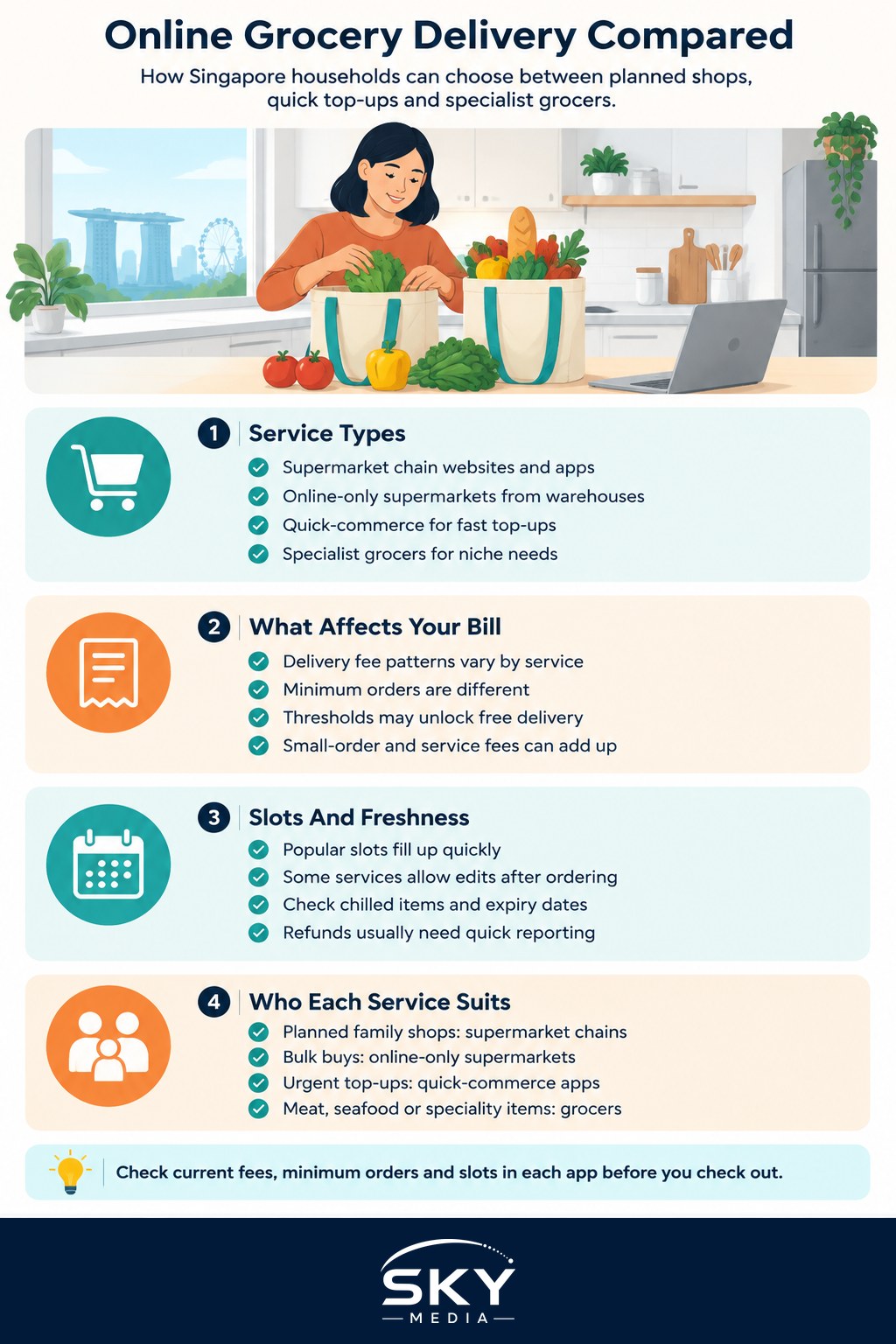
Rather than ranking individual apps, which change their pricing frequently, it helps to understand the four broad models available in Singapore.
1. Supermarket chain websites and apps. The major local supermarket groups, such as FairPrice, Cold Storage and Sheng Siong, run their own online stores. Range broadly mirrors their physical outlets, and they usually operate on scheduled delivery slots.
2. Online-only supermarkets. Platforms such as RedMart (part of Lazada) and Amazon’s grocery offering operate from warehouses rather than stores. They often carry a wide range of imported and bulk items and rely on scheduled slots.
3. Quick-commerce services. Delivery apps such as GrabMart and foodpanda’s grocery service focus on speed, fulfilling orders from small local hubs or partner shops, often within an hour or less.
4. Specialist and direct-from-supplier grocers. Online butchers, fishmongers, organic grocers, Asian specialty shops and farm boxes. They suit specific needs but rarely cover a full weekly shop.
How They Compare on Fees, Minimums and Slots
This table summarises typical patterns. Exact fees, thresholds and slot windows change, and may differ by membership tier or promotion.
| Service type | Delivery fee pattern | Minimum order | Delivery timing | Best for |
|---|---|---|---|---|
| Supermarket chain online store | Fee on smaller baskets; often waived above a spend threshold | Usually has one | Scheduled slots, often next day or later | Weekly family shop, house brands |
| Online-only supermarket | Similar threshold model; membership may reduce fees | Usually has one | Scheduled slots | Bulk buys, imported items |
| Quick-commerce app | Small-basket fees and service fees common | Often low or none, with surcharges | Within an hour or so | Top-ups, forgotten items |
| Specialist grocer | Varies widely | Often higher | Fixed delivery days | Meat, seafood, organic, specialty |
The pattern to remember: scheduled services reward larger orders, while instant services charge for convenience. If you regularly order small baskets from quick-commerce apps, the fees can add up faster than you expect.
Delivery Fees and Free-Delivery Thresholds
Most scheduled services use a spend threshold. Below it, you pay a delivery fee; above it, delivery is free or cheaper. A few tips:
- Plan around the threshold. Batch your shopping into one bigger weekly order rather than two smaller ones.
- Check for slot-based pricing. Some services charge more for popular evening or weekend slots, or offer cheaper windows at less busy times.
- Look at membership schemes. Some platforms offer paid memberships that bundle free delivery. Work out how many orders a month you place before signing up.
- Watch service and small-order fees. Quick-commerce apps may list a low delivery fee but add a separate service or small-basket charge.
- Compare the item prices too. A free delivery does not help if the same products cost more. Check a few staples you buy every week across two services.
For broader money-saving habits, our guide to setting a fair grocery budget for your household shows how to plan a realistic monthly figure.
Delivery Slots and Reliability
Slot availability matters more than many people realise. Popular slots can fill up days in advance, especially before public holidays such as National Day, Chinese New Year and Hari Raya, and before long weekends.
Points to consider:
- Booking window. Some services let you reserve a slot several days ahead; others release slots closer to the date.
- Slot length. Narrower windows are easier to plan around if you live in a condo with a guardhouse or an HDB block where you need to be home.
- Substitutions. Check how the service handles out-of-stock items. Some let you choose “no substitutes”, “similar item” or “call me”.
- Order editing. Being able to add items after placing an order is handy, but cut-off times vary.
- Doorstep or hand-over. Some services leave bags at the door; chilled and frozen items are better received in person.
Freshness, Chilled Items and Returns
Fresh produce is where online grocery services differ the most. Before relying on one for meat, seafood or vegetables, place a small test order.
- Cold chain. Look at whether chilled and frozen goods arrive in insulated bags or with ice packs.
- Expiry dates. Check dates when you unpack, especially for dairy and bread.
- Refund process. Most services offer refunds or credits for damaged or missing items, usually within a short reporting window. Take photos as soon as the order arrives.
- Produce quality. Supermarket chain sites often pick from store stock, while warehouse operators may have more consistent handling. Your experience may vary by location.
If you prefer to reduce packaging waste, some services let you opt out of plastic bags or return insulated boxes. See our guide on greening your grocery routine in Singapore for more ideas.
Choosing the Right Service for Your Household
Different households will land on different combinations. Some common set-ups:
- Busy family of four or more: one scheduled weekly order from a supermarket chain or online-only grocer, meeting the free-delivery threshold, plus occasional quick-commerce top-ups.
- Single professional or couple: quick-commerce for small, spontaneous needs, with a monthly bulk order for household staples such as rice, detergent and toiletries.
- Elderly parents: a simple app with a phone-friendly interface, or help from family to set up a regular order. Our guide to meal delivery and grocery help for seniors covers community options too.
- Newcomers: start with supermarket chain sites, since their house brands and familiar layouts make it easier to learn local prices.
Payment, Vouchers and Account Tips
- Payment methods. Most services accept major cards and popular local e-wallets. Check before relying on a specific method.
- Vouchers and promotions. New-user codes and bank card promotions are common. Read the terms, since many have minimum spends or exclude certain items.
- Loyalty points. Supermarket chains often link online orders to their loyalty programmes.
- Delivery address details. Add your unit number, block and any access instructions clearly to avoid failed deliveries.
The Bottom Line
There is no single best online grocery service. Scheduled supermarket and warehouse services usually suit bigger, planned shops, while quick-commerce apps are best for small, urgent top-ups. Compare your real weekly basket across two or three services, factor in delivery and service fees, and test their fresh produce before committing. Because fees, thresholds and slots change often, review your choice every few months.
Frequently Asked Questions
Is online grocery shopping cheaper than going to the supermarket? Not always. You save on travel and impulse buys, but delivery and service fees can wipe that out on small baskets. Compare the prices of a few weekly staples across two services and the shop, then add the fees to see the real total.
Do I need to be home to receive chilled or frozen groceries? It is safest to be. Chilled and frozen items should not sit at the door in Singapore’s heat, so choose a delivery window you can meet. If someone else will receive them, tell the service and ask how they handle unattended drop-offs.
How do I avoid overspending on online grocery orders? Make a list before opening the app and stick to it. Check unit prices rather than headline discounts, and treat free-delivery thresholds as a target, not a reason to add extras. Reviewing your cart once more before checkout helps.
Can I find halal or other dietary-specific items easily when ordering online? Most platforms offer filters or categories, but they are not always complete. For halal, look for the certification on the product label and check against MUIS guidance. For allergies, read ingredient lists on the packaging itself.
What can I do if an online grocer does not resolve my complaint? First contact the service in the app with photos and order details, within their reporting window. If it is still unresolved, you can seek advice from the Consumers Association of Singapore (CASE) on your options.
Further reading: Supermarket House Brands in Singapore: Which Are Worth Buying