
Most advice about food spending jumps straight to coupons and supermarket loyalty points. Those help, but they only work once you know what a sensible number looks like for your family. This guide builds a grocery budget for a Singapore household from the ground up: how to find your real baseline, adjust it for who lives with you, and set a figure that is fair to everyone rather than one that makes the household miserable.
This is general information, not financial advice. Every family’s income, health needs and habits differ, so treat the steps below as a framework to adapt.
Start With What You Actually Spend
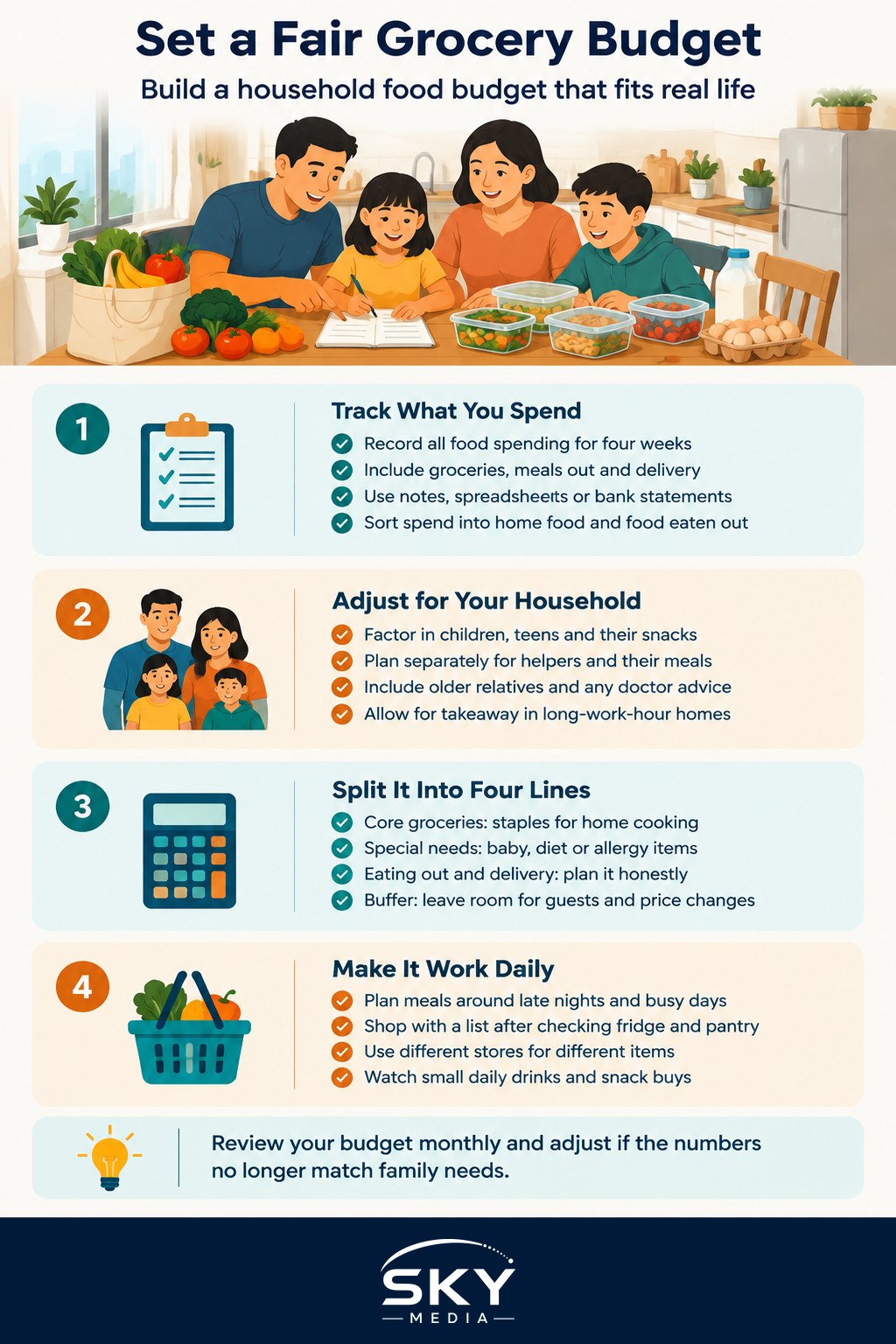
A fair budget begins with honest data, not a figure borrowed from a friend or a forum. For four weeks, record every food purchase in one place. That includes:
- Supermarket and wet market runs
- Online grocery orders and delivery fees
- Convenience store top-ups, bread, milk and snacks
- Bubble tea, coffee and snacks bought on the go
- Hawker, food court and restaurant meals
- Food delivery apps
Use whatever is easiest to keep up: a notes app, a shared spreadsheet, or your bank and card statements at the end of each week. The goal is not to judge the spending yet. It is simply to see the full picture, because many households discover that their “grocery” problem is really a mix of groceries, daily drinks and late-night delivery.
At the end of the month, sort the total into two buckets: food brought home to cook or store, and food eaten out or delivered. That split is the foundation for everything that follows.
Adjust for Who Lives in Your Home
Two families earning the same amount can have very different, equally reasonable food costs. Before setting a target, think through the factors that genuinely change what your household needs.
| Household situation | What tends to change | What to factor into the budget |
|---|---|---|
| Young children and toddlers | Formula, baby food, fruit, small frequent snacks | A separate line for baby items so they are not squeezed by general groceries |
| School-age kids and teens | Larger portions, recess money, packed snacks | Growth in quantity each year, plus pocket money for school food |
| Live-in domestic helper | An extra adult’s meals at home | Her food as a planned line item, agreed openly and fairly |
| Elderly parents at home | Softer foods, specific diets, supplements | Any diet advised by their doctor, without cutting quality |
| Dual-income, long hours | More takeaway and convenience buys | A realistic eating-out line rather than an unrealistic “cook every night” plan |
If you employ a helper, the Ministry of Manpower expects employers to provide adequate food. Plan her meals as part of the household budget rather than an afterthought, and talk with her about preferences and any dietary needs.
For older family members with health conditions, follow the dietary guidance of their doctor or dietitian first and build the budget around it, not the other way round.
Build Your Budget in Four Lines
Once you know your baseline and your household’s needs, break the monthly figure into four lines. Keeping them separate makes it obvious where the pressure is.
- Core groceries. Rice, noodles, eggs, vegetables, fruit, meat, fish, tofu, cooking oil, condiments and household staples you use every week.
- Special needs. Baby items, medical diets, supplements or allergy-friendly products. Ring-fence this line so it is never the one that gets cut.
- Eating out and delivery. Hawker meals, weekend family meals and delivery. For many Singapore families, hawker food is part of everyday life, so plan for it honestly instead of pretending it will disappear.
- Buffer. A small cushion for festive cooking, guests, price changes or an unexpected week. Without a buffer, one busy month breaks the whole plan.
To set each line, start from your tracked baseline, then decide where you want to move. If eating out was much higher than you expected, you might shift some of it into core groceries by cooking a few more dinners, rather than cutting the overall total sharply in one go.
A fair target, not a punishing one
A budget is “fair” when everyone in the household can live with it. Cutting fresh fruit or protein to hit a number is a false saving, especially with growing children. Aim for gradual change: trim the line that surprised you most by a modest amount, keep it for a month, then review.
Make the Budget Work Day to Day
A good framework still needs simple habits to hold up in a busy week.
- Plan meals around your calendar. Look at the week ahead. Late nights and tuition days are when delivery creeps in, so plan an easy dinner for those days.
- Shop with a list built from the plan. Check the fridge and pantry first so you do not buy duplicates.
- Mix where you shop. Supermarkets, wet markets and online stores each have strengths for different items. Our grocery savings and supermarket guide covers practical ways to stretch each trip.
- Cook once, eat twice. Soups, braises and rice dishes often stretch into a second meal or a packed lunch.
- Watch the small, daily spends. Drinks and snacks bought on the go are easy to forget but add up across a family.
- Involve the kids. Older children can help compare unit prices or plan one dinner a week. It builds money skills and makes them more willing to stick to the plan.
If you are new to Singapore and still learning where to buy familiar ingredients, grocery shopping as a newcomer explains the main store types and how markets work. For balancing cost with nutrition, see our healthy grocery shopping tips.
Review and Reset Every Month
Food prices, school terms and family routines shift through the year, so a grocery budget should never be set once and forgotten. Pick a fixed day each month to check the four lines against what you actually spent.
Ask a few simple questions:
- Which line went over, and was it a one-off or a pattern?
- Did the special needs line cover what it should?
- Are festive periods coming up, such as Chinese New Year, Hari Raya, Deepavali or Christmas, that need extra in the buffer?
- Has anything changed at home, like a new baby, a parent moving in or a child starting secondary school?
Adjust the figures based on the answers. If you went over in three straight months, the budget is probably unrealistic rather than the family being careless. Raise it, or decide together which spending to trade off.
Check whether your household qualifies for any government support for living costs. Schemes and eligibility change, so look up current details on official sites such as gov.sg or speak to your nearest Social Service Office if money is tight.
Talking About Food Money as a Family
Food is emotional. It is tied to culture, comfort and caring for one another, so budget conversations can feel personal. Keep them practical and blame-free. Share the tracked numbers, explain the four lines and invite ideas. Partners, grandparents and helpers often have useful suggestions about what the family really eats and what gets wasted.
When everyone understands why the grocery budget is set where it is, it stops feeling like a restriction and becomes a shared plan that keeps the family fed well and the household finances steady.
Frequently Asked Questions
How much should a family of two spend on groceries? There is no single figure, because it depends on income, health needs and habits. Instead of copying a friend’s number, track every food purchase for four weeks, then sort it into food cooked at home and food eaten out or delivered. That baseline gives you a target.
How should I budget for my domestic helper’s meals? Treat her food as a planned line item rather than an afterthought, agreed openly and fairly. MOM expects employers to provide adequate food, so talk with her about preferences and any dietary needs. Include it in the household budget from the start.
What should I do if we overspend on groceries three months in a row? The budget is probably unrealistic rather than the family being careless. Raise it, or decide together which spending to trade off. Review the four lines each month and check whether anything changed at home, like a new baby or a parent moving in.
Is it worth cutting back on fruit or protein to save money? Not really. Cutting fresh fruit or protein to hit a number is a false saving, especially with growing children. Trim the line that surprised you most by a modest amount, keep it for a month, then review. Special needs like medical diets should be ring-fenced.
Where can I get help if the household cannot afford groceries? Check whether your household qualifies for government support for living costs. Schemes and eligibility change, so look up current details on official sites such as gov.sg, or speak to your nearest Social Service Office if money is tight.