
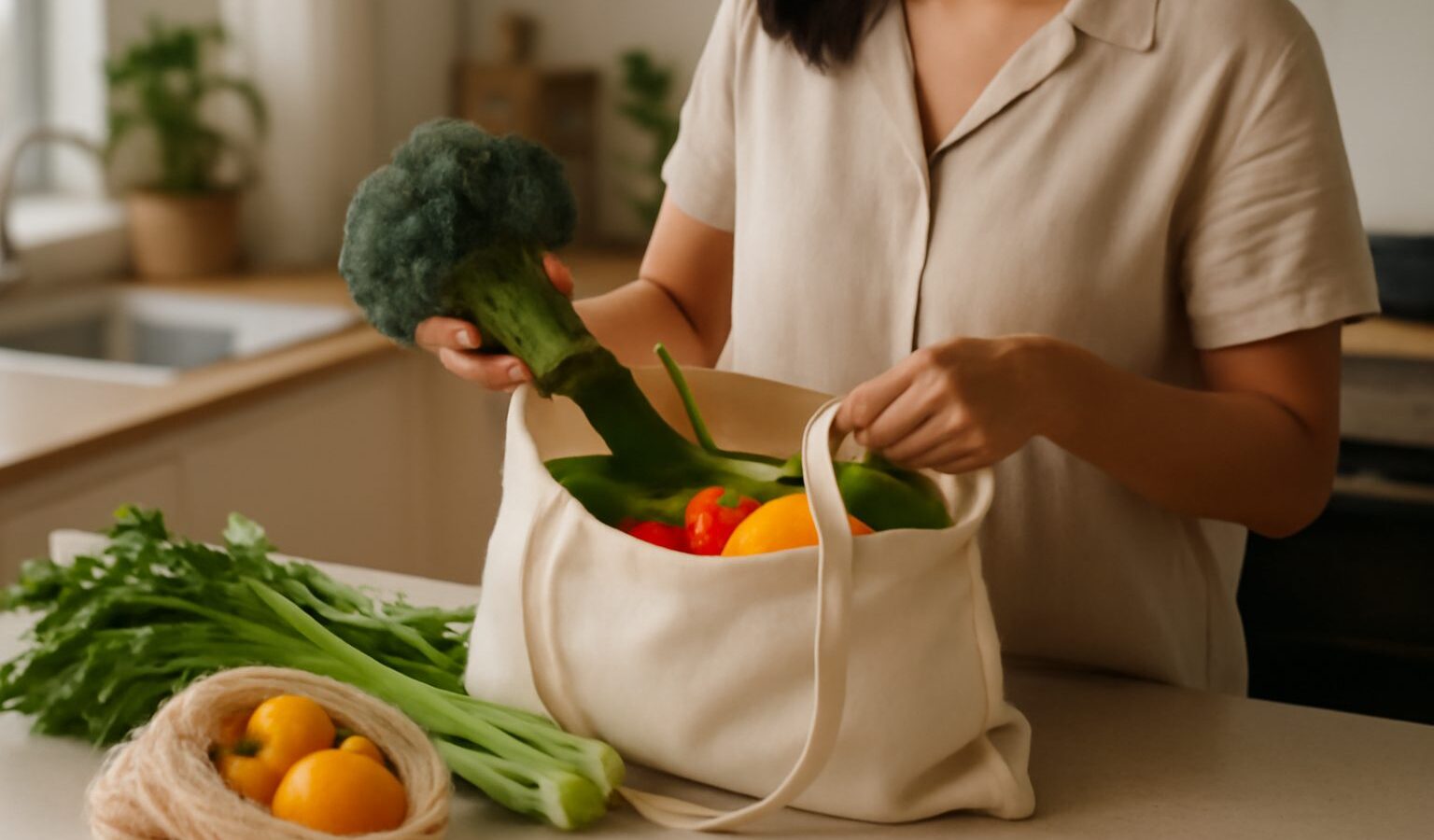
Groceries are one of the few things almost every household buys every week, which makes them one of the easiest places to make a steady, real difference. Sustainable grocery shopping Singapore style is not about buying expensive eco brands or shopping only at specialist stores. It is about a series of small decisions: what you plan, what you carry, which produce and packaging you pick, how you travel and what happens to food once it is home.
This guide pulls those decisions together into one supermarket-focused routine you can adapt to an HDB flat, a condo or a shared home, whether you shop at a neighbourhood supermarket, a wet market or online.
Plan Before You Shop
The greenest food is the food you actually eat. Food waste is one of Singapore’s larger waste streams, and much of it starts with buying more than a household needs.
A simple planning habit:
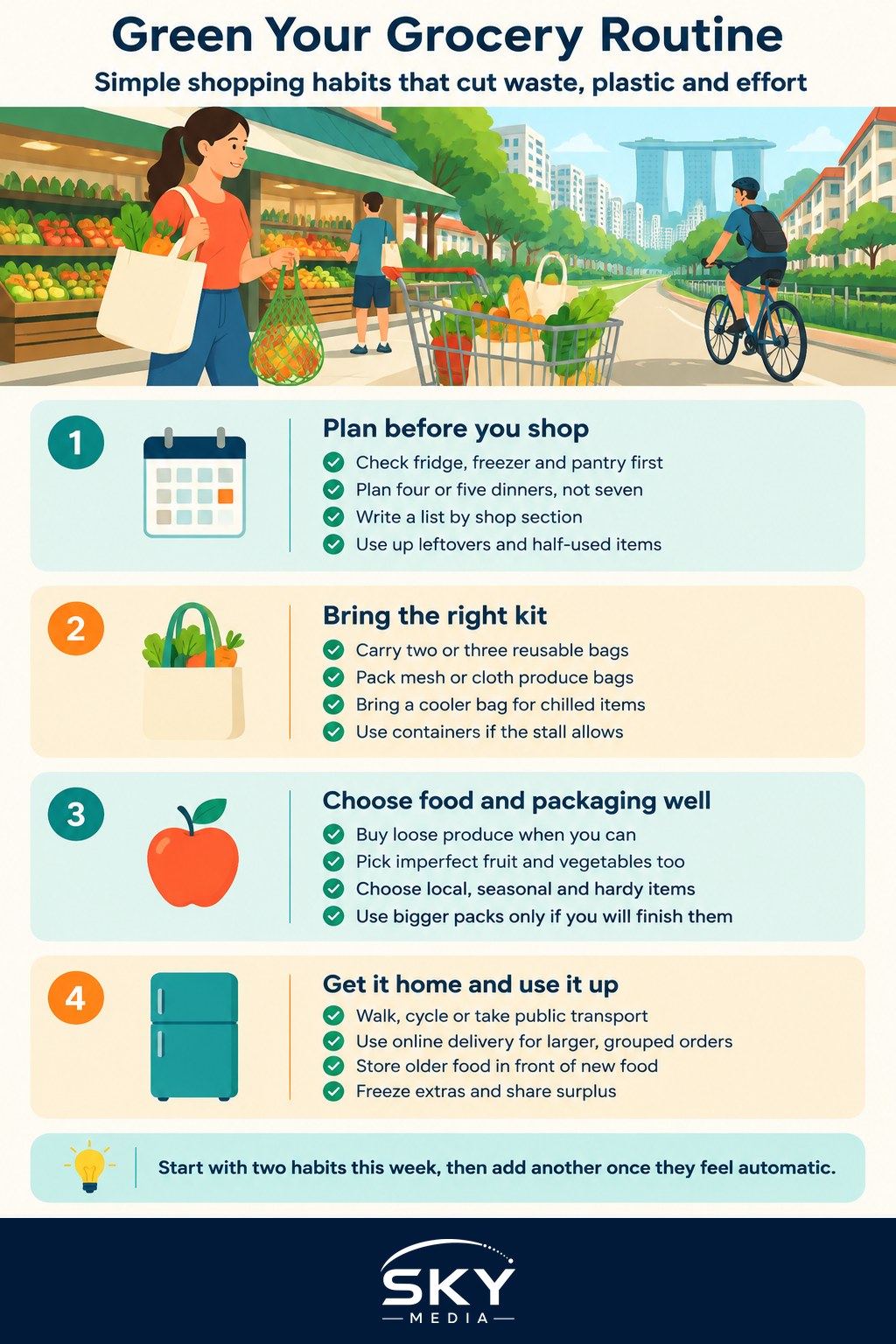
- Check the fridge, freezer and pantry first. Take a quick photo before you leave so you do not buy a third bottle of soy sauce.
- Plan four or five dinners, not seven. Leave room for leftovers, eating out and last-minute changes.
- Build meals around what needs using up, such as half a cabbage or leftover rice.
- Write a list grouped by section (produce, chilled, dry goods) so you move through the shop quickly and avoid impulse buys.
- Shop slightly more often for fresh food if you tend to waste vegetables. Smaller, more frequent trips to a nearby wet market or supermarket can mean less spoilage.
Planning also saves money. If you want to tighten spending as well, our grocery savings and supermarket guide has more ideas.
Bags, Containers and What to Carry
Many larger supermarkets in Singapore now charge for disposable carrier bags, under rules set by the National Environment Agency (NEA). The details can change, so check NEA’s website for the current requirements. Either way, bringing your own bags is the simplest habit to build.
A practical shopping kit:
- Two or three sturdy reusable bags. Foldable ones that fit in a work bag or car boot are the ones you will actually remember.
- A few light mesh or cloth produce bags for loose fruit and vegetables, instead of the thin plastic rolls.
- A cooler bag for chilled and frozen items, which also helps food stay fresh in the heat on the way home.
- Containers for the wet market, if your stallholders are happy to use them for tofu, fish or meat. Ask politely; many are used to it.
Reuse what you already own before buying new. A reusable bag only beats a disposable one after it has been used many times, so a drawer of unused tote bags is not a win.
Choosing Produce Wisely
Fresh produce is where small choices add up.
- Buy loose rather than pre-packed where you can, and only the quantity you need. Two carrots are better than a plastic tray of six if half will go limp.
- Do not overlook imperfect produce. Slightly odd-shaped fruit and vegetables are just as good to eat. Some shops sell them at a lower price.
- Consider where food comes from. Singapore imports most of its food, but local farms do produce leafy greens, eggs and fish, often labelled as local. Choosing these when convenient supports local food resilience.
- Pick seasonal and hardy options that travel and keep well, and buy delicate items such as berries or herbs only when you have a plan to use them.
- Store produce properly at home. Wrapping greens loosely in a cloth or paper towel and keeping them in the crisper can add days to their life.
Packaging: Comparing Your Options
Packaging choices are rarely black and white. This comparison can help you decide quickly in the aisle:
| Choice | Greener option | Why it helps |
|---|---|---|
| Rice, grains, pulses | Larger packs or refill stores, if you will use them in time | Less packaging per serving |
| Drinks | Tap water and concentrates over single-serve bottles | Avoids many small plastic bottles |
| Snacks | Bigger packs portioned at home | Fewer small wrappers |
| Cleaning products | Refill packs or concentrates | Less plastic and lighter to carry |
| Fresh produce | Loose items in your own bags | Skips trays and cling film |
| Ready meals | Cook in batches and freeze portions | Cuts plastic trays and food waste |
A word of caution on bulk buying: a large pack only saves packaging if you finish it before it goes stale or expires. For small households, smaller packs can be the more sustainable choice. Refill and zero-waste stores are worth a visit for dry goods, oils, spices and cleaning liquids; bring clean, dry containers and check their system first.
When it comes to recycling packaging at home, rinse containers and keep recyclables clean and dry before placing them in the blue recycling bins. Food-soiled packaging can contaminate a whole bin, so when in doubt, check NEA’s guidance on what can be recycled.
Getting There and Back
Transport is easy to forget, but it is part of the footprint of every shop.
- Walk or cycle to your nearest supermarket or market when the load is light. A foldable trolley makes walking with heavier shopping easier, and it is also handy for older relatives.
- Combine errands so one car trip covers groceries and other tasks, rather than several short drives.
- Use public transport for mid-sized shops close to an MRT station or bus stop.
- Online grocery delivery can be efficient when orders are large and consolidated, since one van serves many homes. Choose a wider delivery window if offered, avoid lots of small top-up orders, and ask for minimal bags if the platform allows.
At Home: Closing the Loop
Your sustainable routine continues after you unpack.
- Put new items behind older ones in the fridge and cupboard so older food is used first.
- Understand date labels. “Use by” is about safety; “best before” is about quality. Food past its best before date may still be fine to eat if it has been stored properly, but follow “use by” dates strictly.
- Freeze food before it spoils: bread, cooked rice portions, ripe bananas and leftover curry all freeze well.
- Plan one “use it up” meal a week, such as fried rice, soup or an omelette, to clear odds and ends.
- Share surplus. Community fridges and food sharing groups exist in many neighbourhoods; check their rules on what they accept.
For more ways to fold these habits into everyday life, see our guide on building a sustainable daily routine. If you shop at Chinese grocers and wet market stalls, our guide to eco-friendly Chinese grocery shopping covers that setting in more detail.
Start Small and Keep Going
You do not need to change everything at once. Pick two habits this week, such as a written list and a set of reusable bags, and add another once they feel automatic. Over a year of weekly shops, those small, steady choices add up to less waste, less plastic and, very often, a lower grocery bill.
Frequently Asked Questions
Are wet markets more sustainable than supermarkets? Often they can be, because produce is sold loose and you can bring your own bags and containers, which cuts packaging. What matters more is what you buy and how you carry it. A well-planned supermarket trip with your own bags can still beat an impulsive market haul that ends up thrown away.
Is buying local produce always better for the environment? Not always, since the footprint also depends on how the food is grown and stored. Local items can mean fewer transport miles and fresher food, and they support local farms. They are a good choice when convenient, but cutting waste usually matters more than where food is from.
Can I compost food scraps in an HDB flat? Yes, small-scale options such as worm bins or bokashi-style buckets can work in a flat if you manage moisture and smell. Start small and check the rules of your estate and neighbours’ comfort. If composting feels too much, community composting programmes in some neighbourhoods may accept scraps.
Are biodegradable or compostable bags a greener choice? They are not automatically better, since many only break down under specific industrial conditions and not in normal household rubbish or recycling. Reusing a sturdy bag many times is usually the greener option. Check NEA’s guidance on what can go into recycling.
Is organic food worth buying for sustainability? Organic can reduce some pesticide and fertiliser use, but it is not automatically the more sustainable choice, especially if it is heavily packaged or flown in. Compare labels and think about waste, packaging and distance. Buying only what you will eat matters most.
Official sources: National Environment Agency (NEA)
Further reading: How to Shop Farmers’ Markets in Singapore More Sustainably · Choosing Sustainable Seafood in Singapore · A Newcomer’s Guide to Green Living in Singapore