
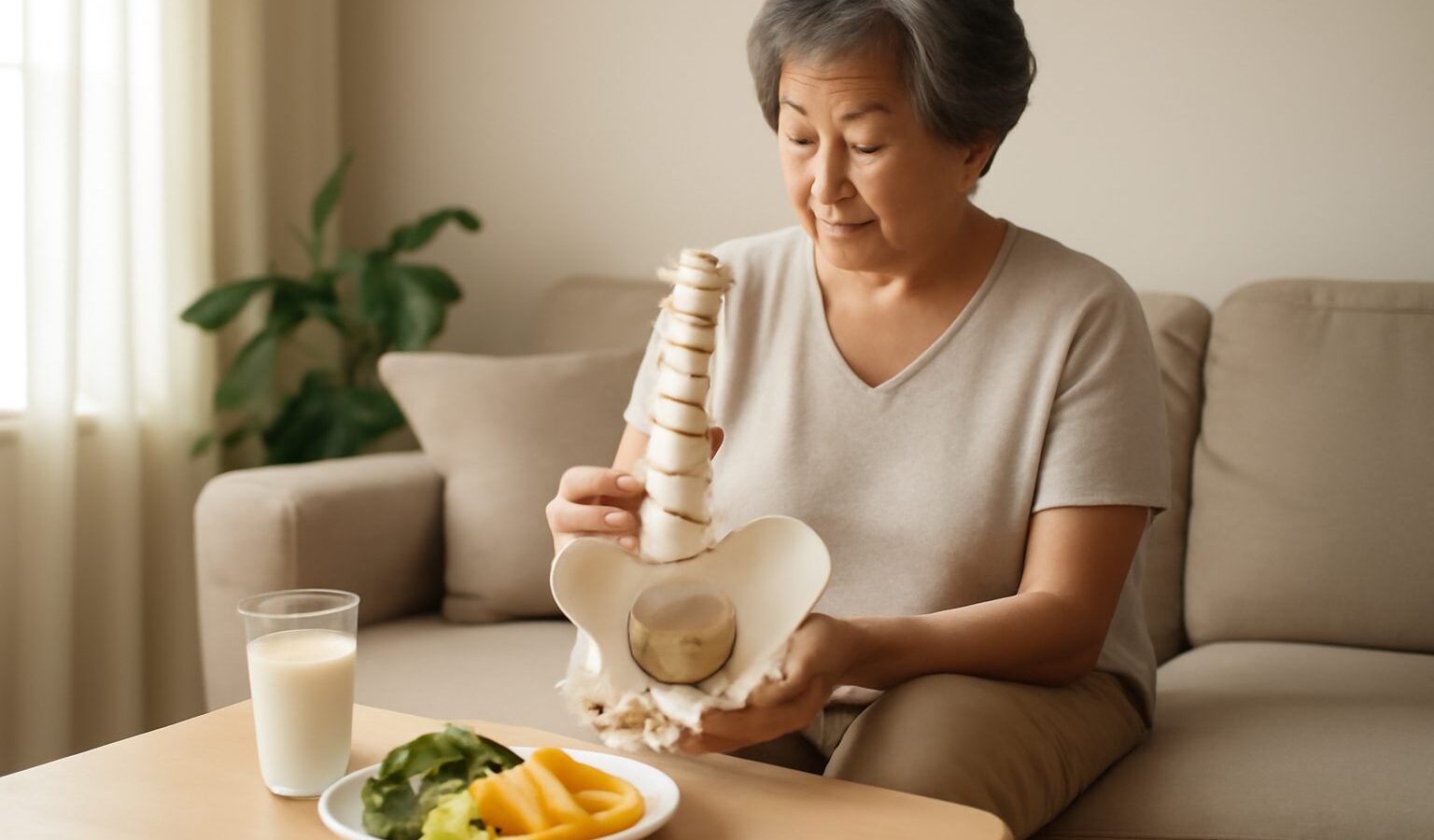
Bones feel permanent, but they are living tissue that changes throughout life. As we age, bones can gradually lose strength, and osteoporosis is the condition where they become fragile enough to break more easily. Understanding osteoporosis and bone health helps older Singaporeans protect their independence, because a single fracture can change daily life. This guide is general information, not medical advice. Only a doctor can assess your bones and advise what is right for you.
What Osteoporosis Is and Why It Develops
Throughout life the body constantly renews bone, removing old bone and building new. In younger years, building keeps pace or gets ahead. With age, the balance tips, and bone can be lost faster than it is replaced. When bones become porous and weak, that is osteoporosis, and it raises the risk of fractures from a minor fall or even everyday movements.
Osteoporosis is often called a silent condition because it usually causes no symptoms until a bone breaks. Common fracture sites include the hip, spine and wrist. A broken hip in particular can seriously affect mobility and independence, which is why prevention matters so much.
Several factors influence bone strength, some of which you cannot change, such as age, family history, and being past menopause. Others are within your influence, including how active you are, whether you smoke, how much alcohol you drink, and getting enough of the nutrients bones need. Certain medical conditions and long-term medicines can also affect bone, so it is worth discussing your personal risk with your doctor.
Signs, Risks and Getting Assessed
Because osteoporosis is usually silent, you often cannot feel it building. That makes risk awareness and assessment important. Reasons to talk with your doctor about your bones include:
- A previous fracture from a minor bump or fall.
- Getting noticeably shorter, or developing a stooped upper back.
- A family history of osteoporosis or hip fracture.
- Long-term use of certain medicines, or a condition that affects bone.
- Repeated falls or feeling unsteady on your feet.
Your doctor can assess your risk and may arrange a bone density scan, a simple, painless test that measures how strong your bones are. Based on your results and your overall health, the doctor decides whether lifestyle steps are enough or whether treatment should be considered. Diagnosis and any medication are professional decisions, so do not self-diagnose from symptoms alone.
You should see a doctor promptly after any fall that causes pain, swelling or difficulty moving a limb, and urgently for sudden, severe back pain, a visible deformity after a fall, or an inability to bear weight. These may signal a fracture that needs care.
Keeping Bones Strong Day to Day
Good habits support bone health at any age, and it is never too late to start. Your doctor or a dietitian can tailor advice, but the general foundations are well established:
- Get enough calcium and vitamin D, which bones rely on. Sunlight helps the body make vitamin D, and food sources matter too. Ask your doctor before starting any supplement, since more is not always better.
- Stay active with weight-bearing and strength exercises, such as walking, stair climbing, and simple resistance work suited to your ability. Movement signals bones to stay strong and keeps muscles supporting them.
- Include balance exercises to reduce the chance of falling.
- Do not smoke, and keep alcohol within sensible limits, since both weaken bone.
- Eat a balanced diet with enough protein to support bones and muscle together.
Because fractures usually happen during a fall, protecting bones and preventing falls go hand in hand. Keep the home well lit and clear of trip hazards, use handrails, wear supportive footwear, and have your eyesight and any dizziness checked. Strong muscles and good balance are among your best defences.
Comparing Everyday Steps for Bone Health
The table below gives a simple way to think about where your effort helps most. It is a general guide to discuss with your doctor, not a personal prescription.
| Goal | Practical everyday action | Why it helps |
|---|---|---|
| Feed the bones | Enough calcium and vitamin D, guided by your doctor | Bones need these building blocks |
| Load the bones | Regular weight-bearing and strength exercise | Activity signals bone to stay strong |
| Avoid the fall | Balance training and a safer home | Most fractures follow a fall |
| Know your risk | A bone density scan if advised | Guides whether treatment is needed |
Living Confidently With Osteoporosis
A diagnosis of osteoporosis is not a reason to stop moving. In fact, staying active in ways your doctor approves helps maintain strength and balance, and it supports confidence. What changes is that you become more thoughtful about protecting yourself from falls and heavy impacts.
If your doctor recommends treatment, follow the plan and keep your reviews, since managing osteoporosis is a long-term effort. Combine any medication with the lifestyle steps above for the best effect. Ask about subsidies and support where relevant, but confirm current details and eligibility with your clinic, the Agency for Integrated Care, or HealthHub, since these differ by person and change over time.
Family can help too, by making shared spaces safe and by encouraging regular activity. Ageing well with strong bones is a team effort, and small, steady habits add up over the years.
When to See a Doctor
See a doctor to discuss your bone health if you have risk factors such as a past fracture from a minor fall, a family history of osteoporosis, loss of height, or repeated falls. Seek prompt care after any fall with pain, swelling, or trouble moving, and urgent care for sudden severe back pain or an inability to bear weight, which can mean a fracture. Ask about a bone density scan and whether treatment is right for you. This article is general education only, so let your own doctor assess your bones and guide your care.
Explore more
Strong bones and strong muscles work together as you age. Read our companion guide to sarcopenia and preventing muscle loss in older age, and keep caring for the rest of you with our guides to cataracts and eye health in older age and dental care for seniors.