
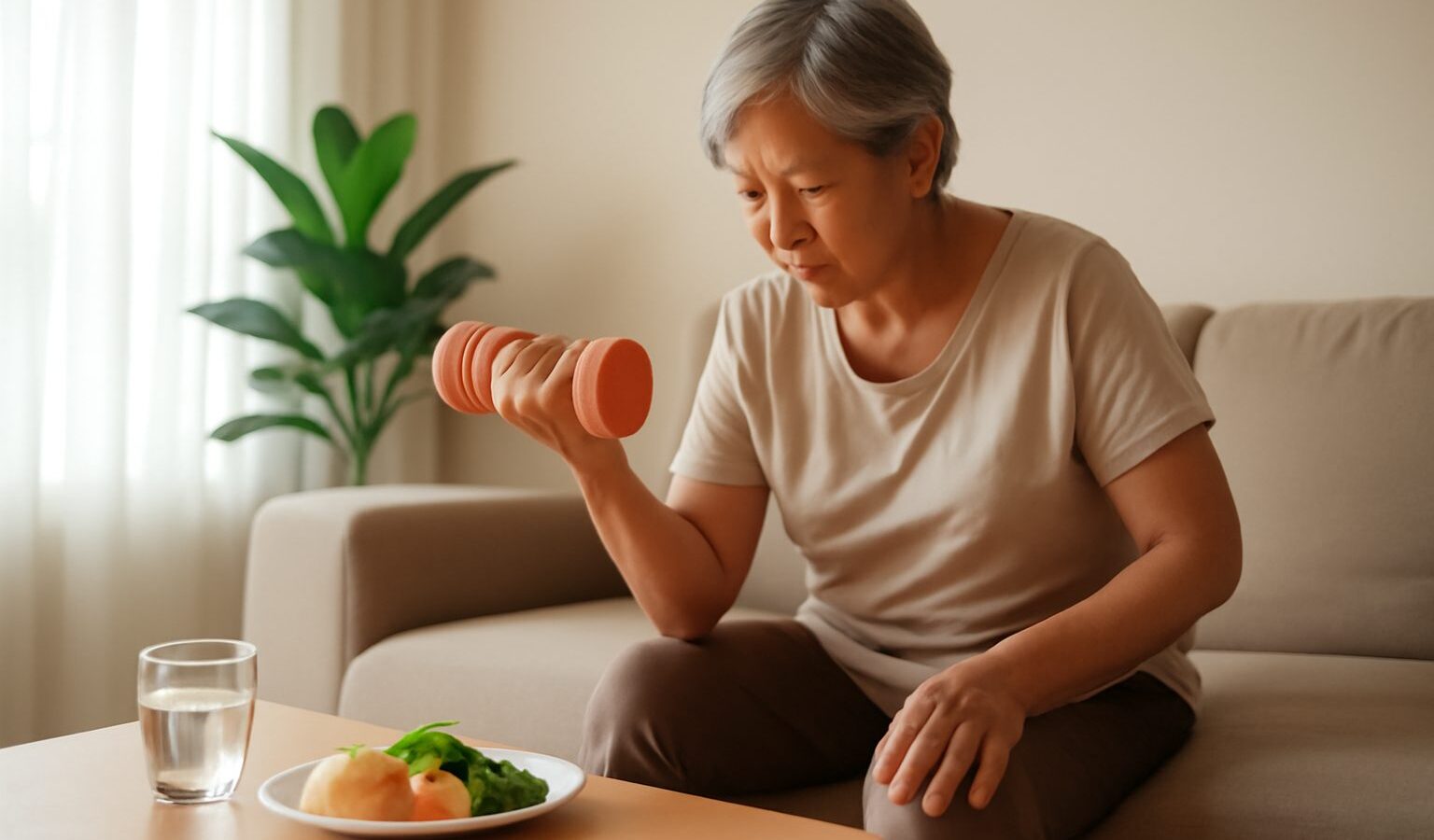
Muscle is easy to overlook until simple things get harder, like carrying groceries, standing from a low chair, or climbing stairs. Sarcopenia is the medical name for the loss of muscle mass and strength that can come with age. Learning about sarcopenia and muscle loss helps older Singaporeans stay strong, steady and independent for longer. This guide is general information, not medical advice. Only a doctor can assess you and advise what is right for your situation.
What Sarcopenia Is
From around midlife, the body tends to lose muscle gradually, and the pace can quicken with age if muscles are not used and fed well. Sarcopenia is when this loss reaches the point that strength and physical function decline noticeably. It is different from simply feeling a bit weaker, because it can affect balance, mobility and the ability to live independently.
Muscle does more than move us. It supports the joints, helps control blood sugar, and keeps us stable on our feet. When muscle fades, everyday tasks take more effort, tiredness sets in sooner, and the risk of falls rises. Weak muscles and fragile bones together can lead towards frailty, which is why muscle deserves attention alongside bone health.
Several things speed muscle loss, including inactivity, especially long periods of bed rest or sitting, not eating enough protein, illness, and some medical conditions. The encouraging news is that muscle responds to the right stimulus at any age, so much of this is within your influence.
Signs You May Be Losing Muscle
Sarcopenia builds quietly, so it helps to notice functional changes rather than wait for a number on a scale. Talk with your doctor if you notice:
- Feeling weaker, or finding it harder to rise from a chair without using your arms.
- A slower walking pace, or getting tired more quickly on your usual routes.
- Difficulty carrying shopping, opening jars, or climbing stairs.
- Losing weight without trying, or clothes feeling looser.
- More stumbles, unsteadiness or near-falls.
- A weaker grip when holding or gripping things.
These changes are not an inevitable part of ageing that you must simply accept. Many are treatable, and some point to other conditions worth checking. A doctor can look for causes and rule out other reasons for weakness or weight loss.
You should see a doctor sooner rather than later if you are losing weight without trying, feel suddenly much weaker, are falling more often, or if weakness is limiting what you can do at home. Unexplained weight loss in particular should always be assessed.
Eating to Protect Your Muscles
Food is a key part of keeping muscle, and protein matters especially. As we age, the body uses protein less efficiently, so getting enough across the day supports muscle repair and maintenance. A doctor or dietitian can tailor amounts to your health, but the general principles are straightforward:
- Include a protein source at each meal, such as fish, eggs, poultry, lean meat, tofu, dairy, beans and lentils.
- Spread protein through the day rather than loading it all into one meal.
- Eat enough overall, since undereating leads the body to break down muscle.
- Keep up calcium and vitamin D for bones and muscle, guided by your doctor.
- Stay hydrated, and if appetite is poor or you are losing weight, ask your doctor or a dietitian for advice rather than skipping meals.
If chewing is difficult, dental problems may be quietly reducing what you eat, so keeping the mouth healthy supports nutrition too. Good food and good movement work best together.
Exercise That Rebuilds Strength
Muscle grows when it is challenged, and this remains true in later life. The most useful ingredient is resistance or strength exercise, which asks the muscles to work against a load. This can be done safely at many levels, from bodyweight moves like sit-to-stand and wall push-ups to resistance bands or light weights.
Balance and mobility work matter too, since strength is most useful when paired with steadiness. Always build up gradually, and if you have health conditions or have been inactive, check with your doctor or a physiotherapist before starting so the plan suits you. Community Active Ageing Centres and exercise programmes can be encouraging places to begin.
The table below compares general approaches. It is a starting point for a conversation with a professional, not a personal prescription.
| Approach | What it involves | Main benefit |
|---|---|---|
| Strength or resistance work | Sit-to-stand, bands, light weights | Builds muscle and strength |
| Balance training | Standing work, gentle balance drills | Steadier, fewer falls |
| Daily activity | Walking, stairs, chores, less sitting | Keeps muscles switched on |
| Enough protein and food | Protein at each meal, adequate calories | Fuels muscle repair |
Staying Strong for the Years Ahead
The single most important message is that muscle loss is not fixed. People in their later years can and do gain strength when they train and eat well, and the payoff is real: easier daily tasks, better balance, and more confidence to stay active in the community. Consistency beats intensity, so a little most days is better than an occasional hard push.
If you are recovering from an illness or a hospital stay, ask about getting moving safely as soon as you can, since muscle is lost quickly during bed rest and takes effort to rebuild. Family members can help by encouraging activity, sharing meals with enough protein, and making it easy to keep going.
Ask about programmes and support at Active Ageing Centres and through the Agency for Integrated Care, and confirm what you are eligible for with the provider, since details differ and change over time. Small, steady steps protect your independence for the long run.
When to See a Doctor
See a doctor if you are losing weight without trying, feeling markedly weaker, falling more often, or struggling with tasks you used to manage easily. Unexplained weight loss and a sudden increase in weakness always deserve assessment, since they can have several causes. A doctor or physiotherapist can check you, rule out other conditions, and guide a safe exercise and nutrition plan. This article is general education only, so let your own doctor advise what is right for you before starting a new regimen.
Explore more
Strong muscles keep you independent as you age. Read our companion guide to osteoporosis and bone health for seniors, and support good nutrition by keeping your mouth healthy with dental care for seniors. To keep caring for your senses, see cataracts and eye health in older age.