
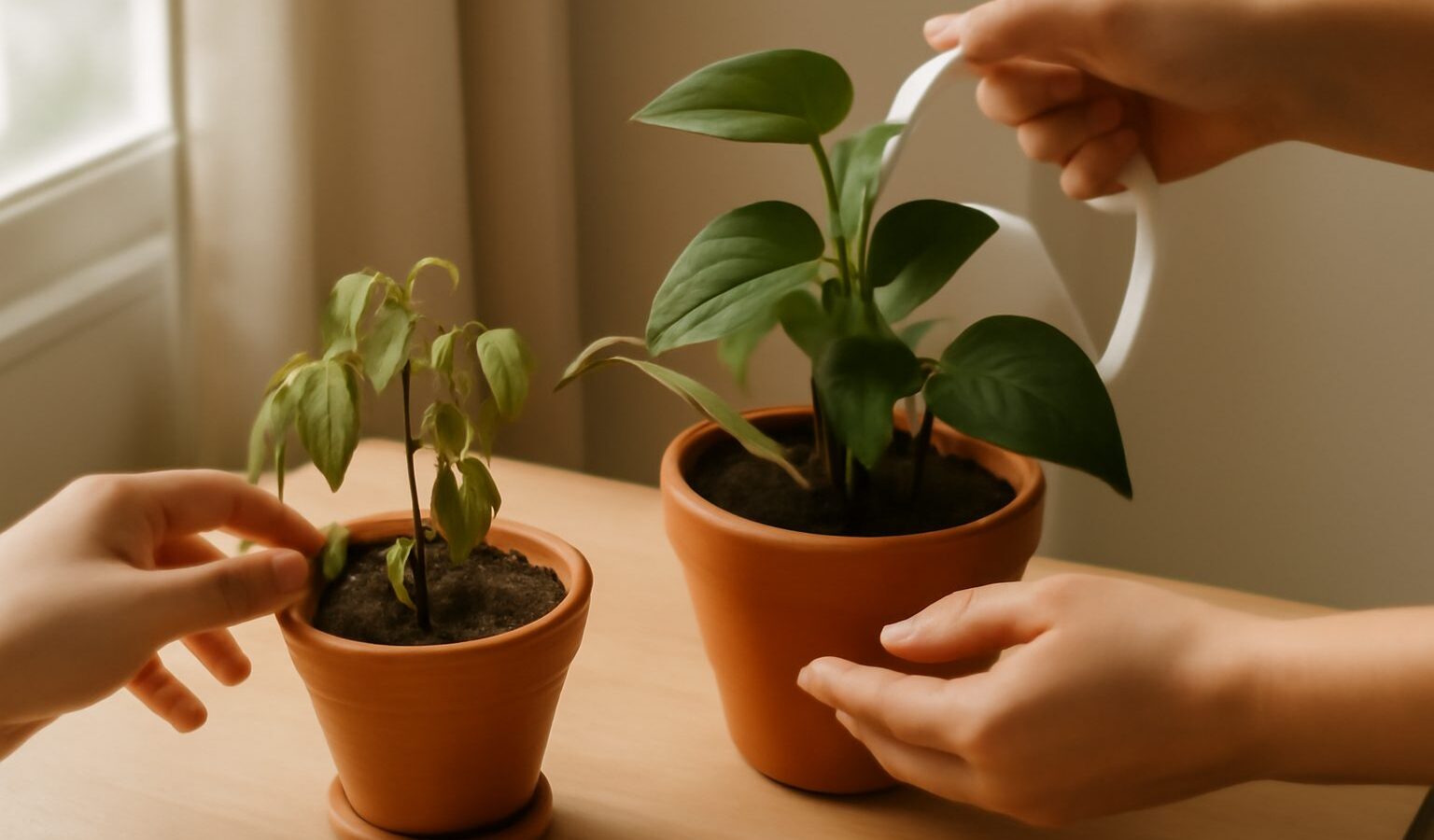
Watering sounds like the simplest part of plant care, yet it is where most houseplants meet their end. The tricky part is that overwatering and underwatering can look almost identical from across the room. Both leave you with a droopy, sad-looking plant, sometimes with yellowing or browning leaves, and it is easy to grab the watering can when the plant actually needs the opposite. Learning to tell overwatering plants Singapore owners struggle with apart from thirsty ones is one of the most valuable skills you can pick up.
In our warm, humid tropics, the balance tips one particular way. Overwatering, and the root rot that follows, is by far the more common killer here, because pots dry out slowly in the moist air and poor drainage lets water linger around the roots. That does not mean underwatering never happens, especially on hot balconies or with small pots, but if you are the type to fuss over your plants, overwatering is the more likely trap.
Why Overwatering Is So Common Here
It helps to understand what overwatering actually does. Roots need air as much as they need water. When soil stays soggy, the air pockets fill with water and the roots effectively suffocate. Starved of oxygen, they begin to die and rot, and rotting roots can no longer take up water or nutrients. The cruel twist is that the plant then wilts from thirst even though it is sitting in wet soil, which tempts the worried owner to water even more.
Singapore’s climate stacks the deck toward this problem. Indoor air is humid, so soil stays damp far longer than it would in a dry country. Many decorative pots have no drainage holes, or sit in saucers that are never emptied, trapping water at the base. Heavy, dense potting mixes hold too much moisture. Put these together and roots are left standing in water. This is why the single most effective thing you can do for tropical houseplants is to prioritise drainage: a pot with holes, an airy mix, and a saucer you tip out after every watering. Standing water in saucers is doubly bad here, since it also breeds mosquitoes and raises dengue risk.
Telling Them Apart
Because the two problems mirror each other, you have to look past the wilting and check a few specific signs. The soil, the roots and the feel of the leaves tell the real story.
An overwatered plant usually has soil that is constantly wet, often with a musty or sour smell. The lower and inner leaves tend to yellow first, and the leaves may feel soft, limp or mushy. You might see brown, soggy patches, and if you slip the plant from its pot, the roots look brown, dark and slimy rather than firm and pale. Mould on the soil surface and persistent fungus gnats flitting around are further clues.
An underwatered plant, by contrast, has soil that is bone dry and often pulling away from the sides of the pot. The leaves feel dry, thin and crispy rather than soft, and browning appears at the tips and edges. The whole plant may look wilted and deflated, and dry soil can become so hard that water runs straight down the sides without soaking in. The roots stay firm and pale, just parched.
| Symptom | Overwatering | Underwatering |
|---|---|---|
| Soil | Constantly wet, musty smell | Bone dry, pulling from pot sides |
| Leaves | Soft, limp, mushy | Dry, thin, crispy |
| Yellowing | Lower and inner leaves | Less common; browning at tips first |
| Roots | Brown, dark, slimy | Firm and pale, just dry |
| Other signs | Mould, fungus gnats, rot smell | Wilting, hard soil, water runs off |
The quickest field test is to push a finger a few centimetres into the soil. If it is wet and the plant is drooping, you are looking at overwatering and should hold off. If it is bone dry, the plant is thirsty. When in doubt, feel the leaves too, since soft and mushy points to too much water while dry and crispy points to too little.
How to Fix and Prevent Both
Rescuing an overwatered plant. Stop watering immediately and move the plant somewhere bright and airy so the soil can breathe. If it smells sour or you suspect rot, slide it out of the pot and inspect the roots. Trim away any brown, mushy roots with clean scissors, then repot into fresh, well-draining mix in a pot with drainage holes. Water only once the top few centimetres have dried. Recovery takes patience, but a plant with some healthy white roots left has a good chance.
Rescuing an underwatered plant. Give it a thorough drink. If the soil has gone hard and water runs off, sit the whole pot in a basin of water for twenty to thirty minutes so the rootball rehydrates from below, then let it drain fully and tip away the excess. Most thirsty plants perk up within hours to a day. Going forward, water a little sooner and more deeply.
Preventing both for good. The habit that solves nearly everything is to water by checking the soil, not by the calendar. Feel the soil, water thoroughly only when the plant needs it, let it drain completely, and always empty the saucer. Use pots with drainage holes and an airy, free-draining mix, and match watering to the spot, since a plant in bright, breezy conditions drinks faster than one in a cool, air-conditioned room. Get this rhythm right and you will sidestep the problem that fells more houseplants than any pest.
Remember too that watering needs shift with the plant and the season. A thirsty herb or a leafy plant in active growth drinks far more than a succulent or a plant resting during a cooler, cloudier spell, so a schedule that suited last month may be wrong today. Larger pots hold moisture longer than small ones, and terracotta dries faster than plastic or glazed ceramic. Rather than memorising rules for each, simply keep checking the soil before you water. That one small habit adapts automatically to every plant, pot and season, and it is the surest way to keep both overwatering and underwatering at bay for good.
Explore more
How to Deal With Root Rot
How to Water Plants in Singapore’s Heat
Why Plant Leaves Turn Yellow
How to Revive a Dying Plant