

Watering plants in Singapore looks simple, yet it is the single thing beginners get wrong most often. Our heat can dry a small pot out by midday, then a monsoon storm can flood it an hour later. Overwatering and underwatering both kill plants, and to make it trickier, they often look the same: droopy leaves, yellowing, sad stems. The skill is not watering more or less, but watering at the right time, in the right amount, for our tropical climate.
This guide walks you through when to water, how much, and how to read your plants, plus the one habit every Singapore gardener must build to avoid breeding mosquitoes. None of it is complicated once you understand what our weather does to a pot.
How Our Heat and Humidity Change Watering
In many countries you water on a fixed schedule. Here that backfires. Singapore stays hot and humid all year, but conditions on your own balcony swing wildly. A pot in blazing afternoon sun dries out fast, while a plant on a shady, humid corridor can stay damp for days. High humidity slows evaporation from leaves, so a plant tucked in a sheltered spot needs far less water than one baking on an exposed west-facing ledge.
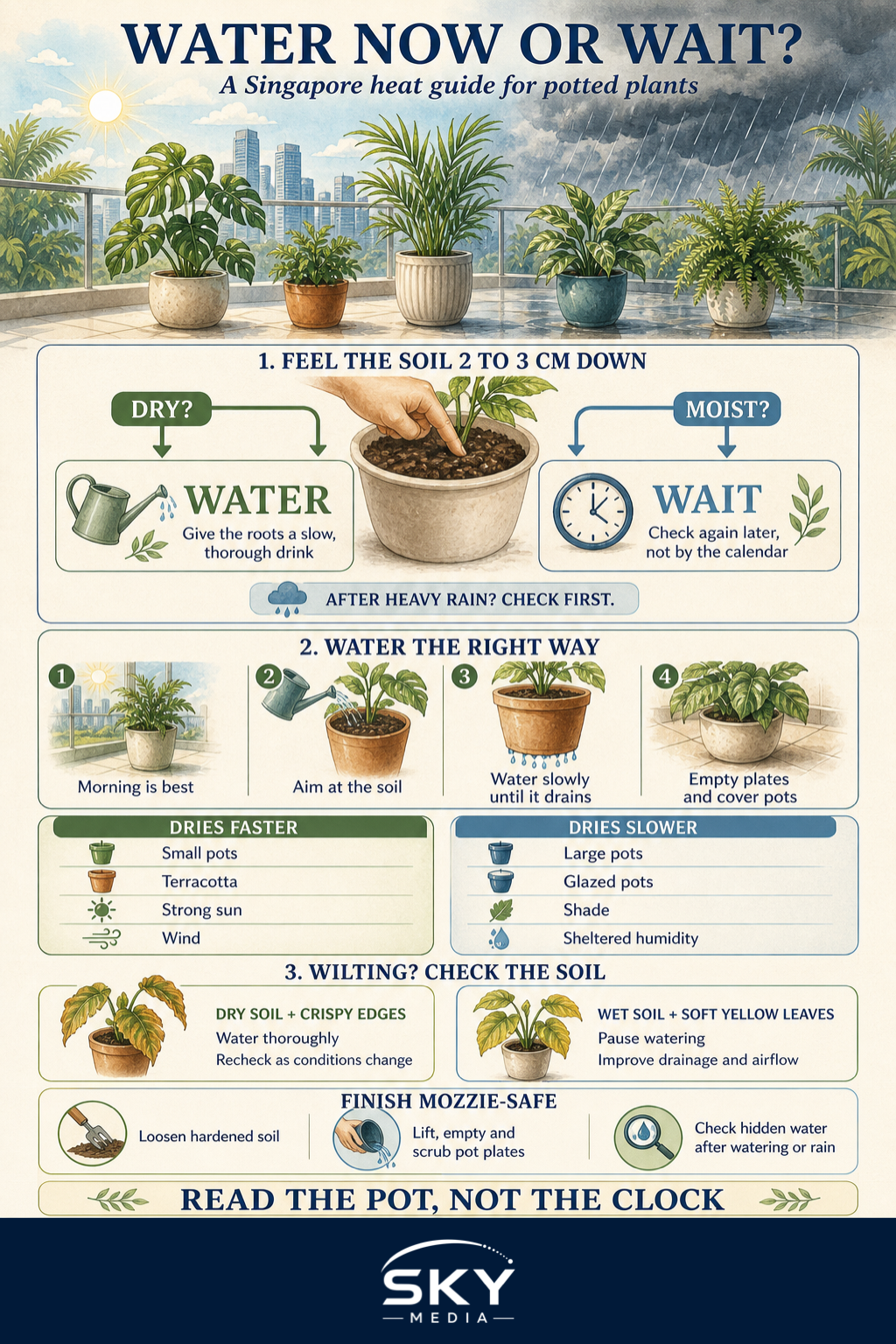
That means the best approach is to water by feel, not by calendar. Push a finger about two to three centimetres into the soil. If it feels dry at your fingertip, it is time to water. If it is still moist, wait. This one habit prevents most beginner mistakes, because it responds to the real conditions your plant is living in rather than a guess.
When and How Much to Water
Timing matters in our heat. Water early in the morning where you can, ideally before the sun climbs high. Morning watering lets the plant drink and gives leaves time to dry, which reduces fungal problems in our humidity. Early evening is the next best choice on very hot days. Avoid watering in the fierce midday sun, when much of it simply evaporates before reaching the roots.
When you do water, water thoroughly. A quick splash only wets the top layer and encourages shallow roots that dry out even faster. Instead, water slowly until it runs out of the drainage holes, so the whole root ball gets a drink. Then let the soil dry appropriately before the next round rather than keeping it constantly soggy.
A few practical pointers for local conditions:
- Small pots and terracotta dry out fastest, so check them daily in hot weather.
- Large pots, glazed ceramic and shady spots hold moisture longer, so water less often.
- After a heavy storm, many outdoor pots need no watering at all, so check first.
- Grouping pots together raises humidity around them and slows drying.
Reading Your Plant: Too Much or Too Little
Because overwatering and underwatering can look alike, it helps to check the soil before you react. A thirsty plant usually perks up within hours of a good drink and has dry, sometimes crispy leaf edges. An overwatered plant has soggy soil, soft yellowing leaves, and may smell musty, a sign roots are starting to rot. If in doubt, feel the soil first: watering a plant that is already wet does far more harm than waiting a day.
Here is a simple comparison to help you tell them apart and act correctly.
| Sign | Likely underwatered | Likely overwatered |
|---|---|---|
| Soil feel | Dry and pulling from pot edges | Wet, soggy, slow to dry |
| Leaves | Crispy, dry edges, wilting | Soft, yellow, mushy stems |
| Recovery | Perks up hours after watering | Stays limp even when watered |
| What to do | Water thoroughly, check daily | Stop watering, improve drainage |
If a plant is overwatered, hold off, move it somewhere brighter and airier, and make sure the pot actually drains. If it is underwatered, give it a slow, deep soak and keep a closer eye on it in the coming days.
Stop Mosquitoes: The Watering Habit You Cannot Skip
Watering in Singapore comes with a responsibility that has nothing to do with your plants and everything to do with public health. Standing water in pot saucers, trays, and the base of cover pots is exactly where Aedes mosquitoes breed, and dengue is a real, serious risk here. Every time you water, you create the very puddles they look for, so this habit is not optional.
Build these steps into your watering routine:
- Tip out any water that collects in saucers and trays within a day, and always after rain.
- Never keep a saucer permanently full “so the plant can sip”; change or empty the water instead.
- Check hidden spots weekly, including cover pots, hanging pot drip trays, and self-watering reservoirs.
- Loosen hardened, compacted soil that traps water on the surface instead of draining through.
- Follow NEA’s anti-mosquito advice and their reminders to remove stagnant water around the home.
A quick tip after every watering session is all it takes. Empty the saucers, and you protect your household and your neighbours while keeping your plants healthy.
Making Watering Easier When You Are Busy
If daily checking sounds like a lot, there are gentle ways to lighten the load without letting water go stagnant. Self-watering pots hold a reservoir that feeds the plant steadily, which suits people who travel or forget, though the reservoir still needs a weekly check so it does not sit stale. Moisture-retaining potting mix, a layer of mulch, and grouping thirsty plants together all slow drying in our heat.
For longer trips, ask a neighbour to help, move pots into shade, or set up a simple drip or wicking system. Choosing the right pot helps too, since free-draining containers with good holes make over and underwatering far less likely. Start with one or two plants, learn how they behave in your particular spot, and watering will soon feel like second nature rather than a daily worry.
Explore more
Good watering starts with the right container, so read how to choose pots and planters in Singapore with proper drainage. If you are often away, our guide to setting up a self-watering system keeps moisture steady and safe, and for compact homes, container gardening for small spaces shows how to arrange thirsty pots sensibly.