
Raising children in a new country means quietly renegotiating a hundred small habits you never thought about before. If you have recently moved from mainland China, you will find that parenting Singapore families do many things that feel familiar, and a few that feel surprisingly different. This guide compares the everyday norms in an even-handed way, so you can keep what matters most to your family while adjusting the parts that make daily life smoother here. Neither approach is better; they simply grew out of different systems and pressures.
The aim is not to tell you to parent one way. It is to help you read the new environment clearly, understand why local families do what they do, and make your own calm choices rather than reacting to every unfamiliar cue.
Schooling and the Pressure to Perform
Both China and Singapore take education seriously, and both have competitive systems that shape family life. In China, the gaokao and the intensity around it are well known, though recent “double reduction” (双减) policies have tried to ease the tuition load. Singapore has its own high-stakes moment, the PSLE at the end of primary school, and a long-running tuition and enrichment culture that many newcomers recognise instantly.
The difference is often in tone rather than intensity. Singapore has been actively softening ranking and grades in recent years, removing some exams in early primary years and shifting language away from pure scores. You will still meet plenty of ambitious “kiasu” parents, the local word for a fear of losing out, but you will also meet families who deliberately dial it back. Public messaging from the Ministry of Education leans towards “every school a good school” and broader definitions of success.
For a newcomer, the practical takeaway is that you have room to choose your own level. Tuition is available and popular, but it is not compulsory, and no one will judge you harshly for pacing your child differently. If you want to understand the local enrichment scene before committing, that is worth doing early rather than signing up out of anxiety.
The Role of Grandparents and Helpers
In many mainland families, grandparents (爷爷奶奶, 外公外婆) are deeply involved in daily childcare, often living in or nearby and handling meals, school runs, and discipline. That model exists in Singapore too, and multi-generational support is genuinely valued here.
The main structural difference is the domestic helper. Many Singapore households, local and newcomer alike, employ a live-in helper for childcare and housework, which is far less common in mainland China. This can feel unfamiliar at first, both the idea itself and the responsibilities that come with being an employer. Some families combine a helper with visiting or resident grandparents; others rely on infant care and childcare centres, which are widely available and subsidised for eligible residents.
If your own parents are far away, the distance can be one of the harder parts of the move. Planning visits, or exploring longer stays, is worth thinking through carefully given the rules involved.
Discipline, Independence, and Outdoor Time
Discipline styles vary widely within both countries, so avoid sweeping conclusions. That said, a few patterns tend to surprise newcomers. Singapore parenting culture leans towards reasoning and negotiation with children earlier than some mainland households expect, and physical discipline is increasingly frowned upon socially, even where it is not the subject of a specific rule. Public tantrums are usually met with quiet management rather than strong reactions from onlookers.
Independence is encouraged in visible ways. It is normal to see primary-school children taking public transport, buying food at the hawker centre, or walking to school in groups. The environment is very safe by regional standards, which gives parents confidence to loosen the reins sooner. If you are used to closer supervision, you can move at your own pace, but you will find the surrounding norms give children more everyday autonomy.
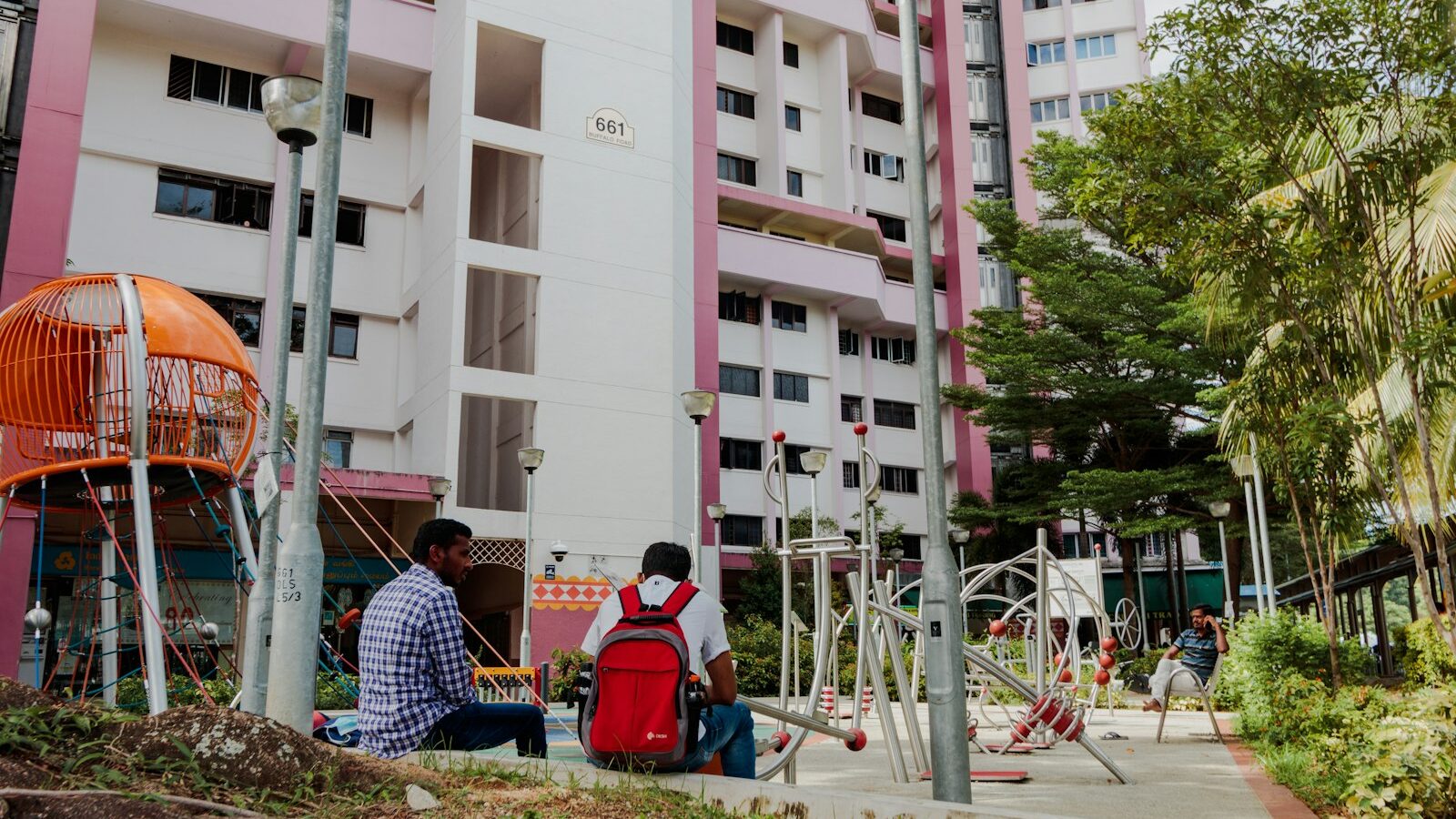
Outdoor time is a pleasant surprise for many families. Despite the heat, parks, playgrounds, and nature spaces are abundant, well maintained, and free. The tropical climate means outdoor play happens year round rather than in seasonal bursts, usually early morning or late afternoon to avoid the midday sun.
Screen Time, Apps, and Daily Rhythms
Screens are a shared modern worry in both places. The difference newcomers notice is the app ecosystem rather than the amount. Children here grow up around YouTube, Netflix, and English-language content, alongside the Mandarin material your family already knows. Schools increasingly use their own learning platforms and email, and communication with teachers often runs through official apps rather than a WeChat group.
The Health Promotion Board and paediatricians here echo global advice: less screen time for young children, more active and outdoor play, and consistent sleep. None of that will feel foreign. What may take adjusting is the bilingual media diet, which is actually an advantage. Keeping strong Mandarin at home while children absorb English at school and in play is one of the clearest wins of raising a family in Singapore.
China vs Singapore Parenting Norms at a Glance
Every family is different, so treat this as a general map, not a rulebook.
| Parenting area | Mainland China (common pattern) | Singapore (common pattern) |
|---|---|---|
| School pressure | Gaokao-driven, easing under 双减 | PSLE-focused, actively de-emphasising grades |
| Enrichment | Heavy tuition, recently curbed | Popular but optional tuition and enrichment |
| Grandparents | Often central to daily care | Valued, often alongside a domestic helper |
| Discipline | Varies, can be firmer | Leans to reasoning, less physical |
| Independence | Closer supervision common | Children given everyday autonomy early |
| Outdoor time | Seasonal, weather-limited | Year-round parks and playgrounds |
| Media language | Mainly Mandarin | Bilingual, English plus Mandarin |
Multicultural Exposure and Keeping Your Own Values
The biggest gift and the biggest adjustment is the same thing: your child grows up among Chinese, Malay, Indian, Eurasian, and international families. They will pick up English quickly, taste different festivals and foods, and learn early that many ways of living sit side by side. This openness is one of the strongest reasons families are glad they made the move.
Adapting does not mean giving up who you are. You can keep Mandarin as the home language, celebrate Chinese New Year fully, hold on to the values around family and effort that you were raised with, and still let your child embrace the local mix. Most successful newcomer families are deliberately bicultural, not one or the other. They borrow the calmer pace and outdoor habits, keep their language and traditions, and let the child hold both worlds comfortably.
Give yourself time and grace. You will not get every call right, and that is fine. Watch what works for your child, lean on the community around you, and adjust gradually rather than overhauling everything at once.
This article is general information, not professional advice. Education, childcare, and residency rules change, so verify current requirements with the Ministry of Education, ECDA, or ICA for your family’s situation.
Explore more
If the local enrichment scene feels overwhelming, start with tuition and enrichment culture in Singapore to decide your own level. For the wider adjustment, mainland vs Singapore Chinese culture and settling in Singapore, a guide for newcomers from China help the whole family find its feet.