
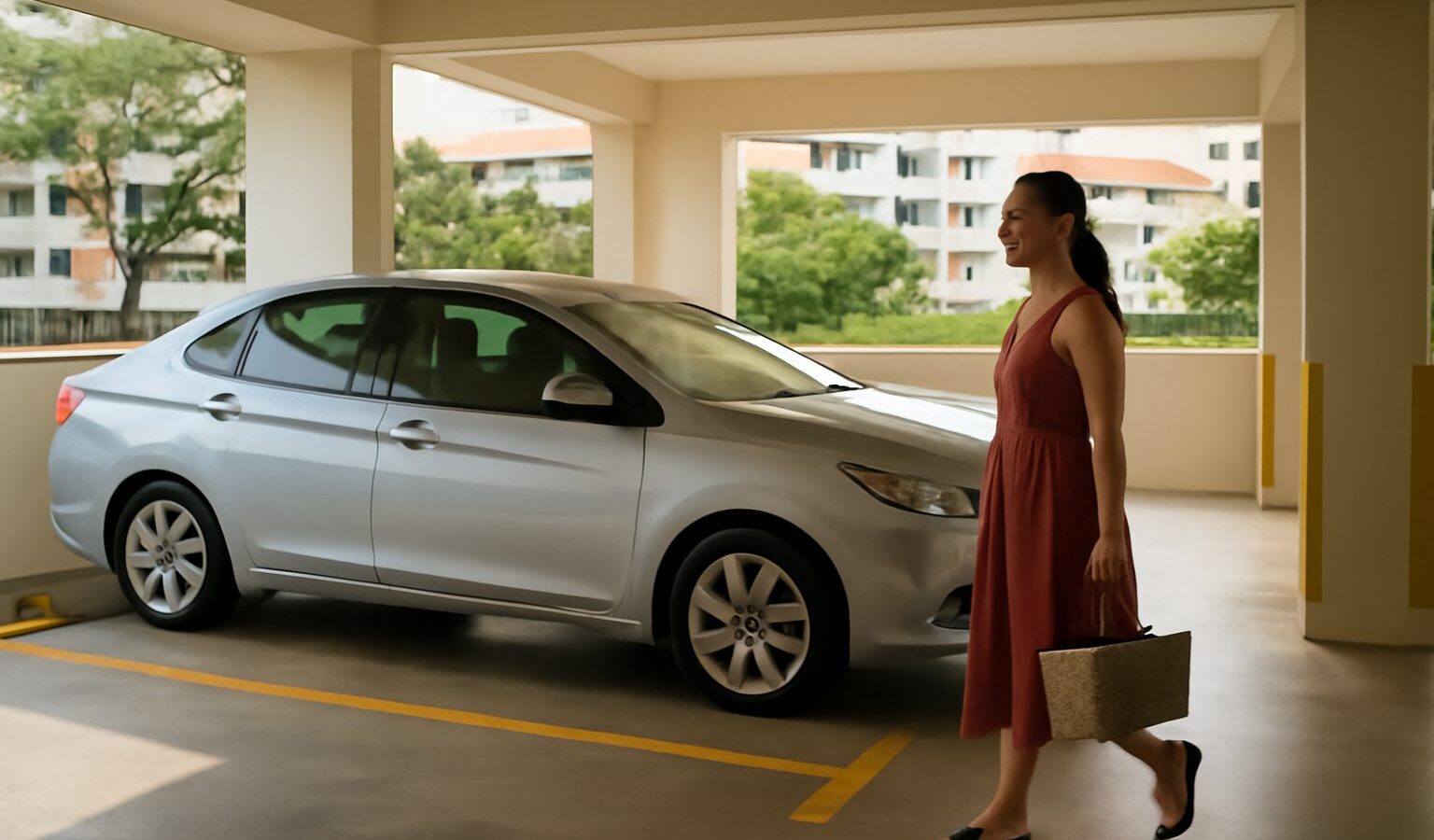
Owning or driving a car in Singapore means thinking about parking almost as much as thinking about the drive itself. Where you leave the car, how you pay, and whether you might come back to a fine are all part of daily life here. Parking Singapore is a patchwork of public carparks run by the authorities, season passes, private and mall carparks, and an app-based system that has replaced paper coupons for most drivers. This guide walks through the landscape, how charges generally work, and how to avoid the small mistakes that cost money. For exact rates, defer to HDB and URA, because charges and rules are set officially and change from time to time.
The Parking Landscape
Broadly, parking in Singapore falls into a few categories, and knowing which one you are in tells you how to pay.
- Public carparks (HDB and URA). These are the open-air and multi-storey carparks in housing estates, town centres and many street-side locations. HDB manages the carparks in public housing estates, while URA manages many others, and between them they cover a large share of everyday parking.
- Season parking. Instead of paying per entry, residents and regular users can buy a season pass for a fixed period, typically monthly, at a designated carpark. This suits people who park in the same place every day.
- Private and mall carparks. Shopping malls, office buildings, condominiums and commercial premises run their own carparks, usually with their own rates and their own barrier systems. Rates here are set by the operator, not the government.
- App-based e-parking. For public carparks that used to run on paper coupons, an app now handles payment digitally, letting you start and stop a parking session from your phone.
Each type has its own way of charging, so the first question in any carpark is simply: who runs this, and how do they expect me to pay?
How Charges Generally Work
Parking charges in Singapore usually depend on the type of carpark, the location, the time of day, and how long you stay. Rather than quote figures that go out of date, it helps to understand the common structures you will meet:
- Per-entry or per-duration charges. Many carparks charge by the amount of time parked, so a longer stay costs more. Some cap the charge or change the rate at night.
- Electronic Parking System (EPS). A large number of carparks use EPS, where a gantry reads your in-car stored-value card on entry and exit and deducts the charge automatically, much like paying for a toll. You do not buy a coupon; the system times your stay.
- App-based sessions. In coupon-free public carparks, you start a session in the parking app when you arrive and end it when you leave, paying only for the time used. This replaced the old habit of tearing paper coupons and displaying them on the dashboard.
- Season parking. A flat fee for the period covers unlimited parking at that carpark, which can work out cheaper for daily users than paying each day.
Because the actual rates, night caps, grace periods and free-parking hours are set by HDB, URA or the private operator and are revised periodically, always check the current rate at the carpark itself or with the relevant authority before assuming what you will pay.
Paying: A Quick Comparison
The table below lines up the main parking types against how you pay and what to keep in mind.
| Parking type | How you pay | Notes |
|---|---|---|
| HDB or URA public carpark (EPS) | Stored-value card read by the gantry on entry and exit | Keep the card topped up; charge is based on your stay |
| Coupon-free public carpark | Start and stop a session in the parking app | Pay only for time used; remember to end the session |
| Season parking | Fixed fee for the period, bought in advance | Best for daily use at the same carpark; apply through the operator |
| Mall or private carpark | Operator’s own system, often ticket or card at a barrier | Rates set by the operator; watch for validation or redemption deals |
| Motorcycle lots | Designated bike lots, often at lower rates | Use marked motorcycle spaces, not car lots |
Finding Parking
Half the battle in a busy area is simply finding a space. A few habits make it easier:
- Use parking-availability information. Official and third-party apps can show real-time availability at many carparks, so you can head for one with free lots rather than circling.
- Plan around demand. Town centres, popular hawker areas and malls fill up at meal times and on weekends; arriving a little earlier or choosing a nearby carpark can save a frustrating hunt.
- Know your destination’s carpark. Malls and offices often have several entrances and multiple levels; a quick look beforehand tells you where to enter and whether there is a height limit.
- Consider parking once and walking. In dense districts it is often faster to park in one reliable carpark and walk between stops than to move the car repeatedly and pay at each.
Avoiding Fines
Parking enforcement in Singapore is active, and the common mistakes are avoidable:
- Do not park where you should not. Yellow-line and red-line restrictions, reserved lots, and no-parking zones are enforced, and parking on them can bring a penalty.
- End your app session correctly. In coupon-free carparks, forgetting to start a session, or letting one lapse while you are still parked, is treated much like not paying.
- Mind your card balance in EPS carparks. If the gantry cannot deduct the charge on exit, you may face an administrative fee on top of the parking cost.
- Watch time limits and grace periods. Some spaces have maximum stays or specific free windows; overstaying can cost you.
If you do receive a notice, deal with it promptly through the issuing authority. Because the specific offences, amounts and appeal processes are set officially and can change, check the current rules with HDB, URA or the relevant operator rather than assuming.
Motorcycle, EV And Residential Season Parking
A few situations deserve their own note:
- Motorcycle lots. Motorcycles have their own designated spaces, usually charged differently from cars. Use the marked bike lots rather than squeezing into car spaces.
- EV charging lots. As electric vehicles grow more common, carparks increasingly include lots with charging points. These are meant for vehicles that are actively charging, so a petrol or fully charged car sitting there may be discouraged or penalised; follow the posted rules and pay any charging fees on top of parking.
- Residential season parking. If you live in an HDB estate or a condominium, a season pass at your home carpark is usually the practical choice for daily parking. Households sometimes face limits on how many season passes they can hold at subsidised rates, so check the current eligibility and application details with HDB or your estate’s management.
For all of these, the constant advice holds: the exact rates and eligibility rules are set by HDB, URA or the operator and are updated periodically, so confirm the current terms before you rely on them.
Explore More
Parking is only one side of the cost of driving in town; read our guide to ERP and road pricing in Singapore to see how charges add up on the same trip. And if you are kitting out your car for daily use, our guide to car accessories and in-car tech in Singapore covers the gear that makes parking and paying smoother. Always confirm current parking rates and rules with HDB or URA.