
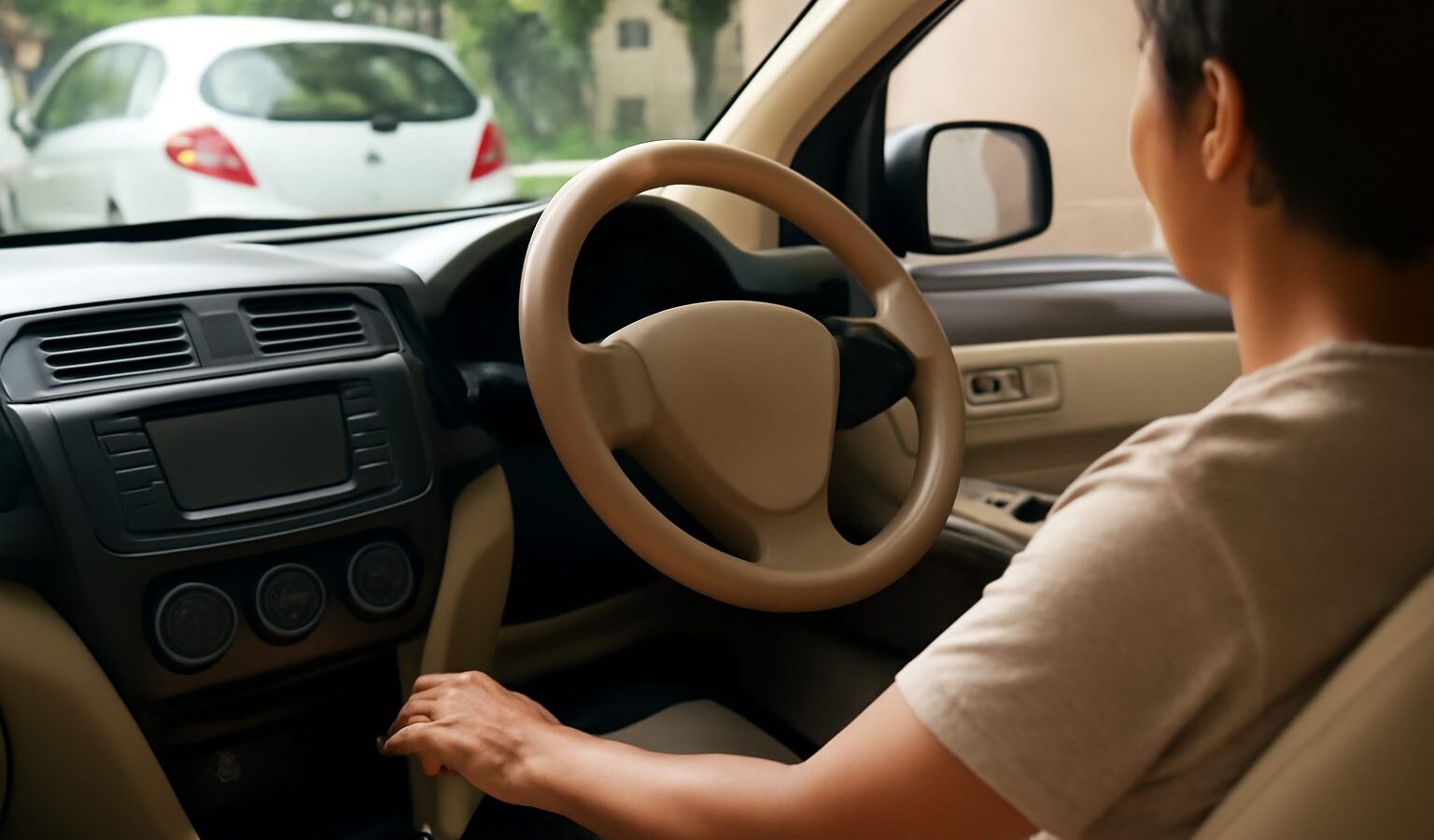
Passing your test is one thing; parking a real car in a real Singapore carpark, with someone waiting behind you, is another. Sharpening your parking skills Singapore style means getting comfortable in narrow HDB lots, spiralling multi-storey ramps and busy mall basements where every space seems to be an inch too small. The good news is that parking is a learnable craft, not a talent you either have or you do not. With the right reference points and an unhurried mindset, even the tightest reverse lot becomes routine. This guide walks through the core manoeuvres and the local quirks that trip up new and returning drivers alike.
Reverse Parking Into a Standard Lot
Reverse parking is the default in Singapore, and for good reason. Backing in gives you a clear, forward-facing exit later, which matters in a packed carpark where visibility is poor and pedestrians appear from nowhere. To reverse into a lot on your left, pull forward until your side mirror roughly lines up with the far line of the empty space, keeping about a metre of gap from the parked cars.
Once positioned, reverse slowly and turn the wheel fully towards the lot as the rear of your car begins to swing in. Use your mirrors and, where fitted, your reversing camera, but keep glancing over your shoulder too, because cameras flatten distance and hide low bollards. Straighten up as the car aligns with the painted lines, then edge back until you sit centred, leaving room on both sides for doors to open. If your first attempt lands you skewed, do not force it. Pull forward, reset, and try again. Nobody parks perfectly every time, and a calm second attempt beats a scraped bumper.
Keep your speed at a crawl throughout. Slow steering inputs give you time to read the gap and stop the moment something looks wrong.
Parallel Parking Without the Panic
Parallel parking appears less often here than in kerbside cities, but you will still meet it along quieter roads and at some landed-property streets. The manoeuvre rewards a repeatable routine. Signal, then pull up level with the car in front of your chosen space, leaving roughly half a metre beside it. Reverse until your rear axle is about level with that car’s back bumper, then turn hard towards the kerb.
As the car swings in at roughly forty-five degrees, straighten the wheel briefly, check that your front will clear the car ahead, then steer the other way to bring the front in. Aim to finish parallel to and close to the kerb without touching it. If you end up too far out, a single forward-and-back shuffle usually fixes it. Watch the kerb height, because a high one can scuff an alloy or a low tyre wall in seconds.
The single biggest improvement most drivers can make is to slow down and use reference points on their own car rather than guessing. Once you know where your rear wheel sits relative to your mirror, the whole sequence becomes predictable.
Handling Multi-Storey and HDB Carparks
Multi-storey carparks bring their own challenges: blind ramps, tight corners and lots that feel narrower than open-air ones. Take ramps slowly, hug the correct side, and sound a light tap of the horn at truly blind bends where signs advise it. Watch for arrows and one-way markings, which are easy to miss when you are concentrating on steering.
HDB carparks add the classic squeeze between two well-parked neighbours and the occasional pillar hard against a lot. When a space sits beside a pillar, favour the open side slightly so at least one door opens fully, and mind your wing mirror on the pillar side. Season parking lots and reserved bays are marked; park only where you are entitled to, and check season-parking rules on the HDB or LTA channels, since eligibility and charges change and should be confirmed there rather than assumed.
A few habits make cramped carparks far easier:
- Fold in your wing mirrors in extremely tight rows if your car allows it.
- Approach each lot square, not at an angle, so your swing is predictable.
- If a space genuinely looks too tight to open a door, choose another. A slightly longer walk beats a dented panel and an awkward note on someone’s windscreen.
Choosing Reverse or Front-In Parking
Both entry methods have their place, and knowing when to use each keeps you safe and courteous. The table below compares them for everyday Singapore parking.
| Factor | Reverse (back-in) parking | Front-in parking |
|---|---|---|
| Exit visibility | Excellent; you drive out facing traffic | Poor; you reverse blind into a lane |
| Ease of entry | Trickier at first, improves fast | Simpler for absolute beginners |
| Tight multi-storey lots | Better control on the swing in | Awkward, harder to line up |
| Loading the boot | Boot faces the lane, needs care | Boot faces the wall, often cramped |
| Recommended for | Most Singapore carparks | Drive-through or angled bays only |
For the vast majority of HDB and mall lots, reversing in is the safer default. Reserve front-in parking for angled bays that are designed for it or the rare drive-through arrangement.
Practising Until It Feels Automatic
Confidence comes from reps, not from reading. Find a quiet, empty carpark on a weekend morning and practise reversing into different lots until the reference points feel natural. Practise from both sides, since a lot on your right behaves differently from one on your left. Once the basics click, deliberately try slightly tighter spaces so real-world lots feel comfortable.
Stay courteous while you learn. If a queue forms behind you, a friendly wave and a steady pace reassure everyone; rushing is what causes bumps. Defer to the Highway Code and to any signage or marshals in private carparks, and never block ramps or aisles while you sort yourself out. Keep your mirrors clean, your reversing sensors unobstructed and your speed low, and parking stops being stressful and starts being the easy end to every journey.
Explore more
Ready to build broader road confidence? Pair these parking drills with our guide to confident expressway driving for the open-road half of the picture. If you are still learning, see common mistakes new drivers make and brush up on road signs and markings so every carpark arrow and marking makes sense.