
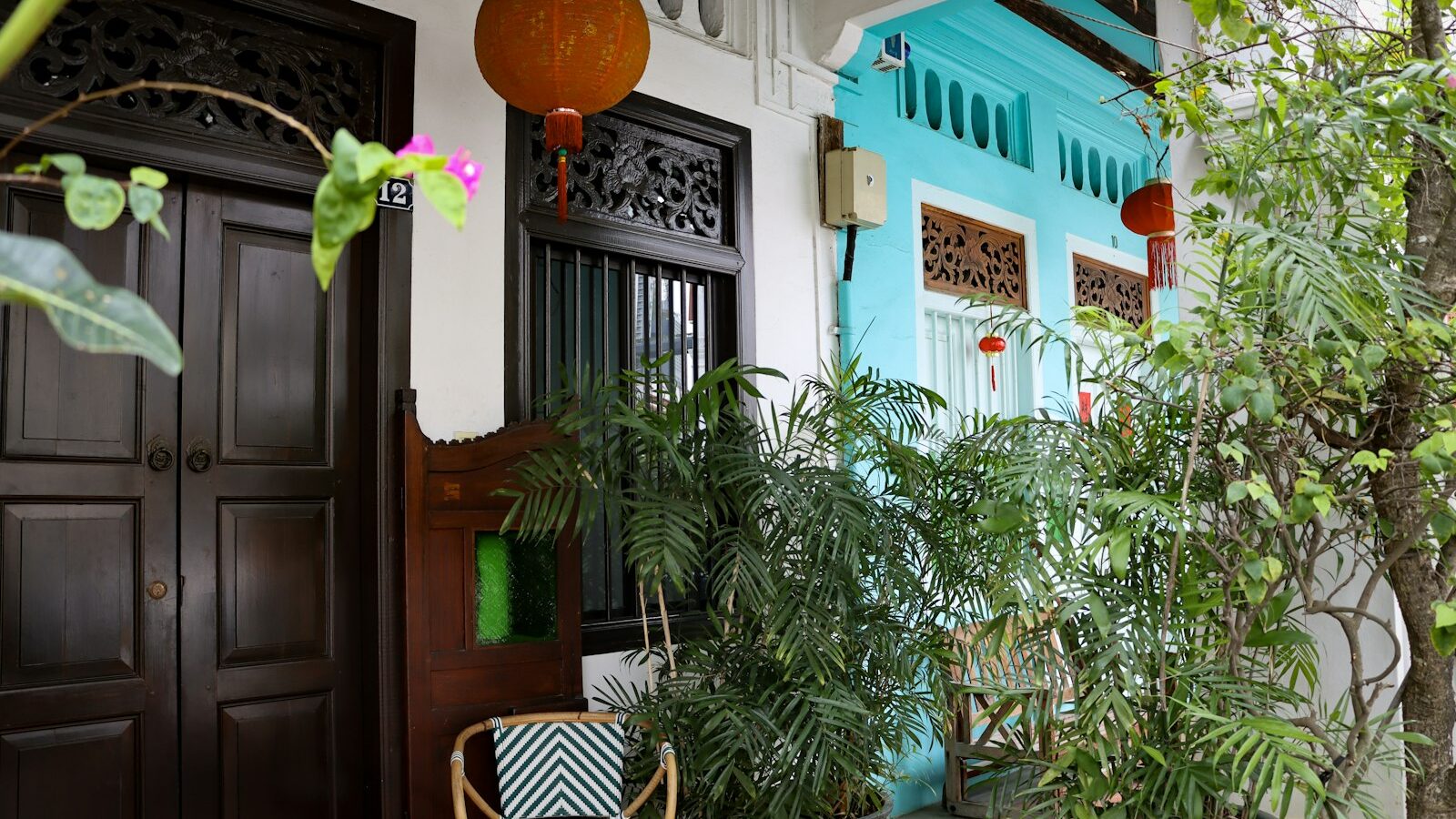
Few looks feel as rooted in Singapore as Peranakan style. Born from the Straits Chinese communities who blended Chinese, Malay and European influences over generations, it is a heritage aesthetic full of colour, pattern and craft. Done thoughtfully, a Peranakan interior in Singapore honours that history rather than treating it as decoration. This guide shows how to bring the warmth and richness of Peranakan design into a modern HDB flat or condo, with respect for its cultural roots and its origins in the shophouses of Joo Chiat, Katong and Emerald Hill.
Before you start, it helps to understand the source. Peranakan homes traditionally featured ornate carved timber screens, patterned encaustic floor tiles, coloured glass, porcelain, and richly layered textiles. The style celebrates the artistry of Nyonya and Baba culture. Treating these elements with care, and learning what the motifs mean, keeps your home celebratory and grounded rather than a shallow copy.
Colour, Tiles and Materials
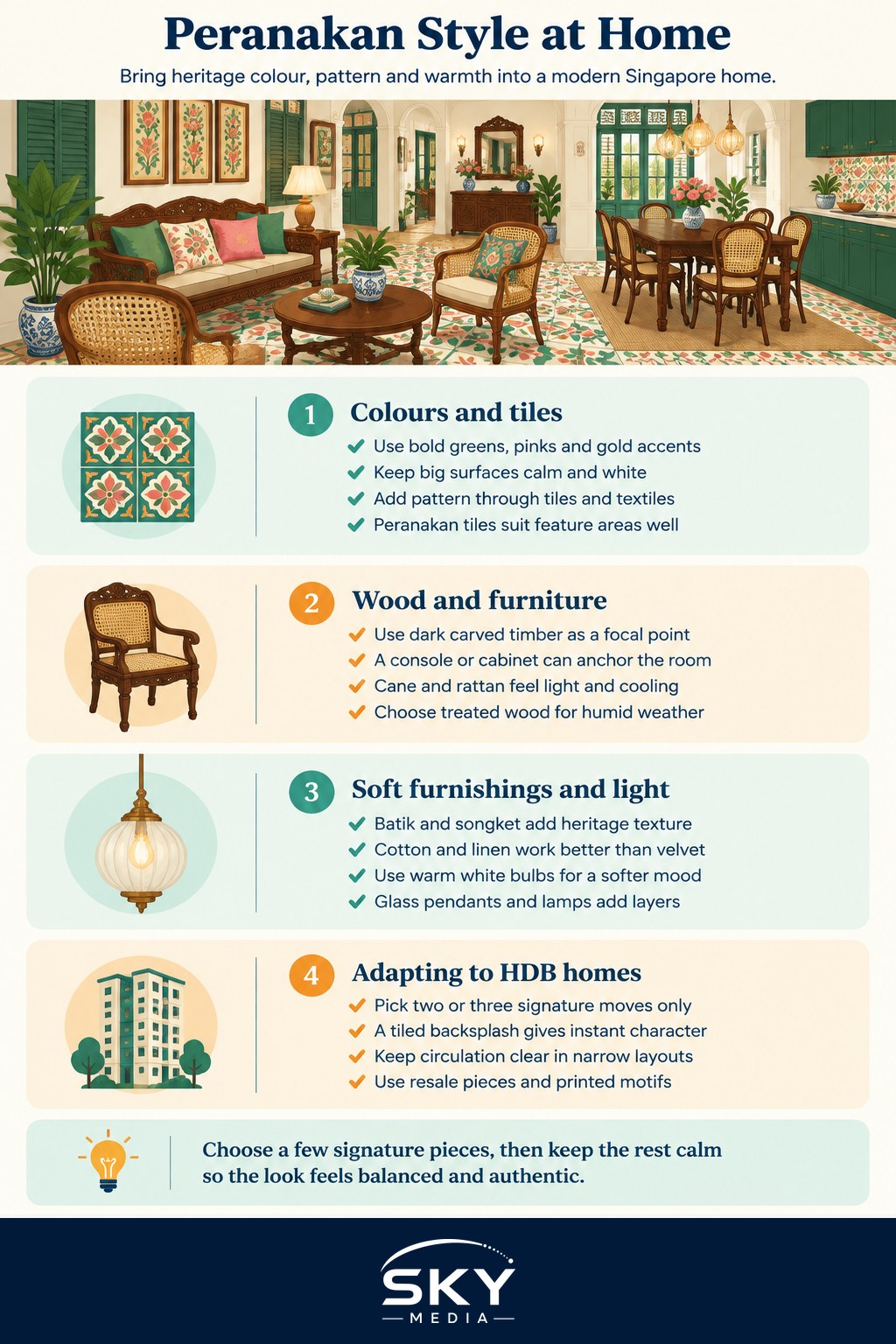
Peranakan palettes are famously bold. Think emerald and jade greens, turquoise, coral pink, deep rose, ochre yellow and touches of gold, often set against crisp white or dark stained wood. You do not need every colour at once. A common and effective approach for a Singapore home is to keep large surfaces calm, then let heritage colour arrive through a feature wall, tiles, textiles and ceramics. If you want a full-colour room, ground it with plenty of white ceiling and trim so the eye can rest.
Encaustic and cement floor tiles, often called Peranakan tiles or Straits tiles, are the signature element. Their geometric and floral patterns in blue, green, yellow and terracotta are instantly recognisable. In a flat you rarely need to tile a whole floor. A tiled kitchen backsplash, a bathroom feature, a border around a living area, or a patterned patch by the entrance delivers the look without overwhelming a compact space. Modern porcelain tiles printed with Peranakan patterns are a practical, budget-friendlier and hardwearing option that suits our humid climate. Our guide on choosing tiles for your home can help you weigh materials and finishes.
Wood matters too. Traditional Peranakan interiors used dark, richly carved timber for cabinets, screens and daybeds. In a smaller flat, a single carved piece such as a console, a cabinet or a fretwork panel can carry the theme. Look for pierced fretwork screens, which suit the tropics beautifully because they let air move while defining a space. In our heat and humidity, choose solid hardwood or good-quality treated timber, keep pieces away from direct afternoon sun, and use a dehumidifier during muggy spells to protect joinery and finishes.
Furniture, Lighting and Adapting to Singapore Homes
Peranakan furniture leans towards graceful, ornate forms: marble-topped tables, cane and rattan seating, and carved chairs with mother-of-pearl inlay in grander homes. You can suggest this heritage without filling a small flat. Pair one or two statement heritage pieces with simpler modern furniture in complementary tones. Cane and rattan are especially smart choices in Singapore because they are light, breathable and cooling, and they read as both traditional and current.
Textiles bring softness and colour. Batik and songket patterns, embroidered cushions, and beadwork-inspired accents echo the famed Nyonya kebaya and beaded slippers. Use cotton and linen covers rather than heavy velvets, which trap heat and can grow musty in humidity. Layer a few patterned cushions on a plain sofa, add a runner, and hang framed textile art or old tile designs on the wall. For picking and arranging pieces, see our notes on choosing art and prints for your home and gallery wall and art display ideas.
Lighting sets the mood. Peranakan homes glowed with warmth, so favour warm white bulbs over cold blue tones. A decorative pendant with coloured or etched glass over the dining table makes a lovely focal point, while wall sconces and table lamps create the layered, intimate light the style loves. Plan this early using our room-by-room lighting planning guide.
To adapt the look to an HDB or condo, edit hard. Choose two or three signature moves rather than everything: perhaps a tiled backsplash, a carved console and warm colour on one wall. Keep circulation clear in narrow BTO layouts, and let white walls stretch the space. If you want colour without commitment, our guide to choosing paint colours for your HDB covers heritage-friendly shades.
To get the look on a budget, hunt for reproduction tiles and printed cushions, restore a secondhand teak cabinet, and frame prints of classic tile motifs. Common mistakes include mixing too many loud patterns until the room feels chaotic, using motifs purely as novelty, and forgetting climate care, which lets timber and textiles suffer. Curated restraint and genuine respect for the culture are what make a Peranakan-inspired home feel authentic.
For more directions, browse our overview of interior design styles in Singapore and the related tropical modern interiors look.
Frequently Asked Questions
Where can I see authentic Peranakan interiors in Singapore for inspiration? Visiting Peranakan heritage museums, the shophouse streets and heritage house tours is a good start, and many are open to the public. Check each venue’s website for current opening details. Seeing real tiles, carvings and layouts helps you edit a design thoughtfully.
What do the common Peranakan motifs mean? Many motifs carry symbolic meanings, such as flowers for beauty and phoenixes and peonies for good fortune. Meanings vary, so read up from reputable heritage sources or museum guides before using them. Understanding them helps your home feel respectful rather than merely decorative.
Can I get the Peranakan look in a rental home without renovating? Yes, focus on movable items. Use removable tile-effect stickers on a backsplash, patterned cushions, ceramics, rattan seating and a framed print of classic motifs. Check your tenancy agreement before sticking anything to surfaces, and keep walls and floors undamaged.
Which Peranakan pieces are worth collecting, and which are easy to fake? Reproductions are common, so buy from reputable dealers and ask about origin and condition. Genuine antiques can be costly, while reproduction tiles and printed textiles are a practical, hardwearing alternative. Do not assume age or quality from appearance alone.
How do I keep a bold-coloured Peranakan room from feeling too busy? Pick a few signature elements, keep large surfaces calm and use white ceilings and trim to give the eye a rest. Limit loud patterns to two or three. Repeating a colour from the tiles in a cushion or vase ties the scheme together.