
Cushing’s disease in dogs is one of the more common hormone conditions seen in middle-aged and older dogs, yet it often creeps up so slowly that owners put the early signs down to “just getting old”. A dog that suddenly drinks far more water, needs to pee at night, develops a pot belly and starts losing fur may be showing classic signs. The condition is usually manageable with the right diagnosis and follow-up, but it is a long-term commitment of time and money.
This guide explains what Cushing’s is, what to look out for, how vets in Singapore typically test for it, and what to expect from treatment and its costs. It is general information only. Always follow the advice of your own veterinarian.
What Cushing’s Disease Actually Is
Cushing’s disease, known medically as hyperadrenocorticism, happens when the body produces too much cortisol over a long period. Cortisol is a natural stress hormone made by the adrenal glands, which sit near the kidneys. In the right amount it helps with metabolism and the response to stress. Too much of it, for too long, affects almost every system in the body.
There are three broad types:
- Pituitary-dependent. A usually small, often benign growth in the pituitary gland at the base of the brain sends too many signals to the adrenal glands. This is the most common form in dogs.
- Adrenal-dependent. A tumour on one of the adrenal glands produces excess cortisol directly. These tumours can be benign or malignant.
- Iatrogenic. Caused by long-term use of steroid medication prescribed for another condition. This type is managed very differently, so never stop a prescribed steroid suddenly without your vet’s guidance.
It is mostly seen in middle-aged to senior dogs, and some smaller breeds are reported to be more prone, though any dog can be affected.
Symptoms Owners Commonly Notice
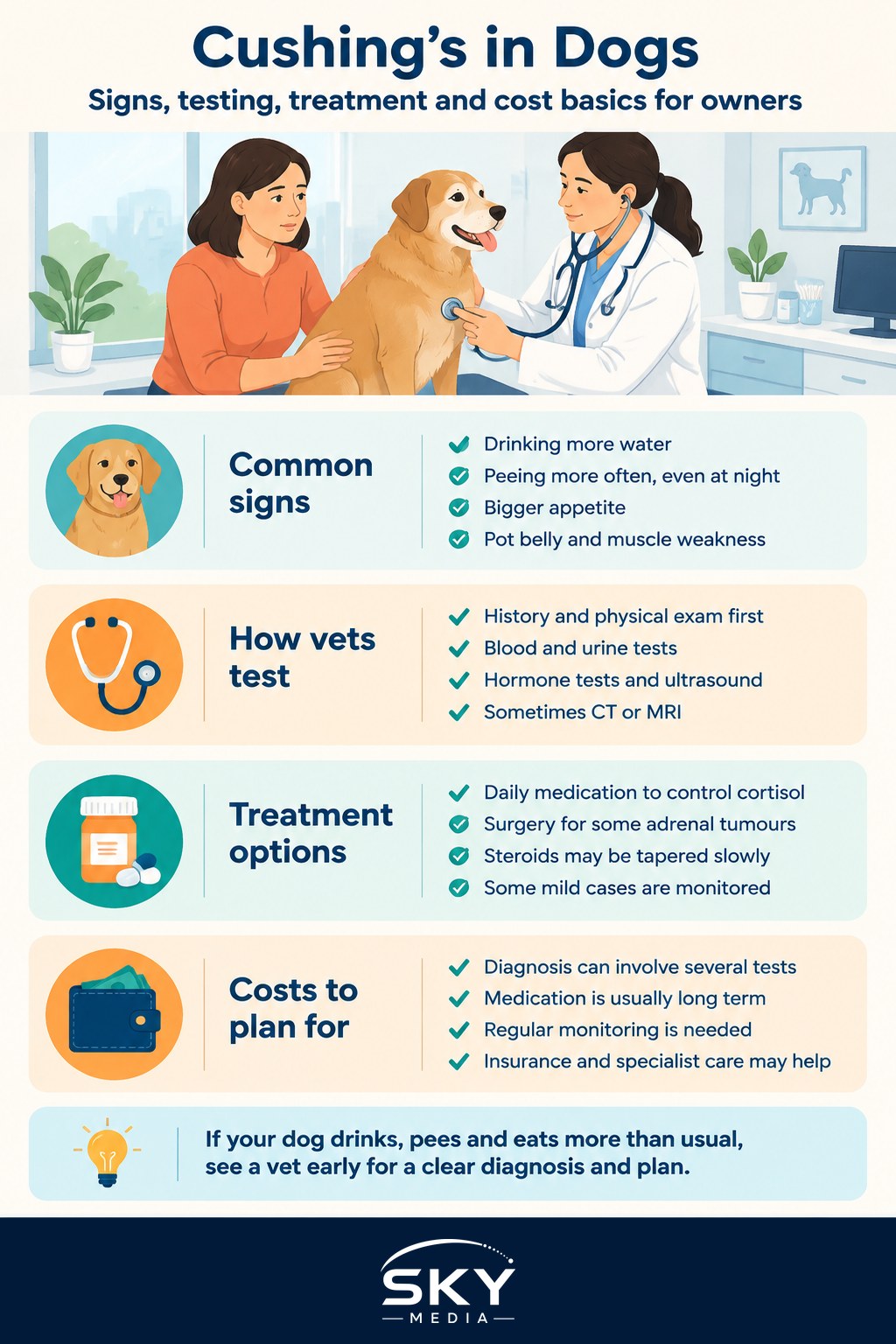
The signs tend to develop over months. Many owners only recognise them in hindsight. Common ones include:
- Drinking much more water and filling the bowl more often than before
- Peeing more, including accidents indoors or needing to go out at night
- A bigger appetite, sometimes with begging or scavenging that is new
- A pot-bellied look, as fat shifts to the abdomen and muscles weaken
- Thinning fur or hair loss, often on both sides of the body, with a slow regrowth after clipping
- Thin skin, visible blood vessels, bruising or skin infections that keep coming back
- Heavy panting, even when resting in an air-conditioned room
- Low energy and muscle weakness, such as reluctance to climb stairs or jump onto the sofa
In Singapore’s heat, panting and drinking more can easily be blamed on the weather, which is one reason the disease can be missed. If several of these signs appear together, or keep getting worse, book a vet visit. Weight changes are worth tracking too; our guide on managing your dog’s weight explains how to monitor body condition at home.
How Vets Test for Cushing’s
There is no single quick test that confirms Cushing’s, so diagnosis usually happens in stages. Your vet will start with a history and physical examination, then decide which tests make sense for your dog.
| Stage | What usually happens | Why it matters |
|---|---|---|
| Routine blood and urine tests | General blood panel and urinalysis | Shows patterns that raise suspicion and rules out other causes |
| Screening or confirmation tests | ACTH stimulation test or low-dose dexamethasone suppression test | Checks how the adrenal glands respond to hormone signals |
| Urine cortisol to creatinine ratio | A urine sample, often collected at home | A normal result makes Cushing’s less likely |
| Imaging | Abdominal ultrasound, sometimes CT or MRI | Helps tell pituitary and adrenal forms apart and spot tumours |
Some of these tests require your dog to stay at the clinic for several hours while timed blood samples are taken. Your vet may also ask you to collect a morning urine sample at home, since a car ride and clinic visit can raise stress hormones. Results are interpreted together, alongside the symptoms, because other illnesses can affect hormone levels.
Treatment Options
Treatment depends on the type of Cushing’s, your dog’s overall health and your family’s circumstances. Your vet will discuss which options suit your dog.
- Long-term oral medication. For pituitary-dependent Cushing’s, the usual approach is daily medication that reduces cortisol production. Trilostane is a commonly used drug. It does not cure the condition but controls it, and dosing is adjusted by the vet based on follow-up tests. Never change the dose yourself.
- Surgery. An adrenal tumour may be removed surgically if it is suitable for an operation. This is a major procedure, often done at a referral or specialist clinic, and carries risks your vet will explain.
- Other approaches. Radiation therapy for larger pituitary tumours and other medications exist but are less common and usually involve specialist referral.
- Tapering steroids. For iatrogenic Cushing’s, the vet may slowly reduce the steroid that caused it while managing the original condition.
Some dogs with very mild signs are monitored rather than treated straight away. That is a decision to make with your vet, not on your own.
Understanding the Costs of Care
Cushing’s is usually a lifelong condition, so it helps to think of costs in terms of an ongoing budget rather than a one-off bill. Clinic fees vary widely between general practices, 24-hour hospitals and specialist centres, and they change over time, so ask your vet for an itemised estimate at each stage.
The main cost drivers are:
- Diagnosis. The initial consultation, blood and urine panels, the hormone tests and ultrasound. Diagnostic workups can add up because several tests are often needed.
- Daily medication. The cost depends on your dog’s size and the dose required. Larger dogs generally need more medication.
- Regular monitoring. Follow-up blood tests are needed after starting treatment, after any dose change and periodically for life.
- Related problems. Skin and urinary infections, high blood pressure and other complications may need extra treatment.
- Surgery or specialist care, if your dog is a candidate.
A few ways to plan ahead:
- Ask whether your pet insurance covers chronic conditions and diagnostics. Many policies exclude conditions that existed before the policy started, so read the policy wording or check with the insurer.
- Ask the vet which tests are essential now and which can wait.
- Keep a simple folder or phone note of results, doses and dates to avoid repeat tests.
Living Well With a Dog With Cushing’s
Most dogs whose condition is well controlled can enjoy a good quality of life. At home you can help by:
- Giving medication at the same time each day, usually with food, exactly as prescribed
- Watching water intake and noting changes, since this is a useful sign of how well control is working
- Watching for signs that cortisol has dropped too low, such as vomiting, diarrhoea, weakness or loss of appetite, and calling your vet promptly if they appear
- Keeping walks gentle and in cooler parts of the day, as muscles may be weak
- Keeping up with grooming, nail and ear checks, because skin issues are common
- Attending every follow-up appointment, even when your dog seems fine
Cushing’s often occurs alongside other conditions of older age. It is worth reading about heart disease in pets and pet dental disease, as regular senior checks can catch several problems at once.
If you notice your dog drinking, peeing and eating more than usual, do not wait for the coat to thin. An early vet visit gives you the best chance of a clear diagnosis and a treatment plan that suits your dog and your budget.