
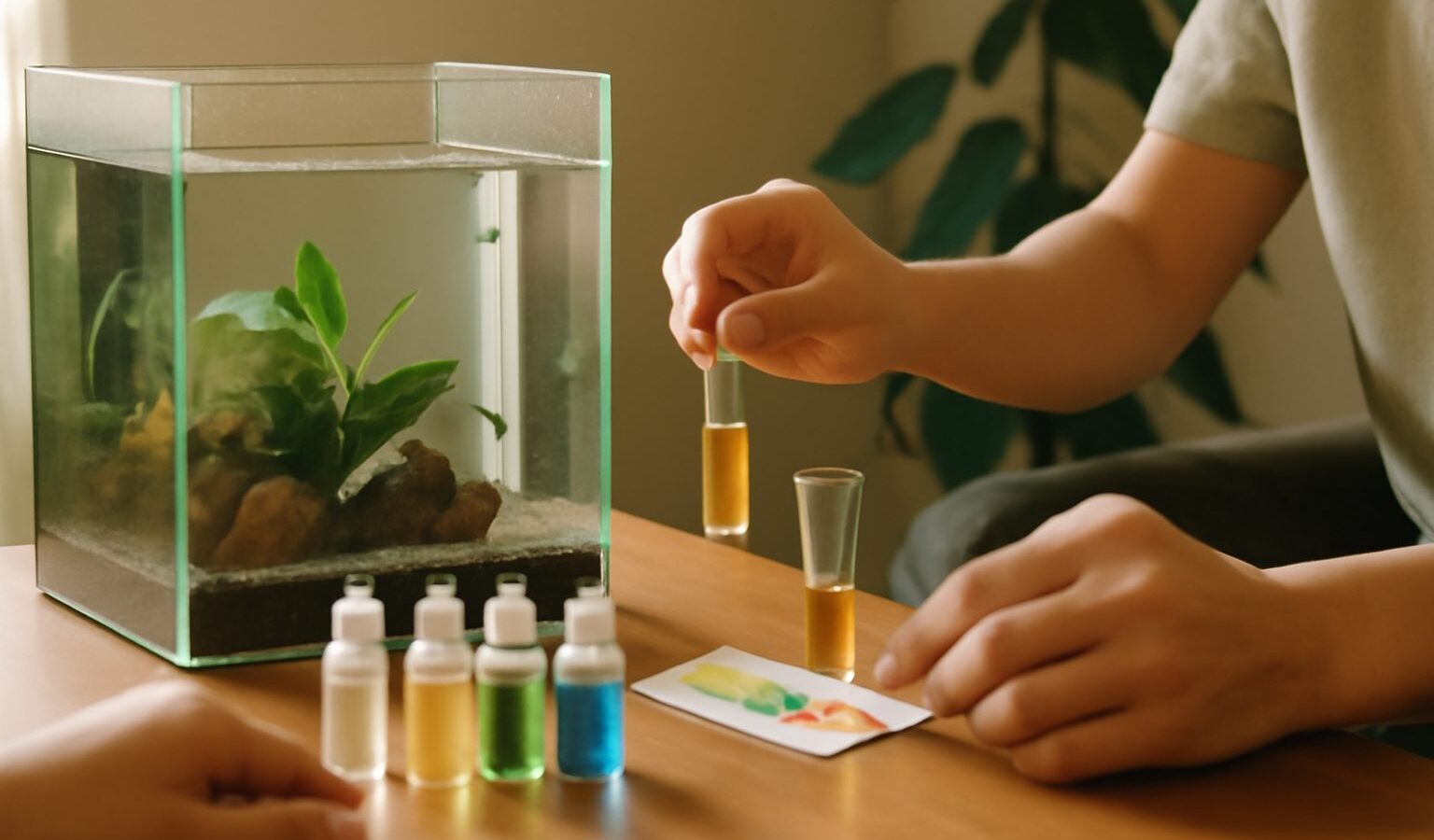
To your fish, the water is not just where they live, it is the air they breathe, the environment they never leave. That is why aquarium water testing in Singapore is one of the most valuable habits a fishkeeper can build. You cannot see ammonia or nitrite, and by the time water looks or smells wrong, your fish may already be suffering. A simple test kit turns the invisible into numbers you can read, letting you catch problems early and keep your tank stable and healthy.
This guide explains the key parameters in plain language so you can understand what you are measuring and why. It is general fishkeeping information, not a diagnosis. If your fish are visibly distressed or dying, act quickly and seek advice from an experienced aquatics specialist or an aquatic vet.
The Nitrogen Cycle: Why Testing Matters
Almost everything in water testing comes back to one process: the nitrogen cycle. Fish produce waste, and uneaten food and plant matter break down, releasing ammonia. Ammonia is highly toxic to fish. In a healthy, established tank, colonies of beneficial bacteria living in the filter convert that ammonia into nitrite, which is also toxic, and then into nitrate, which is far less harmful and removed by water changes.
This is why a brand-new tank is risky. Until those bacteria establish, ammonia and nitrite can spike and harm your fish, a problem often called “new tank syndrome”. Testing lets you watch this cycle happen and stock the tank only when it is safe. Our guide to setting up and cycling your first aquarium explains the maturing process in detail, and testing is the tool that tells you when it is complete.
The three nitrogen readings you care about most are:
- Ammonia: should read zero in an established tank. Any reading is a warning sign.
- Nitrite: should also read zero. A reading means the cycle is incomplete or has been disrupted.
- Nitrate: some is normal, but keep it low with regular water changes, as high levels stress fish and feed algae.
If ammonia or nitrite ever climbs, the immediate response is usually a partial water change with dechlorinated water to dilute the toxins, then finding the cause, whether overfeeding, overstocking, a filter problem or a tank that is not yet cycled.
The Key Parameters to Track
Beyond the nitrogen readings, a few other parameters shape whether your fish thrive.
pH measures how acidic or alkaline the water is. Different fish prefer different ranges, but for most community aquariums, stability matters more than hitting an exact number. Sudden swings in pH stress fish far more than a steady reading that sits slightly outside the ideal. Test your tap water too, so you know your starting point and can match top-up water.
Temperature is easy to overlook but important. Most tropical fish want warm, stable water, and in Singapore’s climate many tanks sit at a comfortable temperature without much heating. What harms fish is fluctuation, so avoid placing tanks in direct sun or under air-conditioning vents, and use a thermometer to keep an eye on it.
Water hardness, often described as GH and KH, reflects the minerals dissolved in your water. KH in particular helps keep pH stable, acting as a buffer. You do not need to obsess over hardness for a hardy community tank, but it helps to know your local water and choose fish that suit it.
When it comes to test kits, liquid reagent kits are generally more accurate and better value over time than paper strips, though strips are convenient for a quick check. Whichever you use, follow the instructions carefully and test at consistent times.
Building a Simple Testing Routine
Good testing is about consistency, not obsession. A sensible routine looks like this:
- New or recently disturbed tanks: test ammonia and nitrite frequently until both hold steady at zero.
- Established, stable tanks: test roughly once a week, or whenever something seems off, such as fish acting strangely, cloudy water, a sudden death or after adding new fish.
- Always test before and around water changes so you can see the effect of your maintenance.
Keep a small log of your readings. Patterns over time tell you far more than a single test, helping you spot a slow creep in nitrate or an early ammonia problem before it becomes a crisis. Pair testing with the fundamentals that keep water clean: feed modestly, avoid overstocking, do regular partial water changes and maintain your filter without scrubbing away all the beneficial bacteria. This same discipline underpins other tank care too, such as controlling algae in your aquarium, which is often driven by the very nutrients your tests reveal.
Remember that test numbers describe the water, but your fish tell the real story. Gasping at the surface, clamped fins, listlessness or loss of appetite are welfare signals to take seriously. If your readings look wrong or your fish are unwell despite good numbers, get advice from a trusted aquatics shop or an aquatic vet.
Small Habit, Big Payoff
Water testing is the quiet backbone of responsible fishkeeping. It takes only minutes, yet it lets you understand your tank, catch trouble early and give your fish the stable, clean environment they depend on completely. Build it into your weekly rhythm alongside the wider care covered in keeping fish and aquariums, and both you and your fish will be far better off for it.