

A condo listing that says “pet-friendly” sounds reassuring, but the phrase has no fixed meaning. One development may welcome dogs of most sizes and have a dedicated pet area. Another may tolerate pets on paper while restricting where they can walk, which lifts they can use and what happens after a single complaint. If you are searching for a pet friendly condo in Singapore, the details you verify before signing matter far more than the label.
This guide is about due diligence: what buyers and renters should check in the condo’s rules, facilities and day-to-day management before moving in with a pet. It is general information, not legal advice. For anything binding, rely on the actual by-laws, your tenancy or purchase documents and the relevant authorities.
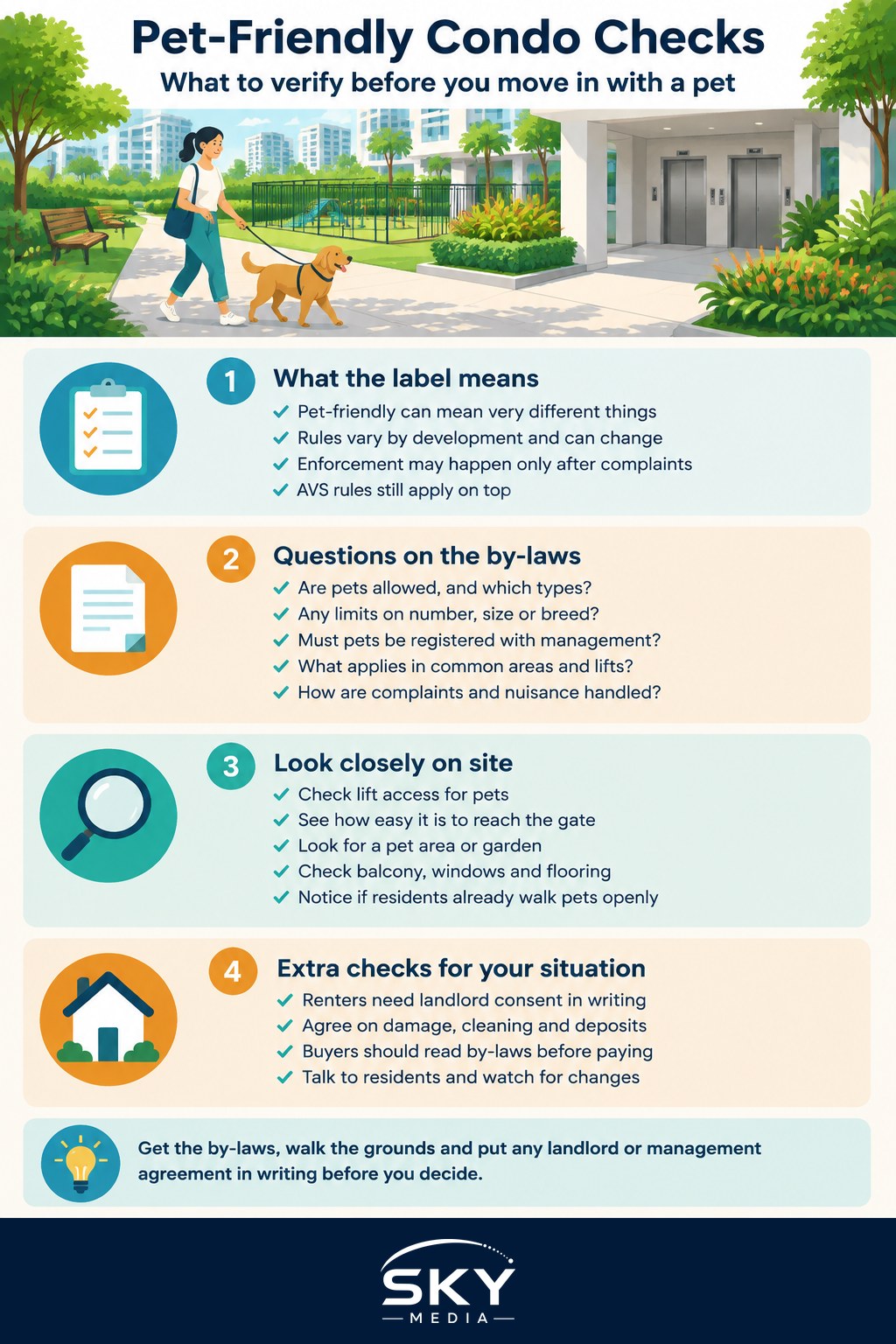
Why “Pet-Friendly” Means Different Things
In Singapore, a private condominium is run by its management corporation, usually called the MCST (Management Corporation Strata Title). The MCST is made up of the owners, governed under strata law, and typically run day to day by a council and a managing agent. It can make by-laws that cover the use of common property, including rules about animals.
That means two developments on the same street can have very different approaches. A few points to keep in mind:
- By-laws can be amended at a general meeting, so a development that is relaxed today may tighten its rules later.
- Enforcement varies. Some managements act mainly on complaints, others patrol actively.
- Licensing is separate. Dog licensing is handled by the AVS (Animal & Veterinary Service, part of NParks), and condo rules sit on top of national rules rather than replacing them. Check the AVS website for current requirements on licensing, microchipping and which animals may be kept.
Our explainer on understanding condo by-laws covers how by-laws work in general. Below, the focus is on the pet-specific parts.
The By-Law Questions to Ask Before You Commit
Ask the agent, the landlord or the management office for a copy of the current by-laws and any house rules, and look for answers to these:
- Are pets allowed at all, and which kinds? Some by-laws mention dogs and cats specifically. Others use broad wording about animals that cause a nuisance.
- Are there limits on number, size or breed? These can differ from HDB rules, so do not assume either way.
- Does the MCST require registration of pets? Some managements keep a pet register and ask for proof of AVS licensing.
- What are the rules in common areas? Leash requirements, carrying small pets, and areas where animals are not allowed at all, such as pools, gyms and function rooms.
- How are complaints handled? Understand whether there are warnings, fines or other steps, and what counts as a nuisance (barking, smells, waste).
- Is there a recent history of disputes? Minutes of past general meetings, if you can view them, sometimes reveal ongoing arguments about pets.
Facilities and Layout: What to Look At in Person
Rules tell you what is allowed. Walking the grounds tells you what living there will actually be like. The checks overlap with any condo viewing, and our guide on what to check when viewing a condo covers the general list. For pet owners, pay extra attention to the points in this table.
| What to check | Why it matters | Good sign | Warning sign |
|---|---|---|---|
| Lifts | Some developments require pets to use service lifts only | Clear signage and accessible service lift | Only one service lift, often locked or busy |
| Route to the gate | Daily walks start here | Short, shaded path to the street or a park | Long walk through no-pet zones |
| Pet area or garden | Somewhere for quick toilet breaks | Designated area with waste bins | No grass, or signs banning animals on lawns |
| Balcony and windows | Safety for cats and small dogs | Space to fit grilles or mesh if allowed | Rules limiting changes to the facade |
| Flooring and soundproofing | Paws and barking travel | Solid flooring, units not stacked over quiet areas | Thin walls, complaints mentioned by residents |
A few more things worth noting on the day:
- Do residents walk dogs openly? Seeing other pets is a decent indicator of real-world tolerance.
- Where does waste go? Look for bins near exits and pet areas.
- Is there a nearby park or park connector? A condo can be pet-friendly on paper but frustrating if the nearest green space is far away.
- How hot does the unit get? West-facing units with little shade can be hard on animals that are home alone in the afternoon.
Extra Checks for Renters
Renters have two layers of permission to satisfy: the MCST’s by-laws and the landlord’s consent. Both matter.
- Get the landlord’s agreement in writing, ideally as a clause in the tenancy agreement that names the pet.
- Clarify damage and cleaning terms. Agree how scratches, stains and end-of-tenancy cleaning will be handled, and whether any extra deposit applies.
- Take dated photos at move-in. This protects you if there is a dispute later about pre-existing damage.
- Confirm what happens if by-laws change. Ask how you would be expected to respond if the MCST tightens pet rules during your lease.
Our guide on finding a pet-friendly rental goes deeper into negotiating with landlords and agents.
Extra Checks for Buyers
If you are buying, you will live with the development’s culture for years, so dig a little further:
- Read the by-laws before you pay the option fee, not after. Ask your lawyer or agent to help you interpret anything unclear.
- Ask about upcoming general meetings. If a by-law change on pets is being proposed, you want to know.
- Talk to current residents if you get the chance, especially those with pets.
- Consider how the development is changing. A mostly owner-occupied condo may behave differently from one with many short-term tenants.
Being a Good Neighbour Once You Move In
Even in a welcoming development, pet rules often tighten after repeated complaints. Keeping on good terms protects you and every other pet owner in the estate:
- Keep your dog leashed or your small pet carried in common areas where required.
- Pick up waste every time and dispose of it properly.
- Work on barking and separation anxiety early, with a trainer or vet if needed.
- Register your pet with management if asked, and keep your AVS licence current.
- Wipe paws before entering lifts on rainy days.
Choosing a Condo That Truly Works for Your Pet
The best pet-friendly condo is not the one with the most generous wording in its listing. It is the one where the by-laws, the physical layout and the management’s attitude all line up with how you and your pet actually live. Get the documents, walk the grounds, ask direct questions and put agreements in writing. A little homework before moving in saves a lot of stress later.
Frequently Asked Questions
Do condo pet rules differ from HDB rules? They can, so do not assume either way. Limits on number, size or breed in a condo come from its by-laws, which can differ from HDB rules, and national requirements for dog licensing from the AVS still apply on top.
What should a tenant get in writing before moving in with a pet? Get the landlord’s agreement in writing, ideally as a tenancy clause naming the pet. Clarify damage, cleaning and any extra deposit, and take dated photos at move-in to protect yourself.
Can condo pet rules change after I move in? Yes. By-laws can be amended at a general meeting, and rules often tighten after repeated complaints. Ask how you would be expected to respond if the MCST tightens pet rules during your lease.
Do pets have to use the service lift in a condo? Some developments require it, so check by-laws and signage. Look at whether the service lift is accessible, or only one is available and often locked or busy.
Which unit features matter for a dog or cat at home alone? West-facing units with little shade can be hard on animals alone in the afternoon, and balconies should allow safety grilles or mesh where permitted. Solid flooring and good soundproofing also help avoid complaints about paws and barking.
Official sources: Animal & Veterinary Service