
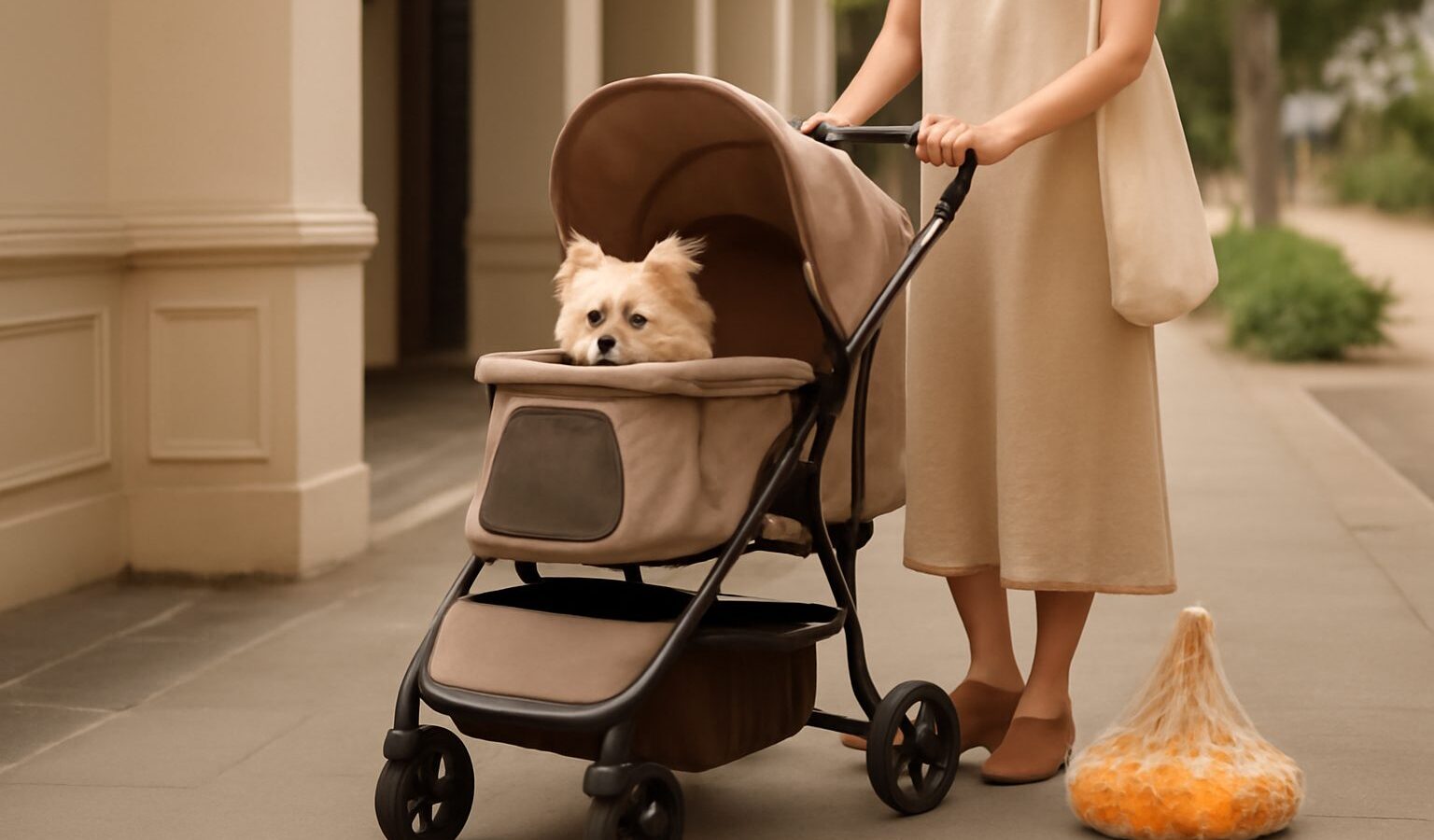
A pet stroller can look like a novelty until you need one. For an elderly dog with stiff joints, a pug that overheats after ten minutes, or an older owner who can no longer carry a pet comfortably, a good stroller makes the difference between staying home and getting out together. This guide to choosing a pet stroller Singapore owners can actually use day to day focuses on senior, small and flat-faced pets, the heat, and practical errands around the neighbourhood.
It is written with older owners in mind, but the same points apply to anyone caring for a pet that tires easily.

Who Benefits Most From a Pet Stroller
A stroller is not a replacement for walking, but it extends what your pet can manage. It is especially helpful for:
- Senior pets with arthritis, weak hind legs or reduced stamina, who can walk part of the way and ride the rest.
- Flat-faced (brachycephalic) breeds such as pugs, French bulldogs, shih tzus and Persian cats. Their shortened airways make it harder to cool down by panting, so heat is a real risk for them.
- Small or toy breeds whose short legs struggle with long distances or busy crowds.
- Pets recovering from surgery or injury, when your vet has advised limited walking.
- Older owners who find carrying a pet in a bag or carrier tiring on the arms, shoulders and back.
If your pet has a medical condition, ask your vet how much walking is right and whether a stroller fits their recovery plan.
Heat Safety Comes First
Singapore is hot and humid all year, and a stroller can trap heat just as easily as it shields from the sun. Keep these points in mind:
- Go out early morning or evening. Midday pavements can get hot enough to hurt paw pads, and the air is at its warmest.
- Choose good ventilation. Mesh panels on at least three sides let air flow. A fully enclosed fabric cabin can become stuffy very quickly.
- Use the canopy for shade, not as a seal. Keep mesh windows open whenever possible.
- Never leave a pet unattended in a stroller, even briefly outside a shop.
- Bring water and a collapsible bowl. A cooling mat sized for the stroller base can also help.
- Know the warning signs of overheating: heavy panting, drooling, bright red gums, weakness or stumbling. Move to shade and air-conditioning, offer water, and contact a vet promptly. Flat-faced breeds can deteriorate fast.
Stroller Types Compared
| Stroller type | Best for | Things to consider |
|---|---|---|
| Lightweight four-wheel stroller | Small pets, short walks and errands on smooth paths | Easy to lift and fold, but smaller wheels struggle on rough ground and kerbs |
| Three-wheel jogger style | Medium pets, park connectors and uneven surfaces | Stable and smooth to push, but bulkier and heavier to fold and store |
| Detachable carrier with stroller frame | Owners who switch between taxis, shops and walking | Carrier lifts off as a bag, but check the clips feel secure every time |
| Large or heavy-duty stroller | Bigger senior dogs with mobility issues | Needs space at home, may not fit in lifts or car boots easily |
Features That Matter for Older Owners
When you are the one pushing, folding and lifting, small design details matter a great deal. Before buying, try a stroller in person if you can, or check the specifications carefully.
- Handle height. An adjustable handle lets you stand upright instead of bending forward, which is kinder to your back.
- Weight and fold. A one-hand fold is helpful, but test it. Also check the folded weight if you need to lift it into a car or up a step.
- Brakes. Foot brakes that lock both rear wheels are safer than a single wheel brake, especially on HDB void deck ramps and slopes.
- Wheel size and suspension. Larger wheels roll over kerbs, drain covers and park connector joints more easily.
- Weight limit and size. Check the stroller’s pet weight limit and measure your pet lying down, not just standing.
- Interior safety tether. A short leash clip inside stops a pet jumping out if startled. Clip it to a harness, never a collar.
- Low entry or front-opening door. Makes it easier for a stiff older pet to step in, or for you to lift them in without strain.
- Storage basket. Useful for water, poo bags and small shopping.
- Washable liner. Heat and humidity mean fur, drool and accidents need easy cleaning.
Lifts, Kerbs and Getting Around the Neighbourhood
Singapore’s barrier-free routes help a lot. Most HDB blocks have lifts and ramps, and park connectors are generally wide and smooth. Many of the habits parents use with baby strollers carry over, and our guide to getting around with a baby and stroller has useful route-planning tips.
Some practical points:
- Measure your lift and front door before buying a large stroller, particularly in older blocks. If you live in a block without lifts to every floor, our explainer on walk-up apartments covers what that means day to day.
- Mind other residents. Keep to the side in corridors and lifts, and be patient with people who are nervous around animals.
- Shops and malls set their own rules. Some welcome pets in strollers, many do not allow animals inside at all. Check signs or ask before going in.
- Parks: NParks has rules for pets in parks and nature areas, including where dogs are allowed and leashing requirements. Check the NParks website for current rules before visiting a new park.
Public Transport and Taxis
Rules on bringing pets on buses and trains are set by the Land Transport Authority (LTA) and the transport operators, and they have been reviewed in recent years. Do not assume a stroller makes a pet allowed. Check the latest rules on LTA’s and the operators’ official websites before you travel, including any conditions on size, type of pet or how it must be contained.
For trips to the vet or groomer, many owners use taxis or private-hire rides. Some ride-hailing apps offer pet-friendly ride options, and individual drivers may also decide. Book ahead, mention the stroller size, and have a detachable carrier ready, since a folded stroller and loose pet are hard to manage in a car.
If your pet is licensed or registered with the Animal & Veterinary Service (AVS), keep the licence details handy when you are out, and follow AVS guidance for your type of pet.
Getting Your Pet Used to the Stroller
Most pets need a gentle introduction:
- Leave the stroller open at home with a familiar blanket inside, and let your pet sniff and explore.
- Reward calmly for stepping in. Short sessions are better than long ones.
- Push slowly indoors before trying the corridor or void deck.
- Start outdoors with a short loop in a quiet area, early or late in the day.
- Mix walking and riding, letting your pet stroll when they can and rest when they need to.
For a senior pet, the goal is gentle outings, fresh air and a change of scenery, not distance.
A Quick Buying Checklist
- Mesh ventilation on several sides and a shading canopy
- Handle at a comfortable height for you
- Reliable rear brakes and a secure fold you can manage
- Correct weight limit and enough room for your pet to lie down
- Internal tether and easy-entry door
- Fits your lift, front door and, if needed, car boot
With the right pet stroller, an older pet and an older owner can keep enjoying the neighbourhood together, one cool evening walk at a time.
Explore more: The Best Parks and Nature Walks in Singapore
Frequently Asked Questions
How do I know if my dog is too heavy for a stroller? Check the stroller’s stated pet weight limit and compare it with your pet’s current weight, then measure your pet lying down to be sure there is room. Heavier senior dogs may need a large or heavy-duty model, which takes more space at home and in lifts.
Is a pet stroller better than a carrier bag for a senior cat? It depends on your cat and your strength. A stroller spares your arms, shoulders and back and gives more room to rest, while a bag suits short trips. A detachable carrier on a stroller frame gives you both options, but check the clips are secure.
How do I teach a nervous pet to ride in a stroller? Go slowly. Leave the open stroller at home with a familiar blanket, reward calm steps inside, then push gently indoors before trying a short, quiet outdoor loop. Keep sessions short and let your pet walk when they want to.
Can I bring my pet in a stroller into shopping malls? Not always. Malls and shops set their own pet rules, and many do not allow animals inside at all, even in a stroller. Look for signs at the entrance or ask staff before heading in, and never leave your pet unattended outside.
What kind of harness should I clip to the stroller tether? Use a well-fitted harness, never a collar. A collar clipped to the tether could put pressure on the neck if your pet jumps or lunges. Keep the tether short enough to stop them leaping out but long enough for them to sit or lie comfortably.