
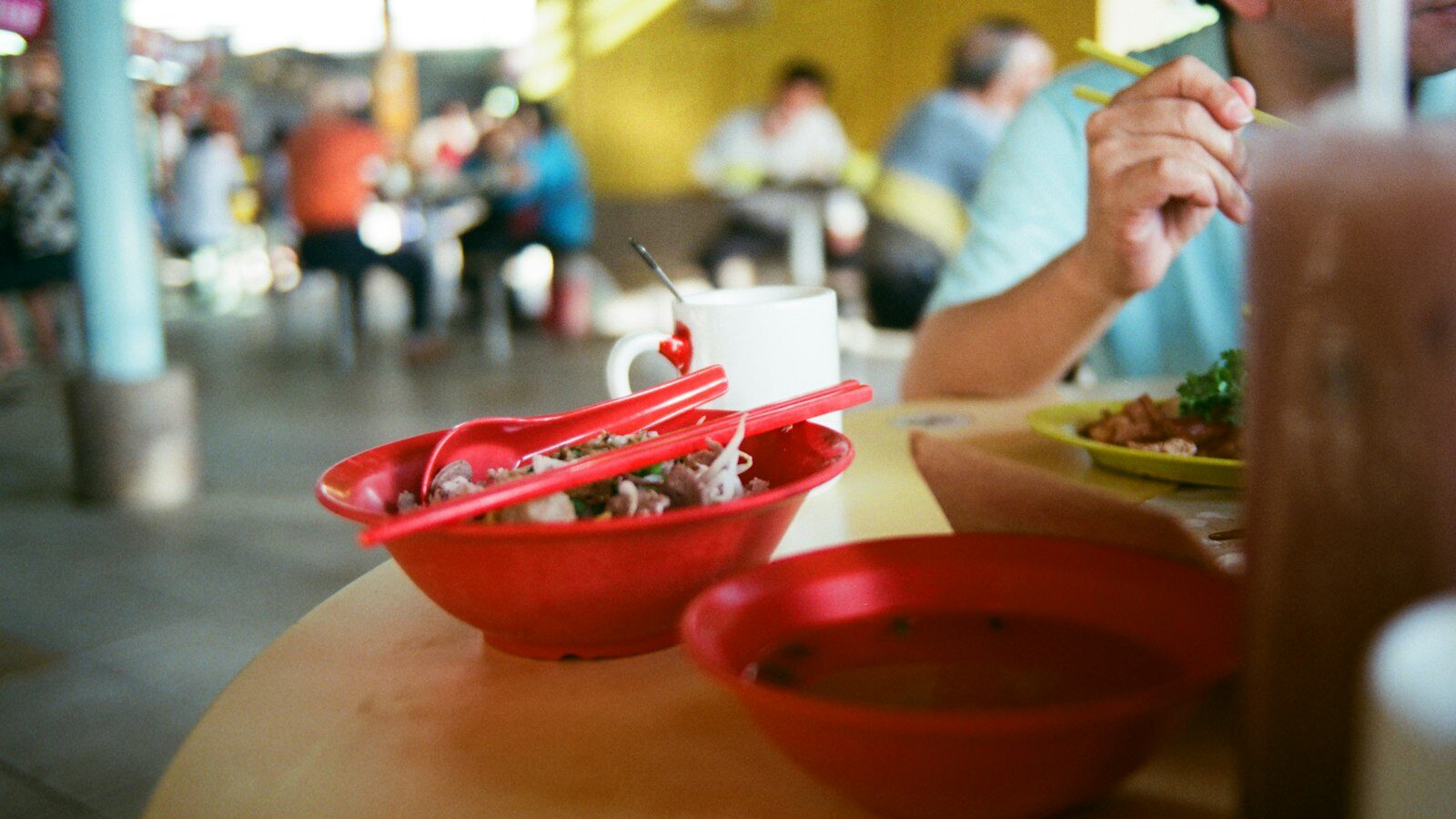
Sup kambing is a fragrant, peppery mutton soup that has been a hawker staple in Singapore for generations. It is warming, rich and deeply spiced, and it is usually eaten with slices of soft bread for dipping. If you have walked past a Malay or Indian Muslim stall and wondered what the steaming brown bowls were, this guide explains what sup kambing is, what goes into it, how to order it and how it differs from its better-known cousin, sup tulang.
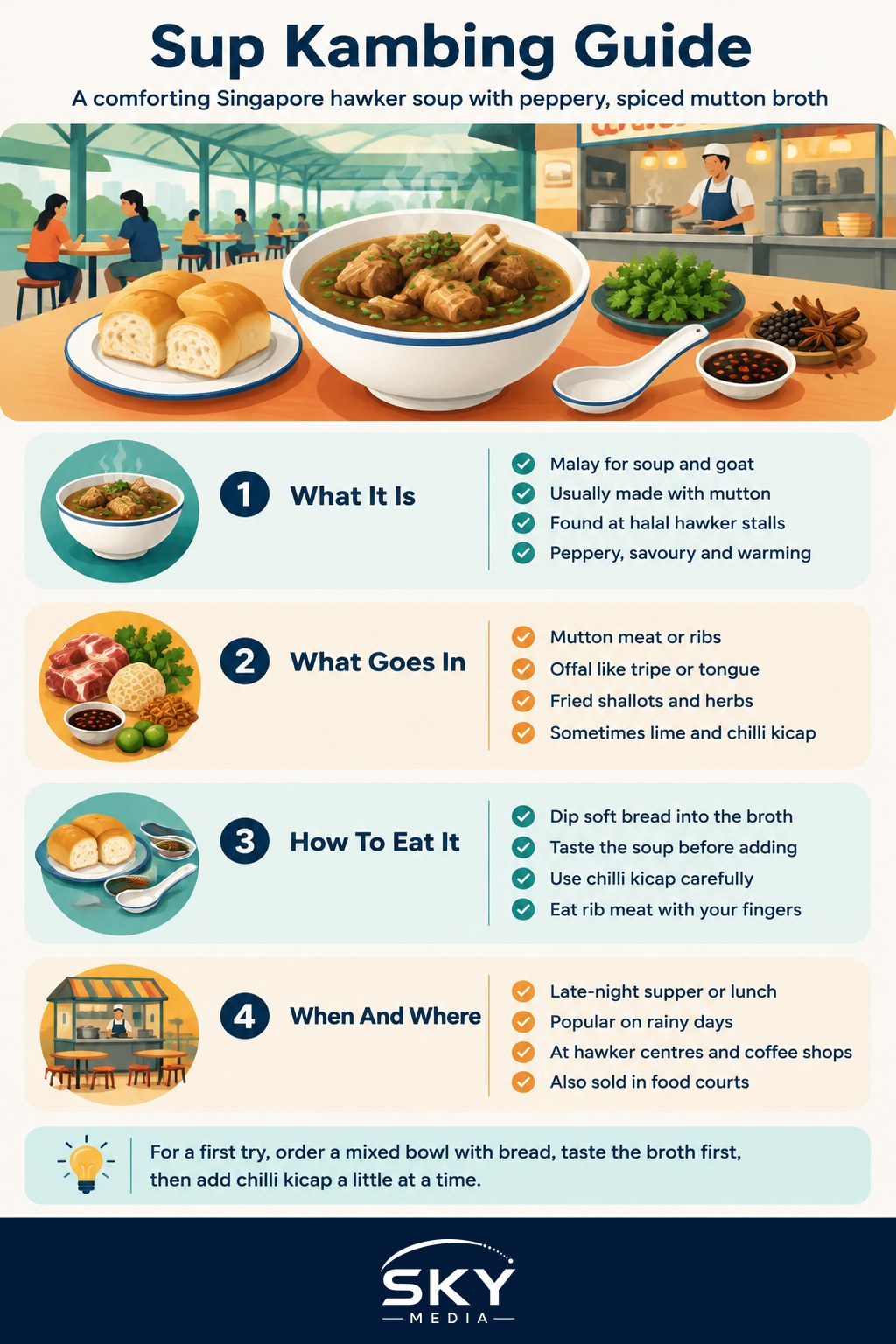
What Sup Kambing Is
“Sup” means soup and “kambing” means goat in Malay. In Singapore the dish is normally made with mutton, and stalls use the word kambing loosely for both. It is closely associated with Malay and Indian Muslim cooking, and you will usually find it at halal stalls in hawker centres, coffee shops and food courts.
The heart of the dish is a long-simmered broth made from mutton bones and meat, built up with a spice blend that typically includes:
- Whole and ground spices such as coriander seed, cumin, fennel, black pepper, cinnamon, star anise, cloves and cardamom.
- Aromatics like shallots, garlic and ginger, often pounded or blended into a paste.
- Body and colour from the slow-cooked meat itself, and sometimes a little thickener so the soup coats a spoon.
The result is usually a cloudy, light to medium brown broth. It tastes savoury, peppery and gently warming rather than fiery. Each stall has its own balance, so some lean towards black pepper, others towards fennel or cinnamon.
What Is in the Bowl
Sup kambing is not just broth. Most stalls let you choose what goes in, and the options can include:
- Mutton meat, often tender chunks of stewed meat.
- Mutton ribs, with meat that falls off the bone after long simmering.
- Offal and other parts, such as tripe, tongue or tendon, at stalls that offer them.
- Mixed, a bit of everything, which is a common order for first-timers who want to try a range.
The bowl is finished with fried shallots, chopped coriander leaves or Chinese celery, and sometimes a squeeze of lime. A small dish of sweet dark soy sauce mixed with fresh chilli, often called kicap and chilli, is usually served on the side.
How to Eat Sup Kambing
There is no strict rule, but this is how many regulars approach it:
- Order bread. Sup kambing is usually eaten with slices of soft white bread or a French loaf. Tear it and dip it into the broth.
- Taste the soup first. Try the broth on its own before adding anything, so you know how the stall seasons it.
- Use the chilli kicap carefully. Dip pieces of meat into the sauce, or add a little to your spoon, rather than tipping it all into the soup.
- Eat the bone meat by hand if needed. Ribs are easier with fingers. Most stalls have tissue or a wash area nearby.
- Pair it. Some diners order sup kambing alongside rice, roti or another dish to make a fuller meal.
Prices, portion sizes and choices vary by stall, so check the menu board when ordering.
Sup Kambing vs Sup Tulang and Other Mutton Dishes
Sup kambing is often confused with other Malay and Indian Muslim mutton dishes. Here is how they compare.
| Dish | What it is | Sauce or broth | How it is eaten |
|---|---|---|---|
| Sup kambing | Mutton meat, ribs or offal in spiced soup | Brown, peppery, spiced broth | With a spoon and dipped bread |
| Sup tulang | Mutton or beef bones with marrow | Thick, bright red, sweet and spicy sauce | With hands, sucking out marrow with a straw |
| Mutton curry | Mutton cooked in a thick gravy | Rich curry with coconut or tomato base | With rice, roti or bread |
| Sup ekor | Oxtail, usually beef, in spiced soup | Clear to light brown spiced broth | With bread or rice |
Sup tulang is the messier, more theatrical dish, with large bones in a bright red sauce. For a full explanation of it, read our sup tulang guide. Sup kambing is the gentler, soupier option, closer in spirit to other comforting soups like bak kut teh, though the spices and meat are very different.
When and Where People Eat It
Sup kambing is popular as a late-night supper, a rainy-day meal or a hearty lunch. Many regulars like it when feeling run-down because it is warm and filling, though it is a rich dish rather than a light one.
Look for it at:
- Hawker centres and coffee shops with Malay or Indian Muslim stalls, especially in neighbourhoods with long-standing Malay communities.
- Stalls that specialise in sup kambing and sup tulang, which often sell both.
- Food courts, where some Muslim stalls include it on their menus.
During festive periods such as Hari Raya Haji, when mutton is especially associated with the season, home cooks also make it. If you want to cook mutton at home, our mutton dishes for Hari Raya Haji guide covers other recipes worth trying.
Tips for First-Timers and Newcomers
- It is halal. Most stalls selling sup kambing are halal-certified or Muslim-owned, which makes it a good option for mixed groups. Check for certification if it matters to you.
- Expect mutton flavour. Mutton has a stronger taste than chicken or pork. If you are unsure, start with ribs or meat rather than offal.
- Ask for less spice if needed. The soup itself is not usually very hot, but the chilli on the side can be.
- Go early for full choice. Popular parts can sell out by the end of the day.
- Health considerations. The broth can be rich in fat and salt. If you are watching your diet, skim the oil, choose leaner meat and drink less of the broth.
Why Sup Kambing Is Worth Trying
Sup kambing is one of the most comforting dishes in Singapore’s hawker scene, a simple bowl that reflects the long influence of Malay and Indian Muslim cooking on local food. Order a mixed bowl with bread, taste the broth before adding chilli, and you will quickly see why many Singaporeans have a favourite stall they return to for years.
Frequently Asked Questions
Is sup kambing very spicy for people who avoid chilli? Not usually. The soup tastes savoury, peppery and gently warming rather than fiery, and the heat mostly comes from the chilli kicap served on the side. You can leave that out or add only a little, and ask the stall about spice level if unsure.
Can non-Muslims order sup kambing at halal stalls? Yes, anyone can order it. Most stalls selling it are halal-certified or Muslim-owned, which makes it a good choice for mixed groups. Look for certification at the stall if it matters to you.
What should a first-timer order if mutton tastes too strong? Start with ribs or meat rather than offal, since mutton has a stronger flavour than chicken or pork. A mixed bowl lets you try a range, and tasting the broth on its own first shows how the stall seasons it.
Is sup kambing a healthy meal? It is warming and filling but rich, and the broth can be high in fat and salt. If you are watching your diet, skim the oil, choose leaner meat and drink less of the broth. Anyone with a medical condition should follow their doctor’s dietary advice.
Why do some stalls run out of sup kambing by evening? Popular parts can sell out by the end of the day, so go early if you want a full choice. The dish is also popular as a late-night supper, so timing varies by stall. Check the stall’s own hours and menu board.
Further reading: Pig Organ Soup: A Guide