

Across Singapore, moments of shared devotion spill out of quiet prayer halls and into the streets, shorelines and open grounds. Pilgrimages draw the faithful to sacred sites, while temple fairs turn ordinary days into occasions of colour, music and community. Together these traditions form a vital part of the island’s living heritage. Understanding temple fairs singapore customs, and the pilgrimages that often accompany them, offers a window into how faith, family and festivity have long been woven together here.
Pilgrimage in the Singapore Setting
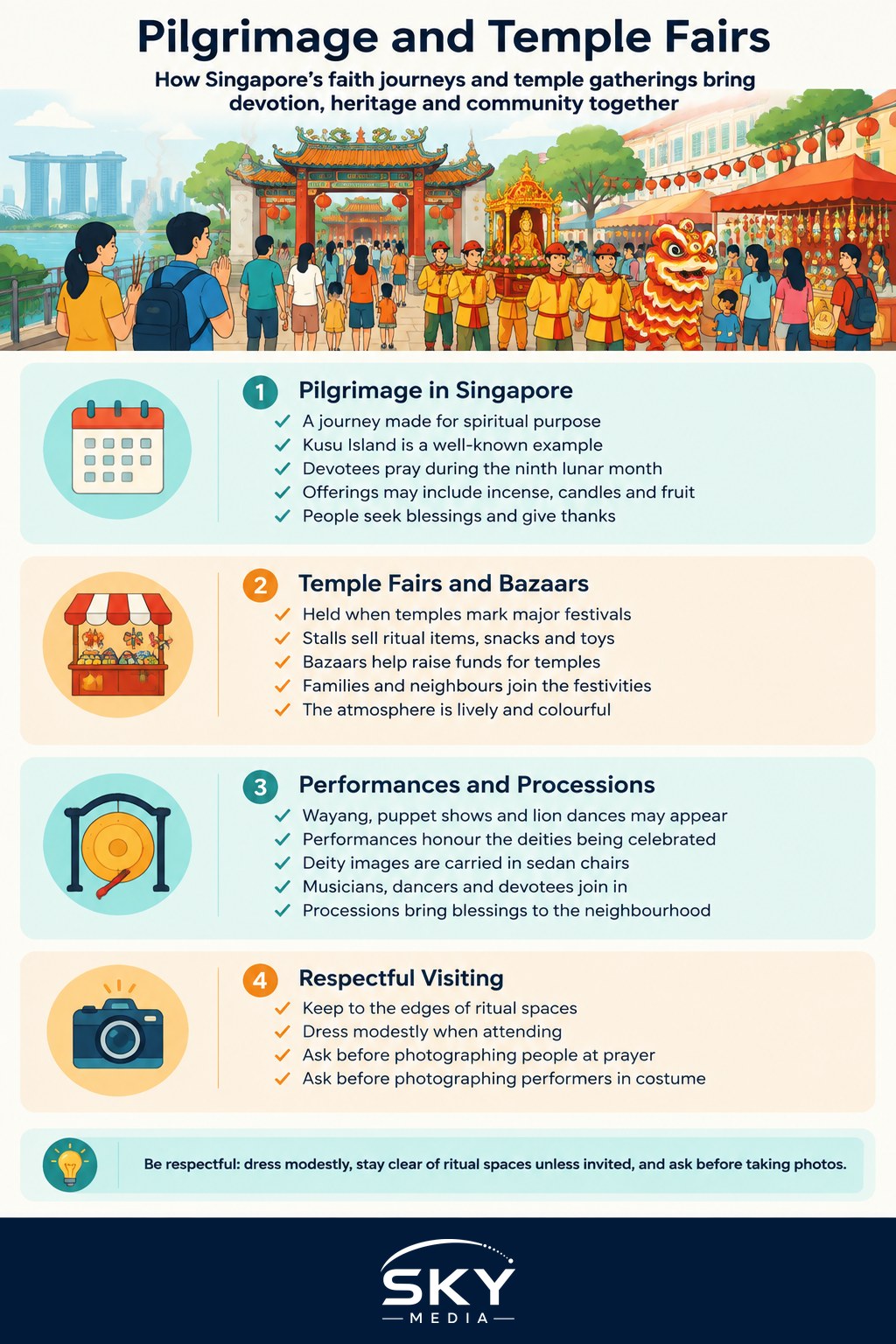
A pilgrimage is a journey undertaken for spiritual purpose, whether to give thanks, to seek blessings or to fulfil a vow. In Singapore, one of the best known examples is the annual pilgrimage to Kusu Island, a small island off the southern coast. During the ninth lunar month, devotees make their way across the water to pray at the island’s temple and shrines, seeking blessings for health, prosperity, peace and family harmony.
The Kusu Island pilgrimage is rich with legend, including tales of a magical tortoise that saved shipwrecked sailors, and it draws worshippers of different backgrounds who share a common wish for good fortune. The rituals are simple yet meaningful, involving offerings of incense, candles, fruit and prayers of gratitude. Because the exact timing follows the lunar calendar and arrangements can change from year to year, those wishing to take part should look for current details from the relevant temples or heritage bodies. Readers can learn more about this tradition in our dedicated guide to the Kusu Island pilgrimage in Singapore.
Pilgrimage need not always involve a long journey. Devotees may also make regular visits to temples associated with particular deities, timing their trips to coincide with auspicious dates. What unites all such journeys is intention. The act of travelling, however short, becomes part of the devotion itself, a way of setting aside ordinary time to focus on the sacred.
Temple Fairs and Bazaars
If pilgrimage is about the journey, the temple fair is about the gathering. When a temple celebrates a major festival or a deity’s birthday, the surrounding area often transforms into a lively fair. Stalls appear selling ritual items, snacks, toys and household goods. The scent of incense mingles with that of street food, and the sounds of bargaining, music and prayer fill the air.
These bazaars serve several purposes at once. They provide devotees with the offerings and ritual goods they need, they raise funds that support the temple and its charitable work, and they create a festive atmosphere that draws families and neighbours together. For many, attending a temple fair is a cherished childhood memory, a time of treats, crowds and the shared excitement of a special occasion. In this way the fair strengthens the bonds of community as much as it serves the needs of worship.
Traditional performances often accompany these fairs. Street opera, known in Hokkien as wayang, may be staged on temporary platforms, its brightly costumed performers enacting stories drawn from legend and history. Puppet shows, lion dances and musical troupes add to the spectacle. These performances are offered both to entertain the community and to honour the deities being celebrated, and they preserve art forms that have been passed down through generations.
Deity Processions and Shared Devotion
At the heart of many temple celebrations is the procession. The image of a deity is placed in an ornate sedan chair or palanquin and carried through the streets, accompanied by musicians, banner bearers, dancers and crowds of devotees. The procession is believed to bring the deity’s blessing to the wider neighbourhood, and it marks the temple’s presence at the centre of community life.
Processions are among the most visible expressions of folk religion in Singapore, and they connect closely to the cycle of deity birthdays observed throughout the year. Those interested in this custom can explore our overview of deity birthdays and temple processions in Singapore, which describes how these events unfold and what they mean to participants. Many of these observances honour figures from the wider Taoist tradition, and readers may also enjoy learning about Taoist deities and their festivals in Singapore.
For visitors wishing to experience a temple fair or procession, courtesy and respect are essential. Dress modestly, keep to the edges of ritual spaces unless invited, and always ask before photographing people at prayer or performers in costume. Many temples welcome respectful observers and are glad to explain the meaning behind the customs on display.
Pilgrimages and temple fairs remind us that heritage in Singapore is not a matter of the past alone. Year after year, devotees make their journeys, stalls are set up, opera is staged and deities are carried through the streets. In these gatherings the sacred and the social meet, and a tradition that stretches back generations continues to renew itself in the present day.