

A long layover used to feel like dead time. Plan it well, though, and a planned long layover trip Singapore travellers can enjoy turns one journey into two destinations for the price of a single ticket. Whether you have six hours or three days between flights, a little forethought lets you rest, sightsee, or simply avoid a miserable overnight slumped across airport seats.
This guide walks through how to think about layovers and stopovers from Changi, what to check before you commit, and how to make the most of the time on the ground.
Layover Versus Stopover, and How Long Is Long
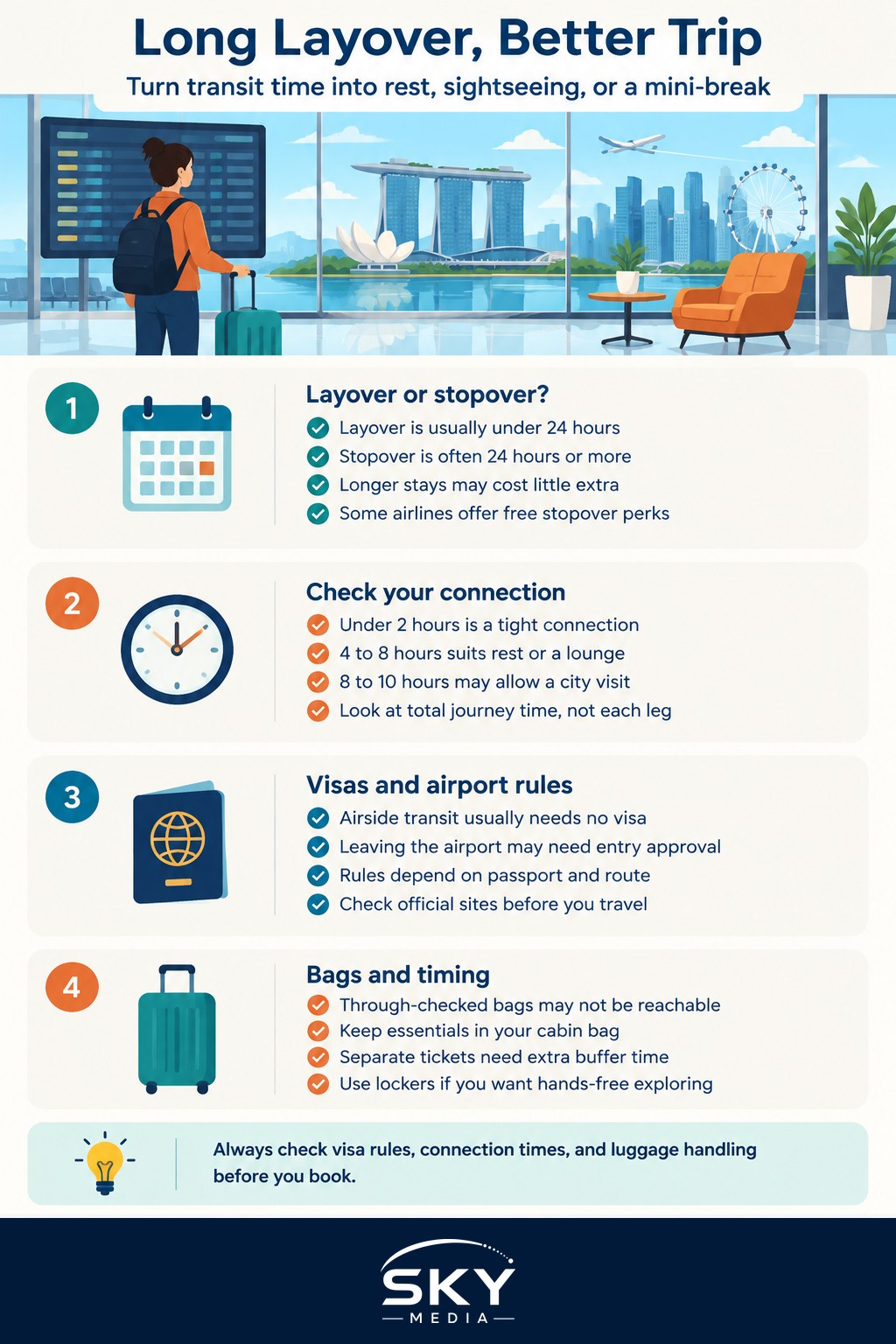
The two words get used loosely, so it helps to be clear. A layover is a connection on the way to your final destination, usually under 24 hours. A stopover is a longer, deliberate stay, often 24 hours or more, that many airlines allow you to build into one itinerary at little or no extra fare cost. Some carriers even run free stopover programmes at their home hub, with hotel or tour perks, so it is worth asking or checking the airline site when you book.
As a rough guide, anything under a couple of hours is a pure connection where you should stay airside and move quickly. Four to eight hours gives you room to rest properly, use a lounge, or explore inside a large airport. More than eight to ten hours, especially in daylight, is usually enough to leave the airport and see something, provided the entry rules allow it. A full stopover of a night or more lets you treat the transit city as a proper mini-break.
When you book, look at the total elapsed journey time, not just the individual flight legs. A cheaper fare with a long, awkward layover in the small hours may cost you a hotel or a wasted day, while a slightly pricier one could land you a useful daytime break.
Minimum Connection Times and Making the Change
Every airport publishes a minimum connection time, the shortest gap the airport considers safe for changing flights. Booking engines usually respect it, but self-built itineraries on separate tickets do not. If your two flights are on one ticket, the airline is responsible for rebooking you if a delay makes you miss the connection. On separate tickets you carry that risk yourself, so give yourself a generous buffer.
Factor in whether you must change terminals, clear immigration, or move between a low-cost and a full-service terminal, as these all eat time. For deeper tactics on tight windows, see our guide to making tight flight connections. When the gap is comfortable rather than tight, the lounge becomes your friend, and our airport lounges and layovers guide covers access options and what to expect.
Transit Visas, Airside Versus Leaving
This is the part people most often get wrong. Staying airside, meaning you never pass through immigration, usually needs no visa, but not always, and some countries require a transit visa even for airside connections depending on your route and nationality. If you want to leave the airport, you may need a proper entry visa or a special transit permit.
Rules change and depend on your passport, so always check the official airport or country immigration site close to your travel date rather than relying on old forum posts. Singapore passport holders enjoy wide visa-free access, which makes stopovers easier, but confirm each time. Some hubs actively encourage transit tourism with free or cheap short-transit visas and even complimentary city tours, so a quick search on the airport name plus transit tour can reveal a nice option.
Luggage, Timing and What to Pack
Sort out your bags before you fly. On a single through-ticket, checked luggage is usually tagged to your final destination, so you cannot access it during the layover. If you plan to leave the airport, keep everything you need, a change of clothes, medication, chargers, in your cabin bag. Travelling carry-on only removes the whole question and makes a leave-the-airport stopover far simpler.
If your bags are not checked through, on separate tickets for example, you must collect them, clear customs, and check in again for the next leg, so add plenty of time. Left-luggage counters or lockers at big airports let you dump bags for a few hours if you want to explore hands-free.
Think about timing and energy too. A long-haul flight either side of a layover is tiring, so do not over-schedule. Our long-haul flight comfort tips help you arrive in better shape, and if the stopover crosses several time zones, plan around dealing with jet lag rather than fighting it.
Popular Stopover Hubs in General Terms
From Changi, several natural stopover points sit along common long-haul routes. Major Middle Eastern hubs break up the run to Europe or Africa and often pair with transit tour programmes. Large East Asian and Northeast Asian airports work well westbound or on trans-Pacific routings and tend to have fast, clean transit setups. European mega-hubs suit onward travel within the continent. Within the region, a night in a nearby Southeast Asian capital can add a second destination cheaply.
Choose a hub with good, quick airport-to-city transport, ideally a direct train, so a half-day is genuinely usable. Check opening hours of anything you want to see, allow for immigration queues both ways, and set an alarm well before you need to head back. Aim to be back through security with time to spare, because a missed onward flight erases every saving the stopover gave you.
Plan it once, and a long layover stops being something to endure and becomes a bonus leg of the trip.
Frequently Asked Questions
Is it worth booking a free stopover programme with an airline? It can be, since some carriers run free stopover programmes at their home hub with hotel or tour perks. Ask or check the airline site when you book. Read the terms, as eligibility and conditions vary, and compare the total journey time.
What happens if I miss my connection on separate tickets? On separate tickets you carry the risk yourself, because the airline is only responsible for rebooking on a single ticket. Give yourself a generous buffer, and remember you must collect bags, clear customs and check in again for the next leg.
Can I leave the airport on a six-hour layover? Usually not worth it at six hours. The article suggests more than eight to ten hours, especially in daylight, is usually enough to leave and see something, if entry rules allow. Allow for immigration queues both ways and getting back through security.
Do I need a transit visa if I stay airside? Usually not, but not always. Some countries require a transit visa even for airside connections depending on your route and nationality. Check the official airport or country immigration site close to your travel date, rather than relying on old forum posts.
What should I keep in my cabin bag on a layover trip? Keep a change of clothes, medication and chargers, since checked luggage is usually tagged to your final destination and cannot be accessed. Carry-on only makes a leave-the-airport stopover far simpler. Left-luggage counters can hold bags for a few hours.
Further reading: How to Plan a Stopover Trip From Singapore Flights