
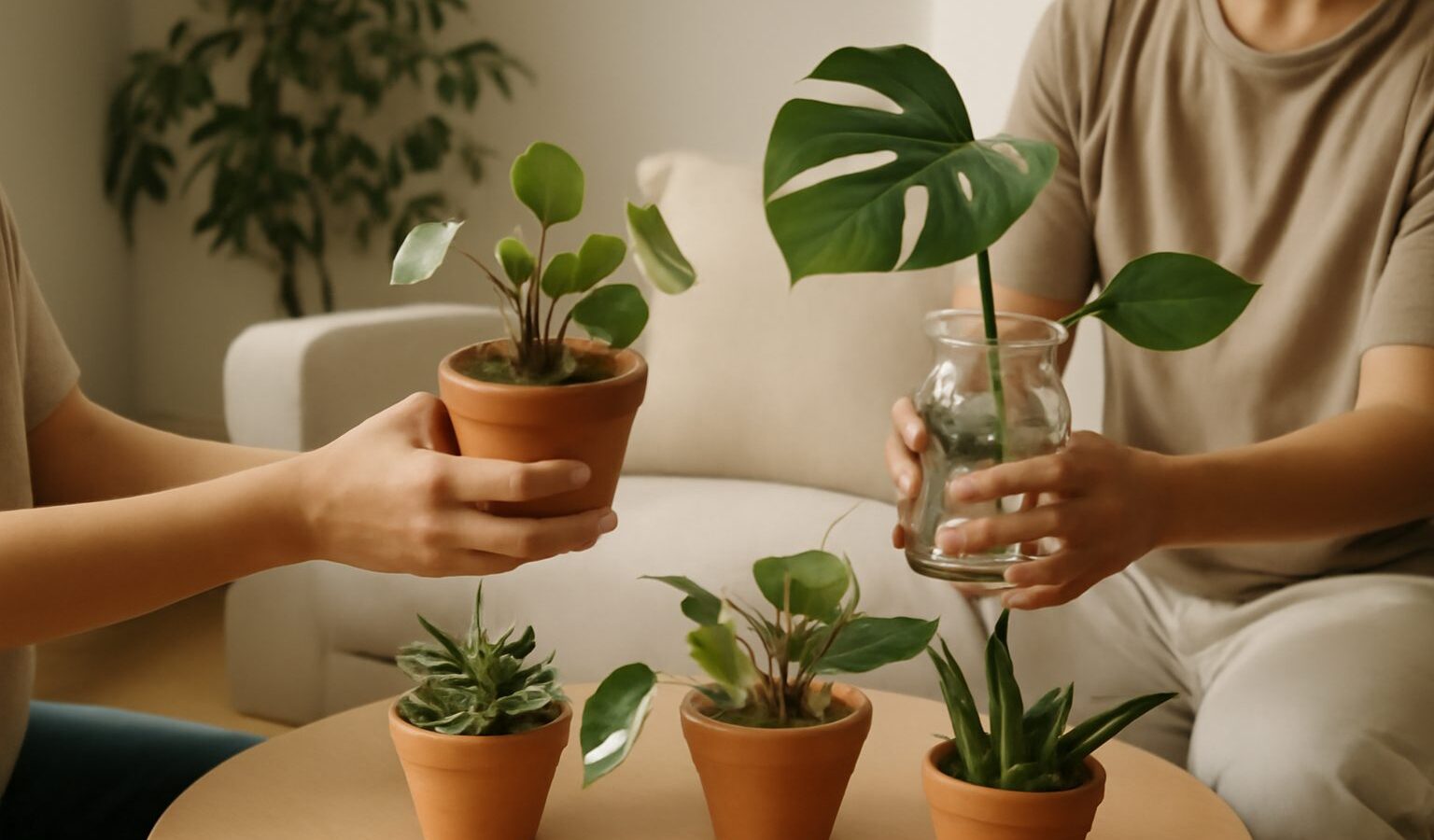
One of the loveliest things about gardening is how generous it makes people. Nearly every plant lover has a windowsill crowded with cuttings they cannot bear to throw away, and that surplus is exactly what makes plant swaps in Singapore so much fun. Instead of buying every new plant, you trade a cutting of something you have plenty of for something you have always wanted. It costs nothing, it grows your collection, and it connects you with fellow gardeners across HDB estates, condos and community gardens.
This guide covers how swaps work, how to prepare cuttings so they actually survive the handover, and a few simple habits that keep pests and diseases from hitching a ride.
Why Plant Swaps Are Worth It
The obvious appeal is that swapping is free. Houseplants and cuttings can add up quickly, so trading with others is a gentle way to garden on a budget. If saving money is your main goal, you might also enjoy our wider guide to gardening on a budget.
Beyond the cost, swaps spread plants that are proven to thrive here. When a neighbour offers you a cutting of a pothos or a snake plant, you know it has already survived our heat, humidity and typical flat conditions, which is a better bet than a delicate import. You also get to ask the person how they grow it, which is worth more than any label.
Then there is the community side. Plant swaps happen informally between friends, in group chats, at community garden gatherings, and sometimes at organised meet-ups. They are a friendly, low-pressure way to meet people who share the hobby. If you would like to find your people, our guide on how to join a gardening community points you towards local groups and gardens.
Preparing Cuttings to Share
A good swap starts with a healthy cutting. Choose a strong parent plant that is free of pests and disease, and take your cutting with clean, sharp scissors or secateurs. Cut just below a node, the little bump where leaves and roots emerge, because that is where new roots will form. Our guide to propagating plants from cuttings explains the technique in full for different plant types.
You can hand over cuttings in two states. A fresh cutting is one you have just snipped, wrapped in a damp paper towel and popped into a small bag or tub so it does not dry out on the journey. This is quick and light, though the receiver will need to root it themselves. Alternatively, root the cutting in water or a small pot first, then give away a plant that already has roots. Rooted cuttings settle in faster and are more forgiving for beginners, which makes them a kind gift for someone new to the hobby.
Whichever you choose, keep cuttings cool and out of direct sun until they reach their new home, and try to hand them over the same day. In our climate a cutting left baking on a corridor ledge will wilt within hours. Label each one with its name so nobody ends up with a mystery plant, and keep a simple record if you tend to forget which is which.
Keeping Pests and Diseases Out
The one real risk of swapping is that pests and diseases travel with plants. Mealybugs, spider mites, scale and fungal spores can all lurk on a healthy-looking cutting, and one infested plant can quietly spread trouble through your whole collection.
Protect yourself by inspecting anything you receive before it joins your other plants. Check the undersides of leaves, the leaf joints and the stem for tiny insects, webbing or white cottony patches. Rinse the cutting, and where possible, keep it separate from your existing plants for a couple of weeks so any hidden problem shows itself before it can spread. This simple step is covered in our guide to quarantining new plants to stop pests, and it applies just as much to a swapped cutting as to a nursery purchase.
Be a considerate swapper too. Only give away cuttings from plants you know are healthy, and never pass on something you suspect has pests, hoping the other person will not notice. The whole system runs on trust. If you spot a problem on your own plants, deal with it first, and hold off swapping until they are clean.
One more kindness worth mentioning is toxicity. Some popular plants that get swapped often, such as pothos and dieffenbachia, are toxic to pets and children if chewed, and their sap can irritate skin. When you hand over a cutting, it is thoughtful to mention this so the receiver can keep it out of reach in a home with curious little ones or animals.
Grow Your Collection the Friendly Way
Plant swaps in Singapore turn a solitary hobby into a shared one. Every cutting you give away is a small act of generosity, and every one you receive is a story and a new plant in your home. Start by rooting a few cuttings from a plant you already love, take them clean and labelled to your next gathering, and offer them freely. You will come home with new greenery, new knowledge and, very often, new friends.