
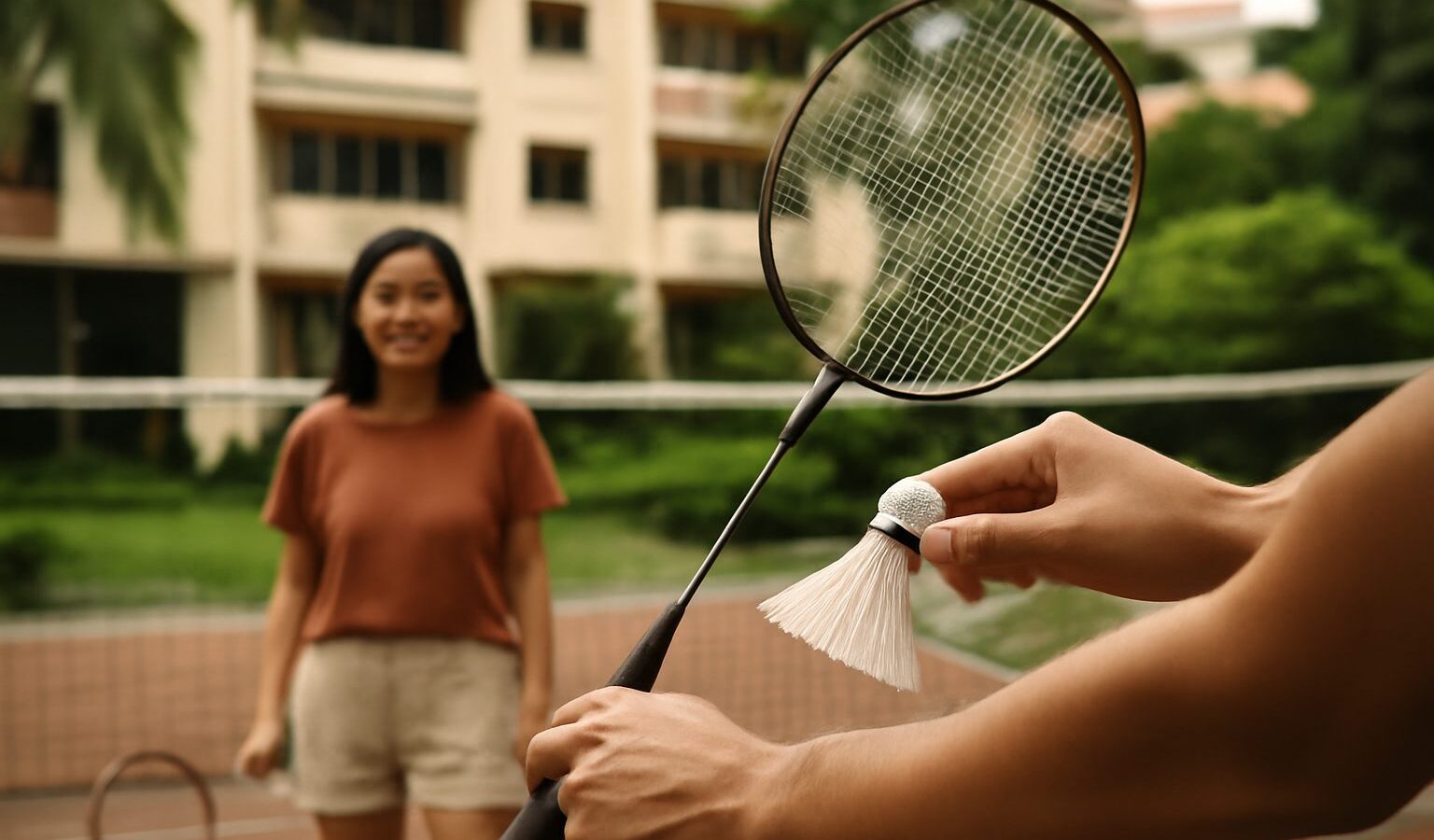
Few sports are woven into Singapore life quite like badminton. It is played in sports halls and community clubs, in HDB void decks with a makeshift net, and by families over the weekend. It is cheap to start, forgiving on the joints when played sensibly, and endlessly social. If you have been meaning to pick up a racquet, playing badminton in Singapore is one of the easiest and most rewarding ways to get active. This guide covers courts, gear, finding people to play with, the basics of the game, and how to keep yourself injury-free.
One note before we begin. This is general information, not medical or coaching advice. Consult a doctor before starting a new exercise programme, especially if you have a health condition, are older, or are returning to sport after a break. Warm up properly, progress gradually, and listen to your body.
Finding and Booking Courts
The backbone of recreational badminton here is the network of ActiveSG sports halls run by Sport Singapore, alongside courts at community clubs managed by the People’s Association. Sports halls offer marked courts with proper lighting and flooring, and you generally book them by the hour through the ActiveSG app. Community clubs also run courts and sometimes casual sessions, and private badminton centres fill in the gaps with peak and off-peak slots.
Courts in popular areas can be snapped up quickly, especially in the evenings and at weekends, so it pays to plan ahead and to consider off-peak daytime slots if your schedule allows. Because booking systems, availability and fees change, check current details with ActiveSG, your community club or the venue directly rather than assuming last year’s arrangements still hold. Do not rely on invented prices or timings; open the app and see for yourself.
- Sports halls: multiple marked courts, book by the hour via the ActiveSG app.
- Community clubs: neighbourhood courts and sometimes organised social play.
- Private centres: more slots and coaching, usually at a higher rate.
Choosing Your Gear
Badminton is refreshingly affordable to start, and you do not need premium equipment to enjoy it or improve. A beginner set-up is modest, and you can upgrade once you know you love the game.
| Item | Beginner choice | Why |
|---|---|---|
| Racquet | Light, flexible, mid-range | Forgiving and easy on the arm while you learn |
| Shuttlecocks | Durable nylon (plastic) | Cheaper and longer-lasting for casual play |
| Shoes | Proper indoor court shoes | Grip and lateral support to protect ankles and knees |
| Grip and clothing | Overgrip and light, breathable kit | Comfort and control in the heat |
The one piece of gear worth taking seriously from day one is footwear. Badminton involves constant stopping, lunging and changing direction, and running shoes do not grip an indoor court properly. Non-marking court shoes give you the traction and lateral support that protect your ankles and knees. Feather shuttlecocks fly beautifully but are expensive and fragile, so most casual players sensibly stick with nylon shuttles until they play more seriously.
Learning the Game and Getting Better
Badminton is easy to start and deep to master, which is part of its charm. You can rally within your first session, then spend years refining footwork and shot selection. Focus early on the fundamentals rather than trying to smash everything.
- Grip: a relaxed grip that changes between forehand and backhand gives you far more control than a tight, fixed one.
- Footwork: getting to the shuttle early, on balance, matters more than raw arm power. Good players move well.
- Serve: a consistent low serve and a reliable high serve open up the rest of your game.
- Shot variety: mixing clears, drops and net shots beats relying on the smash alone.
Singles and doubles play quite differently, and most social badminton in Singapore is doubles. Singles is a lung-busting test of movement and patience across the whole court, while doubles rewards fast reactions, teamwork and clever positioning. Trying both teaches you different skills. If you want to accelerate, group coaching at a private centre or through a club can fix bad habits early, though plenty of people improve simply by playing regularly with better opponents.
Finding Kaki and Joining the Community
Badminton is at its best when it is social, and half the joy is finding your kaki, the regular partners you play with. If you are starting from scratch, there are several easy routes in. Community clubs often run open or beginner-friendly sessions where you can turn up and be slotted into games. Workplace and interest groups organise weekly bookings and welcome newcomers. Neighbourhood chat groups and social sports platforms help you find sessions near your HDB estate, often with a mix of levels.
Once you have a regular group, you might progress to friendly leagues, interest-group tournaments or community competitions. Sport Singapore and the People’s Association periodically run recreational events and programmes, and signing up for one is a great way to add a bit of structure and meet more players. The goal is not to become a champion overnight but to keep showing up, because consistency and enjoyment are what make the habit stick.
Playing Safely in the Heat
Even indoors, Singapore’s heat and humidity are a factor, and many sports halls are naturally ventilated rather than air-conditioned. Hydrate before, during and after play, wear light breathable clothing, and give yourself proper rest between hard rallies. Arrive a little early to warm up: light jogging on the spot, gentle shoulder and wrist rotations, and a few easy rallies prepare your body far better than launching straight into competitive games.
Badminton’s quick lunges and overhead swings make certain injuries common, including ankle sprains, knee strain and shoulder or elbow overuse. You can lower the risk considerably with court shoes, a genuine warm-up, sensible progression, and stopping when something hurts rather than playing through sharp pain. Watch for red-flag signs that need attention: a sudden pop or severe pain in an ankle or calf, a joint that swells or will not bear weight, or persistent pain that does not settle with rest. For any actual injury, see a doctor or physiotherapist rather than self-diagnosing, and give the body time to recover before returning to the court.
Explore More
Badminton pairs naturally with other racquet sports, so if you enjoy it, try playing tennis in Singapore or the fast-twitch fun of table tennis. To make the most of public facilities beyond the court, see our guide to ActiveSG gyms and classes for cross-training that supports your game.