

Playing weddings and corporate functions is one of the steadiest ways for a musician to earn from gigging, and it can be genuinely fun once you get the hang of it. Joining or running a wedding band in Singapore means learning to read a room, playing a broad repertoire, and being reliable more than flashy. This guide walks through what the work actually involves, how bookings tend to happen, and how to protect yourself so a gig does not turn into a headache.
What the Job Really Involves
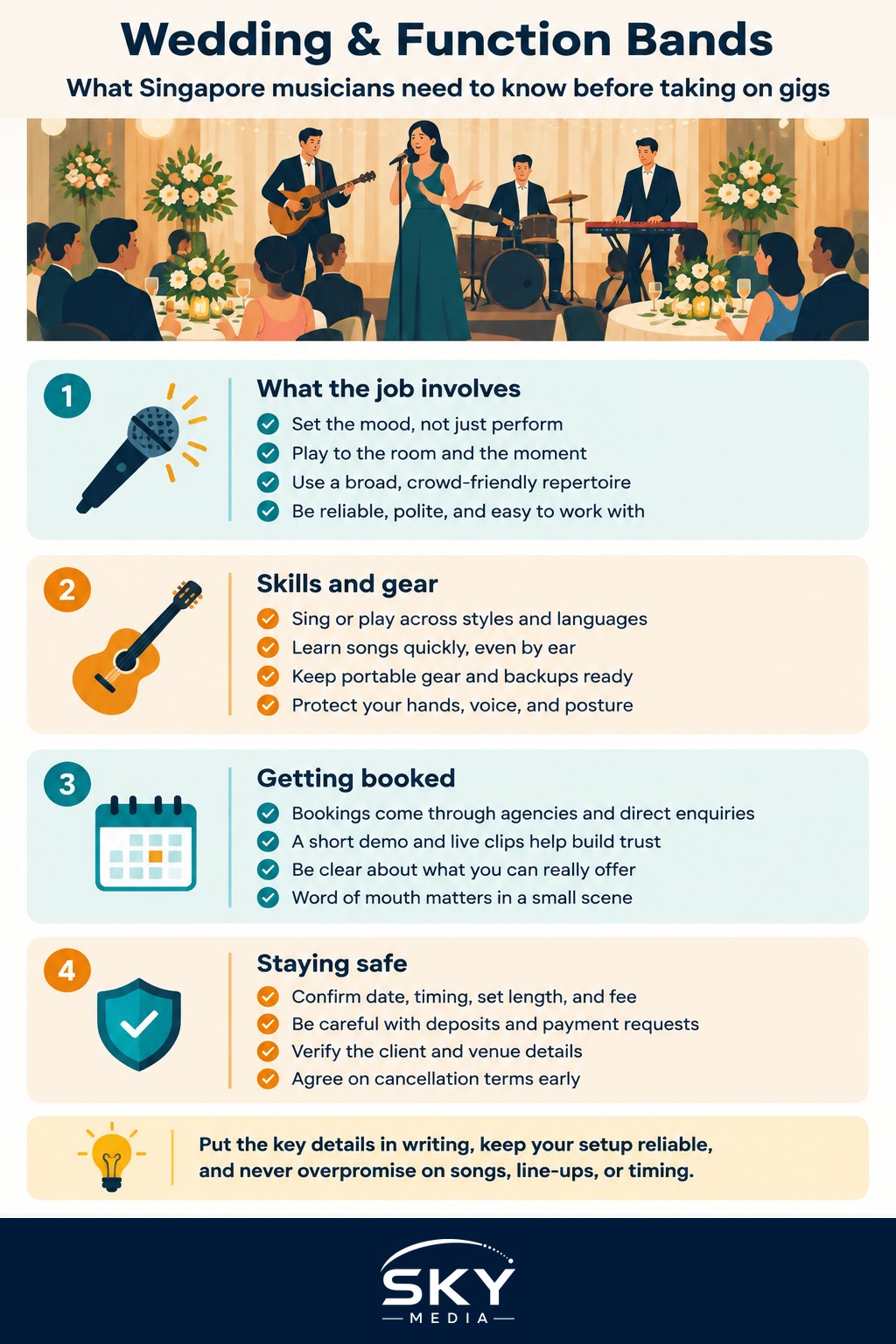
Function work is a service as much as a performance. Couples and event organisers hire a band to set a mood, not to showcase original songs. That means your value comes from versatility, dependability, and reading the moment. A quiet acoustic set during dinner, something warmer for the march-in, and livelier numbers later in the night is a common shape, though every event differs.
Repertoire is your biggest asset. A working function band usually keeps a wide, crowd friendly songbook spanning pop, oldies, jazz standards, and a healthy mix of English and Mandarin favourites, since many Singapore celebrations are multilingual. You do not need to sound like the record. You need clean arrangements, tidy transitions, and the flexibility to shorten or extend a song when the timeline shifts. Learning to build sets thoughtfully is a skill in itself, and our guide to how to build a great playlist applies surprisingly well to live sets too.
Professionalism matters as much as musicianship. Arrive early, dress appropriately, keep your volume sensible during speeches, and be easy to work with. Event planners rebook bands they can trust, and word of mouth is powerful in a small scene.
Skills and Gear to Prepare
Most function musicians are generalists. Singers should be comfortable across styles and languages, keyboard players should handle both pads and solos, and everyone benefits from being able to transpose on the fly to suit a guest vocalist. Being able to learn songs quickly and by ear is a huge asset, since function work rewards fast, flexible learning more than technical fireworks.
On the gear side, keep it practical:
- A reliable, portable setup you can carry and set up quickly.
- In-ear monitors or a small monitor solution so you can hear yourself in noisy venues.
- Backups for the essentials, such as cables, strings, and batteries.
- A tidy way to store charts, whether on a tablet or in a folder.
Singapore humidity is hard on instruments and electronics, so wipe down gear and let it acclimatise. Our guide on caring for your audio gear in the humidity covers the basics of keeping things reliable.
Look after yourself as well. Long events with heavy playing can strain your hands or voice, so keep good posture, take breaks when you can, and do not push through pain. If discomfort lingers, see a doctor or physiotherapist rather than playing through it.
Getting Booked and Staying Safe
Bookings come through a mix of channels: agencies that supply bands to hotels and event companies, direct enquiries from couples, planners, and repeat clients who pass your name along. Having a short, honest demo and a few clean live clips helps people trust that you can do the job. Be realistic about what you offer and never overpromise on songs or line-ups you cannot deliver.
Because money changes hands, treat the business side seriously and stay alert to scams. A few sensible habits:
- Put the agreement in writing. Confirm the date, timing, set length, song requests, dress code, and fee in a simple contract or message thread so everyone agrees.
- Be cautious with deposits. Legitimate deposits are normal, but be wary of anyone who pushes you to pay them money upfront, overpays and asks for a refund of the difference, or wants to move everything off normal channels.
- Verify the client and venue. Real events have real details you can check. Vague briefs, urgency, and reluctance to give specifics are red flags.
- Agree on cancellation terms. Events get postponed, so know in advance what happens to the fee if plans change.
Do not quote or rely on any fixed pay figures you see floating around online, since rates vary widely by band, experience, and event. Talk to trusted musicians in the scene, be fair, and price your time honestly.
Keep Growing as a Function Musician
The best function bands make it look easy because they have rehearsed the transitions, trimmed the fat, and learned to serve the occasion. If you enjoy playing live and want more entry points, our guides to how to get gigs as a musician and how to perform live music are worth a read. Start with a solid songbook, be someone people want to work with, and let steady, reliable performances build your reputation over time.
Further reading: Choosing Your Wedding Bands