
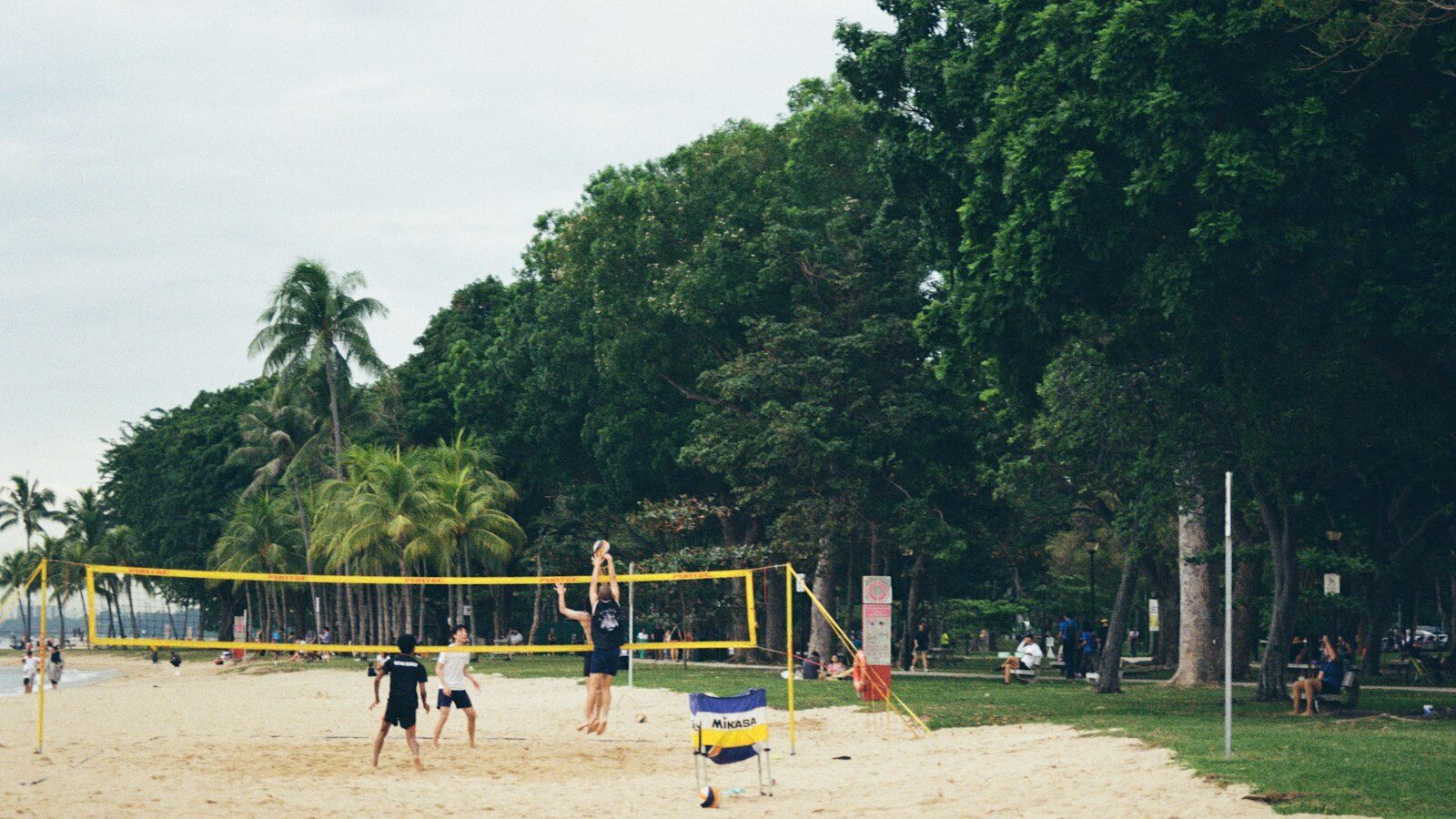
Volleyball is one of the most social and accessible team sports around, and if you are keen on playing volleyball singapore has plenty of courts, clubs and casual games to get you started. Whether you fancy the sand between your toes at the beach or the cooler comfort of an indoor hall, the sport rewards teamwork, timing and a bit of practice. This is a general fitness overview, not medical advice, so do check with a doctor before starting if you have any health conditions.
Why volleyball suits Singapore
Volleyball works well here for a few reasons. It is a team game, so it pulls friends, colleagues and neighbours together. It scales easily, from a relaxed knock-about with four people to a proper six-a-side match. And it comes in two flavours that suit our climate: indoor volleyball in an air-conditioned or sheltered hall, and beach volleyball out in the open air.
The sport builds a surprising amount of fitness. You get short bursts of jumping and sprinting, plenty of lateral movement, and constant communication with teammates. Over time that helps with agility, coordination, and cardiovascular health, all without the pounding of long-distance running.
Beginners often worry about their height or lack of experience. In reality, positioning, reading the ball and good footwork matter far more than being tall. Most clubs welcome newcomers and will happily teach the basics.
Where to play
You have more options than you might think. Public sports centres run by ActiveSG have indoor courts you can book, and many community clubs and schools open their halls for community play. If you would rather feel the sand, several beaches and parks have sand courts that are free to use on a first-come basis.
Here is a simple comparison to help you choose a setting.
| Setting | Team size | Best for | Things to note |
|---|---|---|---|
| Indoor court | 6 a side | Structured games, cooler play | Usually needs booking; firm floor |
| Beach or sand court | 2 to 4 a side | Casual play, weekend fun | Hot sun and glare; softer landings |
| Community hall | 4 to 6 a side | Learning the basics locally | Check programme times with the CC |
To find a regular game, look for local volleyball clubs, workplace teams, or interest groups that meet weekly. Many organise friendly sessions where mixed abilities play together, which is the fastest way to improve and make friends at the same time.
Getting the basics right
Volleyball has a handful of core skills, and learning them properly from the start saves a lot of frustration.
- The pass, or bump, uses your forearms to control a low ball.
- The set uses your fingertips to place the ball for a teammate.
- The serve puts the ball into play from behind the back line.
- The spike, or attack, sends the ball down over the net.
- The block defends against the opposing spike at the net.
The best way to pick these up is to learn from a coach or an experienced club. Good technique protects your fingers, wrists and shoulders from strain, and it makes the game far more enjoyable. Do not be shy about starting slowly; even seasoned players drill the fundamentals constantly.
Staying safe and playing well
Volleyball is generally low contact, but jumps, dives and quick changes of direction can lead to sprains if you are not prepared. A few sensible habits go a long way.
Warm up before every session with light jogging, arm swings and gentle jumps so your muscles and joints are ready. Take time to cool down and stretch afterwards to help recovery. Learn to land softly with bent knees, and avoid landing on a foot that is under the net where you might roll an ankle.
Footwear matters. Indoor players want court shoes with good grip and cushioning to absorb repeated landings. Beach players usually go barefoot, so watch out for hidden objects in the sand and pace yourself, as sand is far more tiring than a hard floor.
If you play beach volleyball outdoors, respect Singapore’s heat. Play in the cooler morning or late afternoon hours where you can, wear light clothing and a hat, and use sunscreen. Take regular breaks in the shade. Staying hydrated is essential, so drink water before you feel thirsty and top up throughout the game. Stop and rest if you feel dizzy, unusually fatigued or overheated.
Fingers and shoulders take the most load in volleyball. Build up your playing time gradually rather than jumping into long, intense sessions. If you tweak an ankle, wrist or shoulder, rest it and give it time to settle rather than pushing through pain, and seek proper care if it does not improve.
Gear you actually need
You do not need much to begin. A pair of suitable shoes for indoor play, comfortable and breathable clothing, and a water bottle will see you through your first sessions. As you get more serious, knee pads help protect against floor burns and bruises when you dive for the ball, and finger support tape can ease the load on your joints.
For beach play, a rash guard or light top, a hat and sunglasses make hot afternoons more bearable. Bring a small towel and a change of clothes, and never forget the sunscreen.
Making it a habit
The trick to sticking with volleyball is finding a regular group. Once you have a weekly game in the diary, progress comes naturally and the social side keeps you coming back. Set small, realistic goals such as a more consistent serve or a cleaner pass, and celebrate the little wins. Mix in some general conditioning, like light strength work and mobility, to support your jumping and reduce niggles.
Above all, keep it fun. Volleyball is a game built on encouragement and quick recoveries after mistakes, so laugh off the shanked passes and enjoy the rallies. With a bit of consistency, you will be surprised how quickly you improve.
Explore more
Team Sports and Leagues in Singapore
Using ActiveSG Facilities
Warming Up and Cooling Down Properly
Staying Hydrated in Singapore’s Heat