

Despite the name, polyglutamic acid is not an exfoliating acid at all, so there is no need to worry about tingling or peeling. It is a hydration ingredient, and it has built a following among people who want that fresh, dewy, plumped look. If you have seen polyglutamic acid in Singapore popping up in serums and essences and wondered whether it is worth the hype, this guide breaks down what it is, how it compares to hyaluronic acid, who it suits and how to use it sensibly in our humid climate.
What polyglutamic acid is
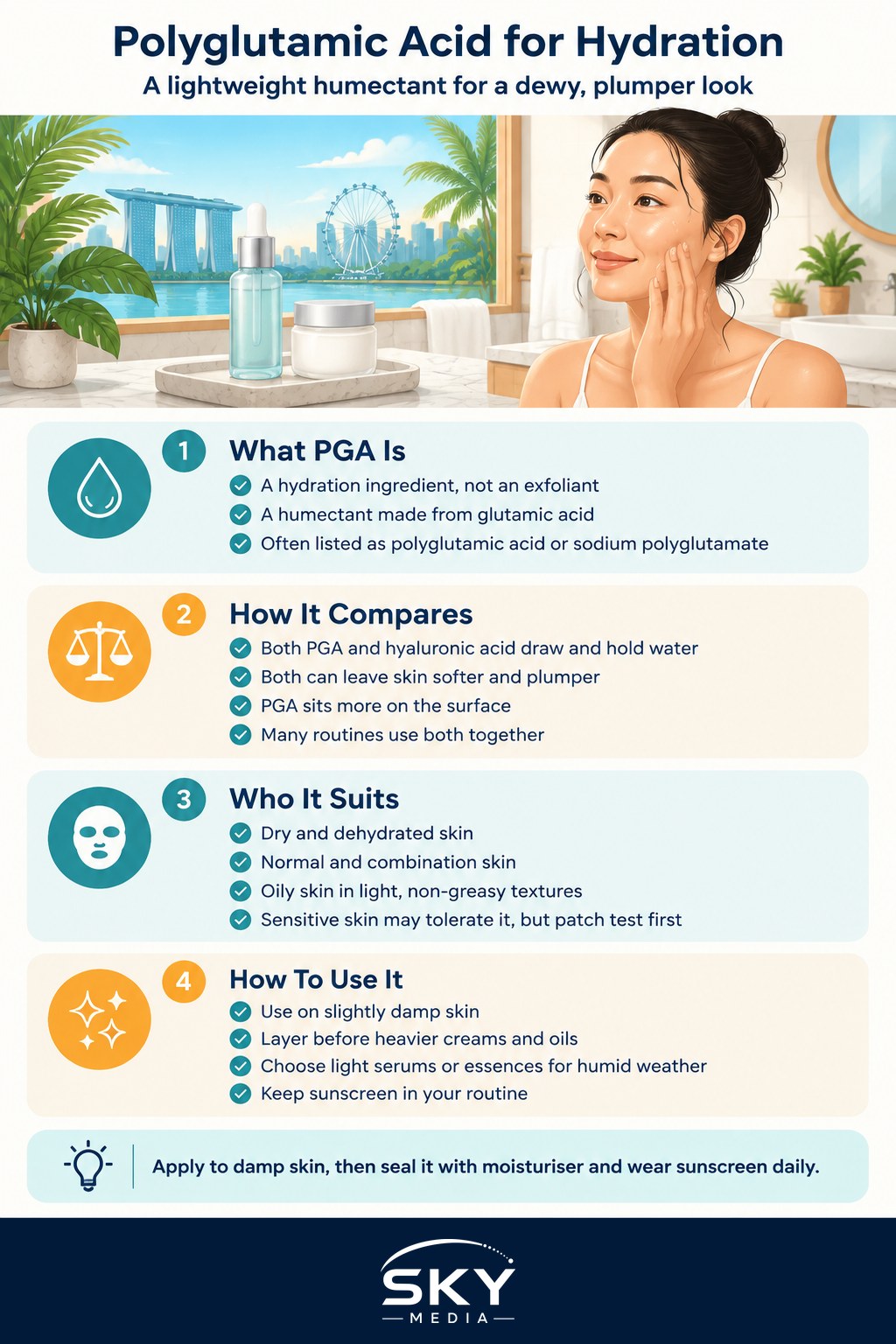
Polyglutamic acid, sometimes shortened to PGA, is a humectant made up of chains of glutamic acid, an amino acid. It is often produced through fermentation, and on labels it may appear as “polyglutamic acid” or “sodium polyglutamate.”
The reason people get excited is its water-holding ability. Humectants work by attracting and holding water in the upper layers of skin, and polyglutamic acid is a large molecule that sits mainly on the surface, forming a light, moisture-holding film. Many fans describe it as feeling more “sealed in” and dewy than some other humectants. Because the word “acid” causes confusion, it helps to remember that this is a hydrator, not an exfoliant. Our guide to understanding skincare ingredients in Singapore is a good primer if the science feels dense.
Polyglutamic acid versus hyaluronic acid
The most common question is how it compares to hyaluronic acid, the best-known humectant of all.
- Both are humectants that draw and hold water, so both can leave skin looking plumper and feeling softer.
- Hyaluronic acid comes in different molecular sizes and is famous for holding a large amount of water. Our full explainer on hyaluronic acid in Singapore covers it in detail.
- Polyglutamic acid tends to sit more on the surface and is often described as forming a light, moisture-sealing layer, which some people feel makes hydration last more comfortably through the day.
In practice, they are not rivals so much as teammates. Many routines use both, and neither one replaces a moisturiser. Which you prefer often comes down to how each feels on your skin.
What it does, and who it suits
Polyglutamic acid’s headline benefit is hydration: a smoother, plumper, dewier look and a softer feel. That is a cosmetic effect, not a medical one. It will not treat acne, fade a condition, or replace sun protection.
It generally suits:
- Dry and dehydrated skin that needs strong surface hydration.
- Normal and combination skin chasing a dewy finish.
- Oily skin too, because it can be delivered in light, non-greasy textures.
Sensitive skin can usually tolerate it, but as with anything new, patch test first and add one product at a time. Other ingredients in the same formula, such as fragrance, could still cause a reaction, so introduce it carefully and watch how your skin responds.
How to use it in Singapore’s humid climate
Here is where technique matters, because humectants behave according to their surroundings.
- Apply to damp skin. Polyglutamic acid works best on slightly damp skin, so pat it on after cleansing or a hydrating toner rather than onto bone-dry skin.
- Always seal it in. A humectant draws water, but you still want a moisturiser on top to hold that hydration in place, especially in drying aircon. Our guide to hydrating versus moisturising your skin explains why this pairing matters.
- Mind the order. As a lightweight, water-based step it goes on before heavier creams and oils. See layering your skincare in the right order if you are unsure where it fits.
- Choose humidity-friendly textures. A light serum or essence usually feels best in our weather. For pairing it with the right cream, our guide to choosing a moisturiser for humid weather can help.
- Keep sunscreen daily. Hydration is not sun protection, and our UV is strong all year.
The honest limits
Polyglutamic acid is a genuinely nice hydrator, and many people love the dewy finish it gives. Even so, the marketing sometimes leans on impressive-sounding claims about holding many times its weight in water. Those numbers are hard to translate into real, visible results on your face, and what you see depends on the whole formula, the concentration and your own skin. It is a surface hydrator, not an anti-ageing treatment or a medicine. If you have a persistent skin concern, see a doctor or dermatologist rather than expecting a hydrator to fix it.
In short, polyglutamic acid is a lightweight, dewy-finish humectant that plays beautifully alongside hyaluronic acid and a good moisturiser. Apply it to damp skin, seal it in, layer it in the right order, patch test first, keep up your sunscreen, and see a professional for anything that persists.
Further reading: Hydration for Healthy Skin