
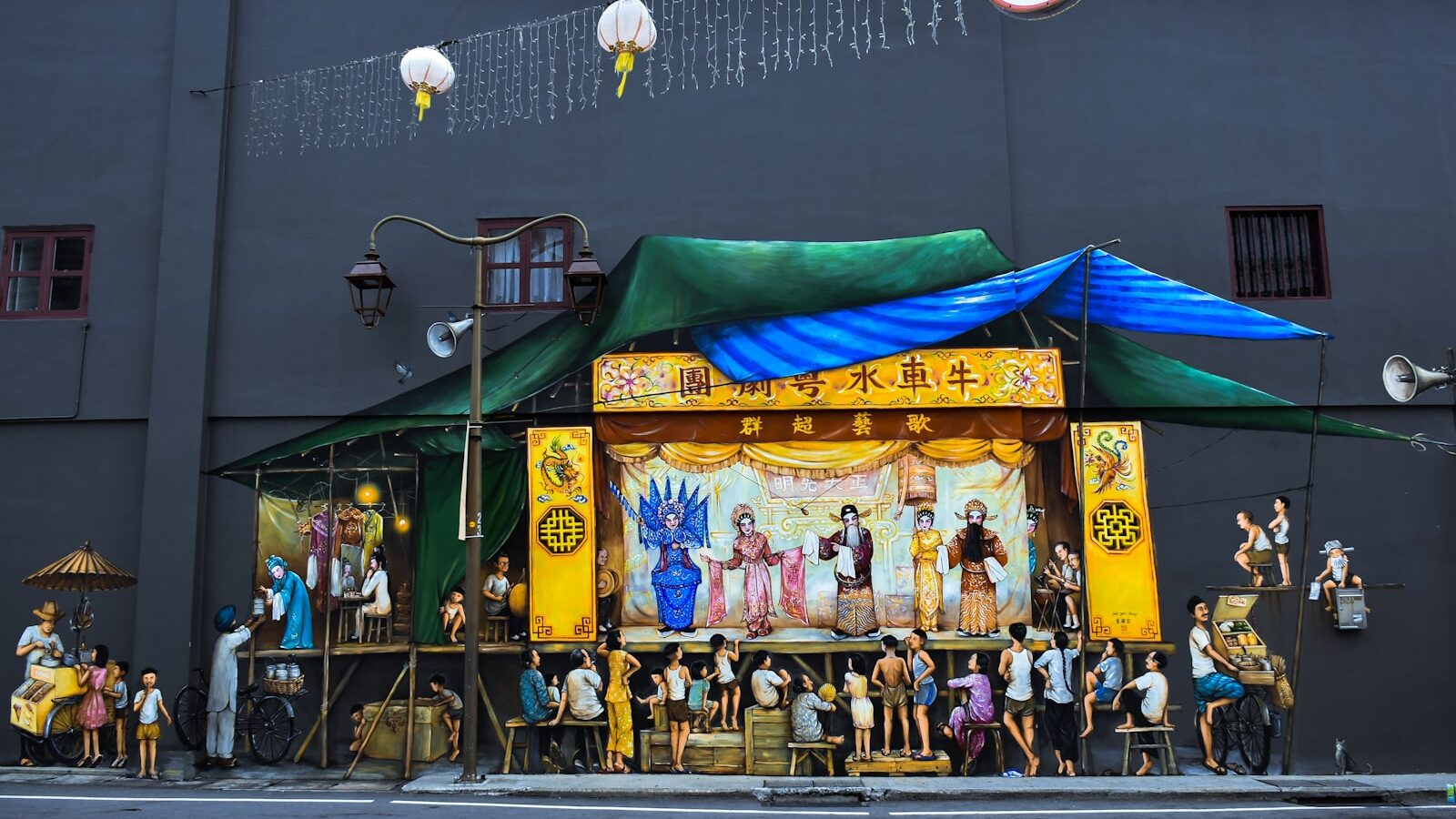
If you have ever wandered past a Chinese temple during a festival and heard the clash of gongs, the wail of a two stringed fiddle, and a chorus of high pitched voices, you may have stumbled upon Potehi. This is the Hokkien glove puppet theatre, a small but spirited art form that has entertained temple crowds in Singapore for generations. The puppets are worn on the hand like gloves, and a skilled performer can bring an entire cast of heroes, villains, and comic servants to life with just their fingers. This guide explains what Potehi is, where it comes from, how it is performed, and who keeps it going today.
What Potehi Is and Where It Comes From
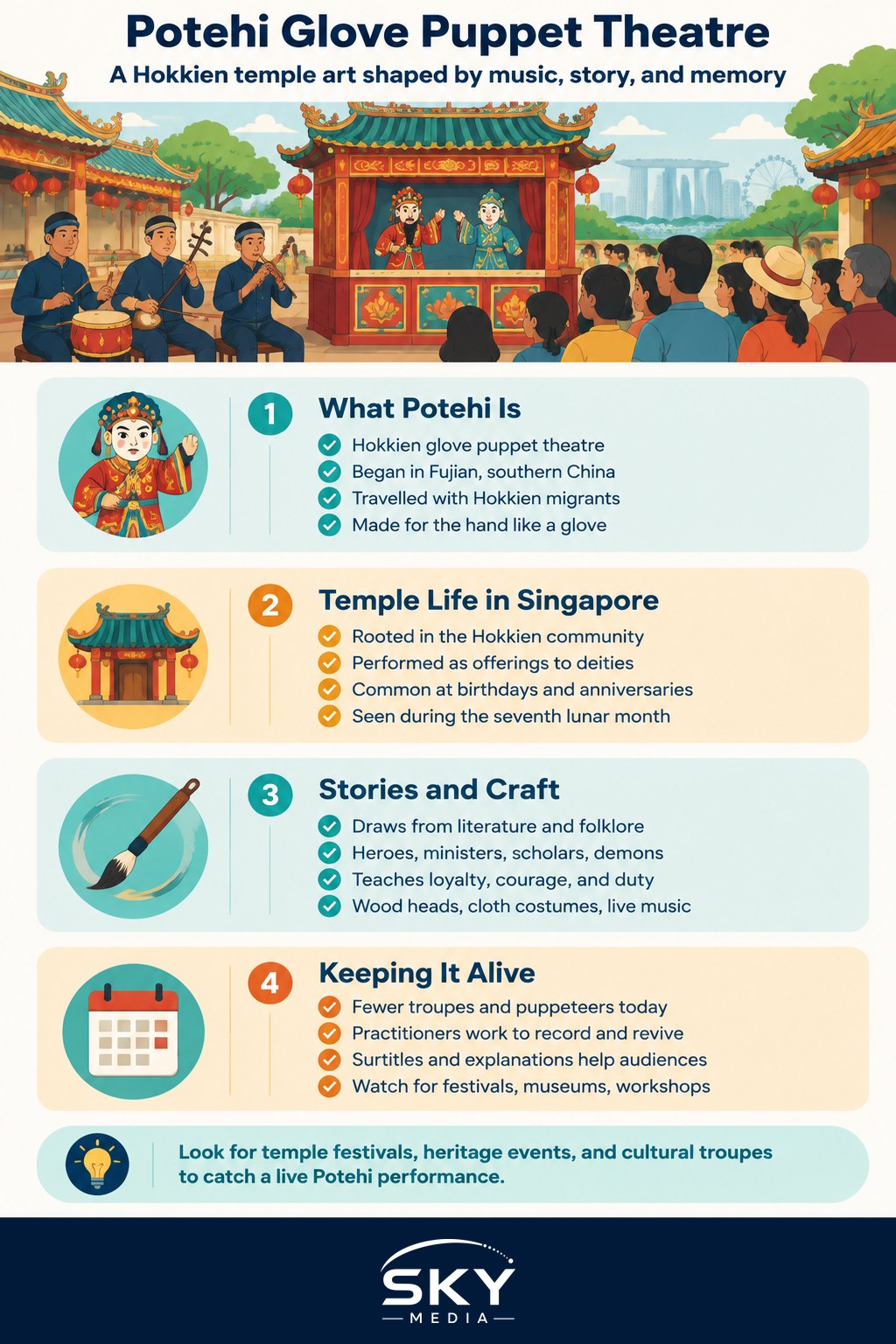
Potehi, a Hokkien word often translated as cloth bag puppet or glove puppet, refers to a form of hand puppetry that developed in the Fujian province of southern China. The name captures the basic design of the puppet, a fabric body shaped like a small robe that the puppeteer slips over the hand, with a carved wooden head and tiny hands attached. According to popular tradition the art is several centuries old, and it travelled across the sea with Hokkien migrants who settled throughout Southeast Asia, including Singapore, Malaysia, Indonesia, and Taiwan.
In Singapore, Potehi took root within the Hokkien community and became closely tied to temple life. Performances were, and often still are, staged as offerings during the birthdays of deities, temple anniversaries, and festivals such as the seventh lunar month. The shows were believed to entertain the gods as much as the human audience, which is why a troupe might perform even when few people are watching. This spiritual dimension places Potehi alongside other ritual performing arts in the region, and it shares this festive temple setting with Chinese opera and getai in Singapore, which often appear at the same celebrations.
The Stories and Their Meaning
The tales told through Potehi are drawn largely from classic Chinese literature, folklore, and history. Audiences meet loyal generals, scheming ministers, wandering scholars, immortals, and demons, often lifted from well loved epics and legends. Many stories carry a moral backbone, rewarding loyalty, filial piety, and courage while punishing greed and treachery. In this way the puppet stage served as a kind of popular classroom, passing on shared values and history to communities that were often far from formal schooling.
Because the performances were traditionally in Hokkien, they also helped preserve the dialect and its rich store of idioms, songs, and turns of phrase. For older members of the community, hearing these stories in Hokkien is a powerful link to childhood and to ancestral roots. The art form therefore carries cultural weight well beyond simple entertainment, standing as a vessel of language, memory, and belief. It belongs firmly within the wider story of preserving Singapore heritage.
How a Performance Is Made and Staged
A Potehi show is a compact production. The stage is a small decorated booth, often mounted on a trestle or a mobile platform, with an ornate opening at the front that frames the action. Behind the curtain the puppeteers stand or crouch, raising the puppets above their heads so that only the figures are visible to the audience. A single master puppeteer may voice several characters at once, switching pitch and tone to distinguish a booming warrior from a delicate maiden or a bumbling servant.
The puppets themselves are small works of craft. The heads are carved from wood and painted, with features and colours that signal a character’s nature, much as face paint does in Chinese opera. A red face may suggest loyalty and courage, while other colours hint at cunning or villainy. Costumes are sewn from patterned cloth, and some figures have movable parts. Live music is central to the atmosphere, provided by a small ensemble playing gongs, drums, cymbals, and string and wind instruments that punctuate the fights, entrances, and emotional turns. This close bond between puppet, voice, and music links Potehi to the broader world of traditional music in Singapore.
Learning the art takes years. A puppeteer must master manipulation, so that a puppet can walk, bow, fight, and gesture convincingly, while also handling narration, singing, and the rhythms of the music. Traditionally this knowledge passed from master to apprentice within family troupes.
Potehi in Singapore Today and How to Experience It
Like many traditional arts, Potehi has faced decline as older audiences pass on and younger generations grow up speaking English and Mandarin rather than Hokkien. Fewer troupes remain active, and the pool of experienced puppeteers has thinned. Yet the art is far from forgotten. Dedicated practitioners, cultural groups, and heritage organisations have worked to record, teach, and revive Potehi, sometimes introducing surtitles or short explanations so that younger and non Hokkien speaking audiences can follow along. It sits within the same fragile ecosystem as many traditional trades in Singapore that survive through the devotion of a few.
The best way to encounter Potehi is still at a temple festival, where a booth may appear as part of the celebrations, especially during major deity birthdays and the seventh lunar month. Heritage festivals, museums, and community events also stage demonstrations and workshops from time to time, giving visitors a chance to see the puppets up close and even try slipping one over their hand. Those keen to experience it should look out for current temple festival calendars, heritage programmes, and cultural troupes that continue to perform. To sit before the little stage, to hear the gongs and the Hokkien voices, and to watch a scrap of carved wood and cloth suddenly seem alive, is to touch a piece of living heritage that has crossed oceans and centuries to reach us.
Further reading: Puppetry and Ventriloquism as a Hobby in Singapore