
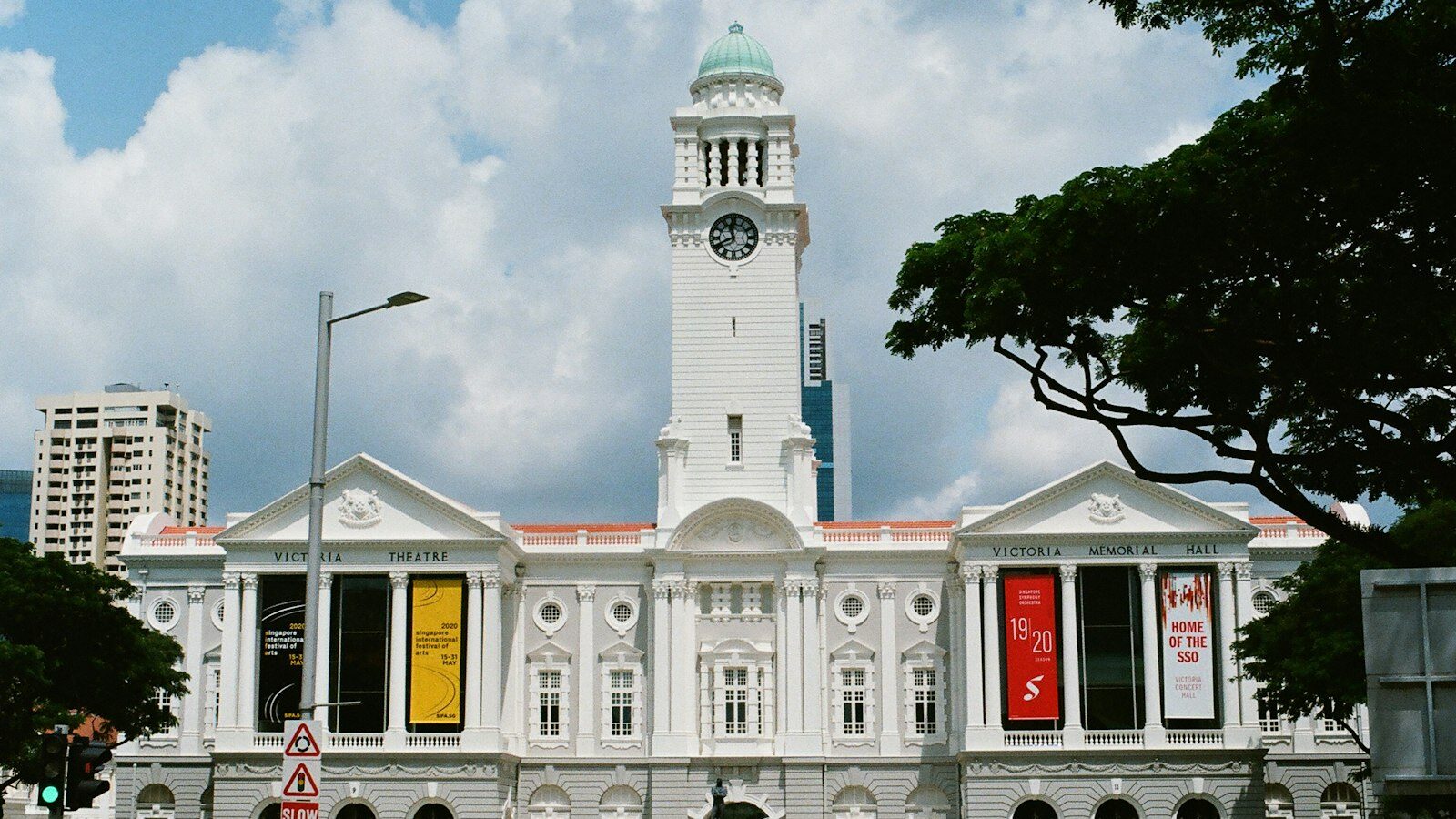
Stand on Empress Place with the Singapore River at your back, and the Victoria Theatre and Concert Hall rises before you in warm plaster and a proud clock tower. For more than a century this twin building has been the setting for civic ceremony, orchestral music, political rallies and community theatre. The Victoria Theatre Singapore has long been one of the Civic District’s most beloved performance venues, a place where the young nation gathered to celebrate, to debate, and simply to listen. This guide traces its story, its architecture, and what to look out for when you visit.
Origins: From Town Hall to a Memorial
The story begins with the need for a proper meeting place in a growing colonial port. The older wing started life as the Town Hall, built to give the settlement a dignified space for public gatherings and performances. As the town expanded, the building took on a second life. A companion hall was raised in memory of Queen Victoria, and the two structures were joined into a single grand composition. That is why locals still refer to the venue by two names at once, the theatre and the memorial concert hall, linked at the centre.
A tall clock tower was added to bind the two wings together, and it remains the building’s signature. Set on Empress Place beside the river, the complex became part of the cluster of civic buildings that gave colonial Singapore its formal heart. Around it grew the wider Civic District, with the courts, offices and open green of the Padang all within a short walk. To understand the venue is to understand how the town organised its public life around this riverside stage.
Architecture and the Clock Tower
The Victoria Theatre and Concert Hall belongs to the classical tradition favoured for civic buildings of its era. Symmetry rules the facade, with columns, arches and a restrained elegance meant to convey permanence and dignity. The central clock tower is the element most visitors remember, a vertical marker that rises above the low riverside skyline and helps orient anyone exploring the district on foot.
Inside, the two wings serve different purposes. One side holds a theatre laid out for drama and staged performance, while the other houses a concert hall shaped for music, with acoustics and seating arranged for audiences who came to hear an orchestra. A major restoration in recent decades carefully renewed the fabric of the building, refreshing the interiors and back-of-house facilities while respecting the historic exterior. The work aimed to keep the character intact while bringing the stages up to modern standards. Because the building carries protected status as a gazetted national monument, changes are guided by conservation principles overseen by the National Heritage Board.
The Raffles Statue and the Riverside Setting
Directly in front of the building stands one of Singapore’s most photographed sculptures, the dark bronze statue of Sir Stamford Raffles. This original figure has stood in the civic heart for generations, and its position before the theatre makes the forecourt a natural gathering and photo spot. From here you can look toward the river and the bridges that stitch the two banks together, and beyond to the towers of the modern city.
The setting is part of the appeal. The venue does not sit in isolation but anchors a walkable heritage precinct. A short stroll brings you to the museums, the old parliament building, the courts and the open expanse of the Padang. Few places in Singapore pack so much civic history into so small an area, and the theatre sits at its centre.
A Stage for the Nation’s Story
More than any single event, it is the accumulation of moments that gives the Victoria Theatre and Concert Hall its meaning. The concert hall became a home for orchestral music in Singapore and hosted the ensemble that would grow into the national symphony. The theatre welcomed local and visiting companies, amateur societies and professional troupes alike. In the years around independence, halls like this one served as venues for public meetings and political occasions, giving the building a place in the nation’s founding memory as well as its cultural life.
Today the venue continues that role under the management of Arts House Limited, which oversees several heritage arts spaces in the Civic District. Concerts, plays, recitals and community performances fill its calendar, so the building remains a living stage rather than a museum piece. That continuity, from colonial town hall to a contemporary performance venue, is what makes it special.
Here is a quick guide to how the complex is organised and what each part offers.
| Feature | What it is | What to look for |
|---|---|---|
| Victoria Theatre | The drama wing, laid out for staged performance | Proscenium stage, restored interiors, theatre programming |
| Victoria Concert Hall | The music wing, shaped for orchestral audiences | Concert seating, home to symphonic music in Singapore |
| Clock Tower | The central tower linking the two wings | Signature riverside landmark and orientation point |
| Forecourt | The open space facing the river | Original bronze Raffles statue and photo vantage |
Visiting the Victoria Theatre and Concert Hall
The venue sits in the Civic District on Empress Place, an easy walk from several MRT stations serving the city centre and the riverside. From the nearest stops you can follow signs toward the river and the museums, and the clock tower will guide you the rest of the way. Buses along the surrounding roads also stop close by, and the area is comfortable to explore on foot.
To attend a performance, buy tickets in advance through the official channels, as programming and availability change through the year. If you only want to admire the architecture, the forecourt and riverside promenade are open to stroll, and the exterior looks especially handsome in the late afternoon light. For current opening details, tour options, ticketing and any access information, check the official Arts House Limited and venue websites rather than relying on fixed times, since these are updated regularly.
Treat the surrounding civic precinct as part of the outing. You can combine a visit with the nearby museums, a walk along the historic river bridges, and time on the Padang, turning a single stop into a half-day of heritage exploration in the heart of Singapore.
Explore more
If the Victoria Theatre and Concert Hall has drawn you into the Civic District, keep going with a visit to The Arts House at the Old Parliament, another heritage venue managed in the same precinct. Round out the walk at the Asian Civilisations Museum just across Empress Place, and cross the water to trace Singapore’s historic bridges that link the two banks of the river.