
Singapore’s electricity supply is famously reliable, which is exactly why a power outage catches most households off guard. The lights go out, the aircon falls silent, the Wi-Fi router blinks off, and suddenly nobody remembers where the torch is. This guide to a power outage in Singapore is a calm, household-level plan: what to check in the first five minutes, how to protect your food and appliances, how to keep everyone comfortable, and when to call for help.
The First Five Minutes: Is It Just Your Home?
Many home “blackouts” are really a tripped breaker inside your own flat. Before calling anyone, work out which situation you are in.
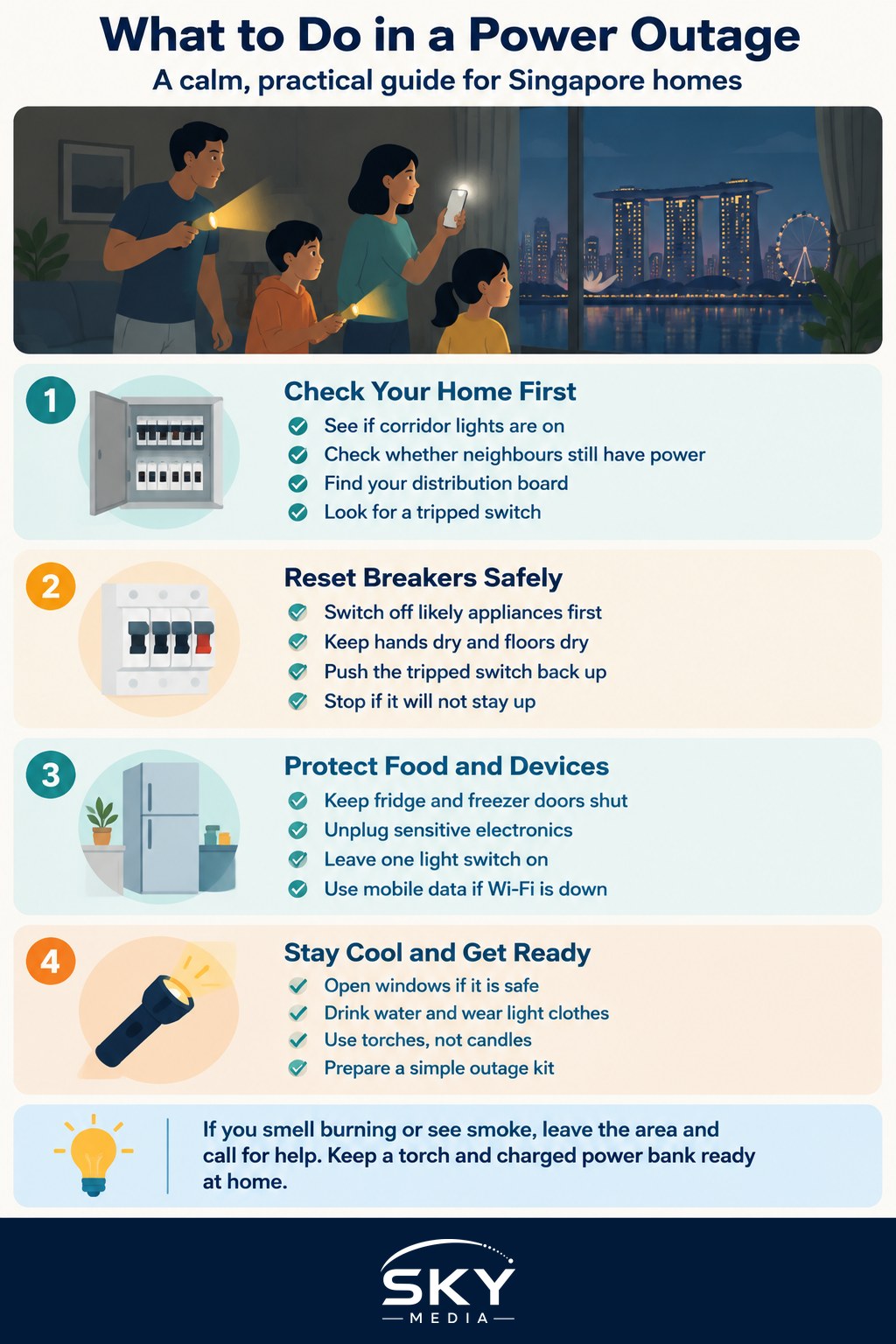
- Look outside your door. Are the corridor lights on? Is the lift lobby lit? If common areas have power, the problem is almost certainly inside your unit.
- Check your neighbours. A quick look at other windows in your block, or a message in your block or estate chat group, tells you whether the outage is wider.
- Find your distribution board. In HDB flats and most condos, this is the grey or white box near the main door, sometimes in the kitchen or a utility area. It holds the main switch, the individual circuit breakers and the residual current device, often called the ELCB (earth leakage circuit breaker) or RCCB.
- See which switch has dropped. A tripped switch sits in the down or middle position while the others stay up.
If only your home is affected and a switch has tripped, the cause is often a faulty appliance, a wet socket or too many high-load appliances on one circuit.
How to Reset a Tripped Breaker Safely
Resetting a breaker is simple, but do it carefully.
- Unplug or switch off the likely culprits first. Think about what was running when the power went: kettle, water heater, oven, washing machine, aircon. Switch them off at the wall.
- Make sure your hands are dry and you are not standing on a wet floor.
- Push the tripped switch firmly back up. If it stays up, power should return.
- Turn appliances back on one at a time. If the breaker trips again when a particular item is switched on, that item is the likely problem. Leave it unplugged and get it checked.
- If the switch will not stay up at all, even with everything unplugged, stop trying. Repeated tripping is a safety signal, not an inconvenience. Call a licensed electrician.
Never tape a breaker in place, bypass it or replace it yourself. The device exists to protect you from electric shock and fire. If you smell burning, see scorch marks on a socket or hear buzzing from the board, switch off the main switch if it is safe to do so and get professional help.
Comparing the Common Outage Scenarios
Different outages need different responses. This table helps you match what you see to what you should do.
| What you notice | Likely cause | What to do |
|---|---|---|
| Only your flat is dark, corridor lights are on | Tripped breaker or ELCB in your unit | Unplug suspect appliances, reset the switch, call a licensed electrician if it keeps tripping |
| Your whole block or floor is out, other blocks are fine | Fault in the building’s supply or common electrical system | Contact your town council (HDB) or managing agent (condo) |
| Several blocks or the whole neighbourhood is dark | Wider supply disruption | Check SP Group’s official channels for updates and report the fault if no notice is posted |
| Power is on but one room or socket is dead | Single circuit tripped or a faulty socket | Check the distribution board, and avoid using that socket until it is inspected |
SP Group is the company that operates Singapore’s electricity grid, and it handles faults in the wider network regardless of which electricity retailer you buy from. Its fault reporting line is listed on its official website and on your utilities bill. Your retailer handles billing, not grid repairs.
Protecting Food, Appliances and Devices
Once you know what is happening, turn to damage control.
Your fridge and freezer. Keep the doors closed. A closed fridge stays cold for a few hours, and a full freezer holds its temperature longer than a half-empty one. Resist the urge to check on things. If the outage is long, use your judgement on perishable foods such as raw meat, seafood, dairy and cooked leftovers, and follow food safety guidance from the Singapore Food Agency. When in doubt, throw it out.
Sensitive appliances. When power returns, there can be a brief surge. Switch off and unplug items such as the television, computer, gaming console and aircon during the outage, then plug them back in a few minutes after supply is stable. If you work from home or run a home server, a device like the ones in our guide to choosing an uninterruptible power supply (UPS) gives you time to save work and shut down properly.
Leave one light switched on. Keep a single light switch in the “on” position so you know immediately when power is back.
Phones and connectivity. Mobile data usually keeps working, but home Wi-Fi will not. Lower screen brightness and keep a charged power bank. Our round-up of power banks and charging gear covers what is worth keeping charged at home.
Staying Cool, Safe and Comfortable at Home
Singapore’s heat is the real discomfort during an outage, especially for babies, older family members and anyone unwell.
- Open windows for cross-ventilation if it is safe and not raining heavily, and draw curtains on the sunny side.
- Drink water regularly and wear light, loose clothing. A damp cloth on the neck and wrists helps.
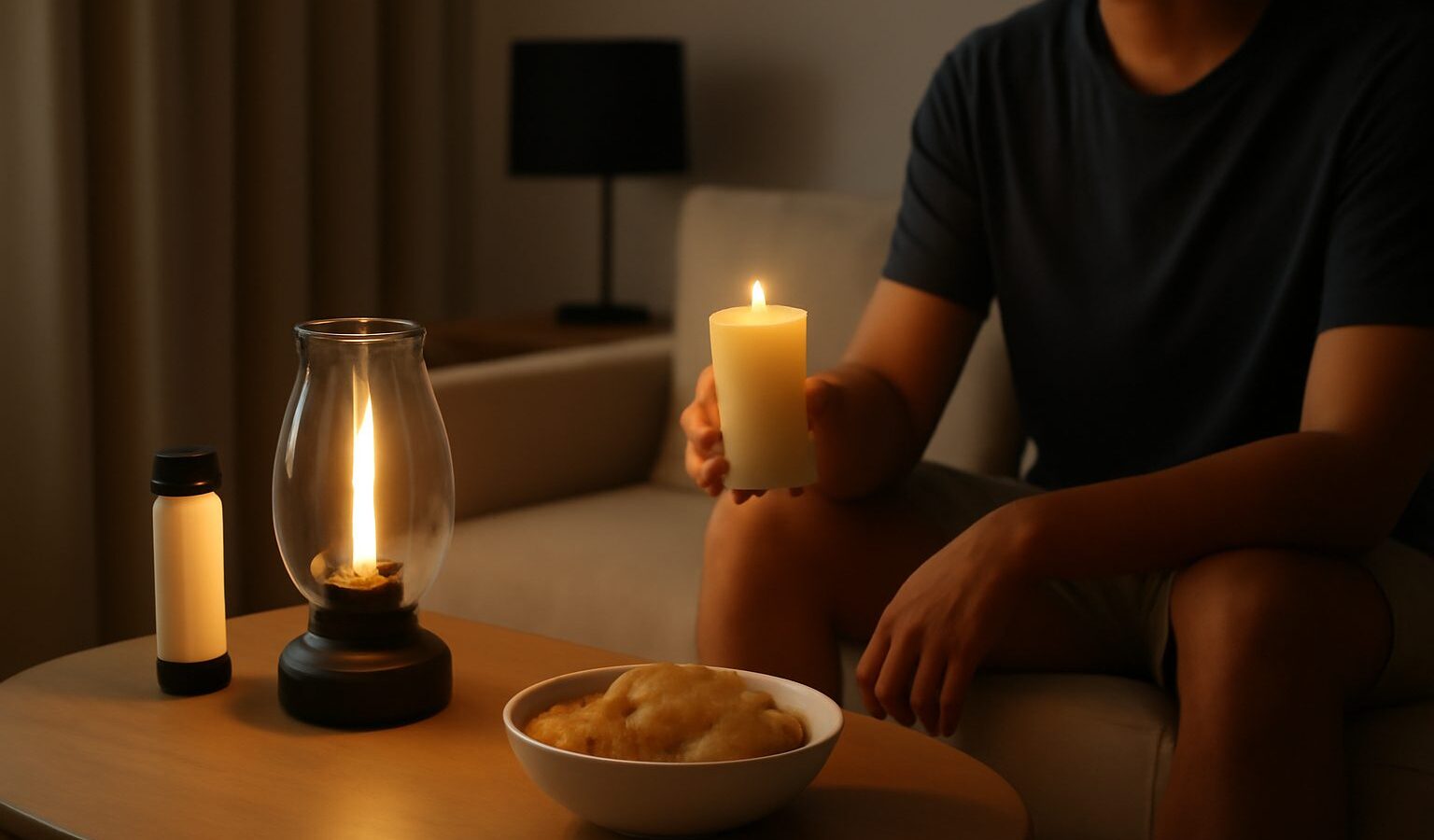
- Use torches, not candles. Candles near curtains, bedding and children are a fire risk. Rechargeable LED lanterns and headlamps are far safer.
- Check on vulnerable household members. If someone relies on powered medical equipment, such as an oxygen concentrator, talk to their doctor or equipment supplier in advance about a backup plan, and seek medical help immediately if the person is in distress.
- Avoid the lifts. If the lift has stopped with someone inside, they should press the alarm button and stay calm. Contact the town council or managing agent, and call the emergency services if anyone is unwell or in danger.
Building a Simple Outage Kit Before You Need It
The best time to prepare for a power outage is when the lights are on. A small kit stored in one known spot takes minutes to put together:
- A torch or LED lantern for each bedroom, plus spare batteries
- A fully charged power bank, recharged every few months
- A small battery or hand-crank fan for hot nights
- Bottled drinking water and a few snacks that need no cooking
- A printed list of key numbers: your town council or managing agent, a licensed electrician you trust and SP Group’s fault line from its website
- Any medication that needs to stay cool, and a plan with your pharmacist for how to store it if power is lost
If you want backup power for longer stretches, read our guide to choosing a portable power station, which explains capacity and what such units can realistically run.
When to Call for Help
Most outages are resolved within minutes, either by resetting a breaker or by the supply being restored. Escalate when:
- The breaker keeps tripping, or will not reset
- You see sparks, smoke, scorch marks or smell burning, in which case leave the area and call the emergency services if there is any sign of fire
- The whole block is affected and there is no notice or update from the town council or managing agent
- A wider area is dark and no official update appears from SP Group
- Someone at home is unwell, overheated or dependent on powered medical equipment
Contacts and procedures can change, so check the latest details with SP Group, your town council or your condo management office.
A power outage in Singapore is rare and usually short. With a torch in reach, a charged power bank and a clear idea of where your distribution board sits, it becomes a minor interruption rather than a stressful night.
Frequently Asked Questions
How long does a power outage usually last in Singapore? Most are short, often resolved within minutes once a breaker is reset or supply is restored. Longer ones usually come from wider network faults, so watch SP Group’s official channels and notices from your town council or condo management for updates.
Will my fridge food spoil if the power is off for a few hours? A closed fridge generally stays cold for a few hours, and a full freezer holds its chill longer than a half-empty one. Keep the doors shut, and for raw meat, seafood or dairy that warmed up, follow Singapore Food Agency guidance.
Why does my breaker keep tripping when I switch on the kettle or oven? High-load appliances can overload a circuit, or the appliance itself may be faulty or damp inside. Try it alone on a different socket; if the switch trips again, leave it unplugged and have the appliance or wiring checked.
Should I unplug my devices during a blackout? Yes, for sensitive items such as the television, computer and aircon, since a brief surge can occur when power returns. Plug them back in a few minutes after supply is stable, and keep one light on to know when it is back.
Who do I call if the lift stops with someone inside? The person should press the alarm button and stay calm, while you contact the town council or managing agent. If anyone feels unwell or in danger, call the emergency services straight away.
Official sources: Energy Market Authority