
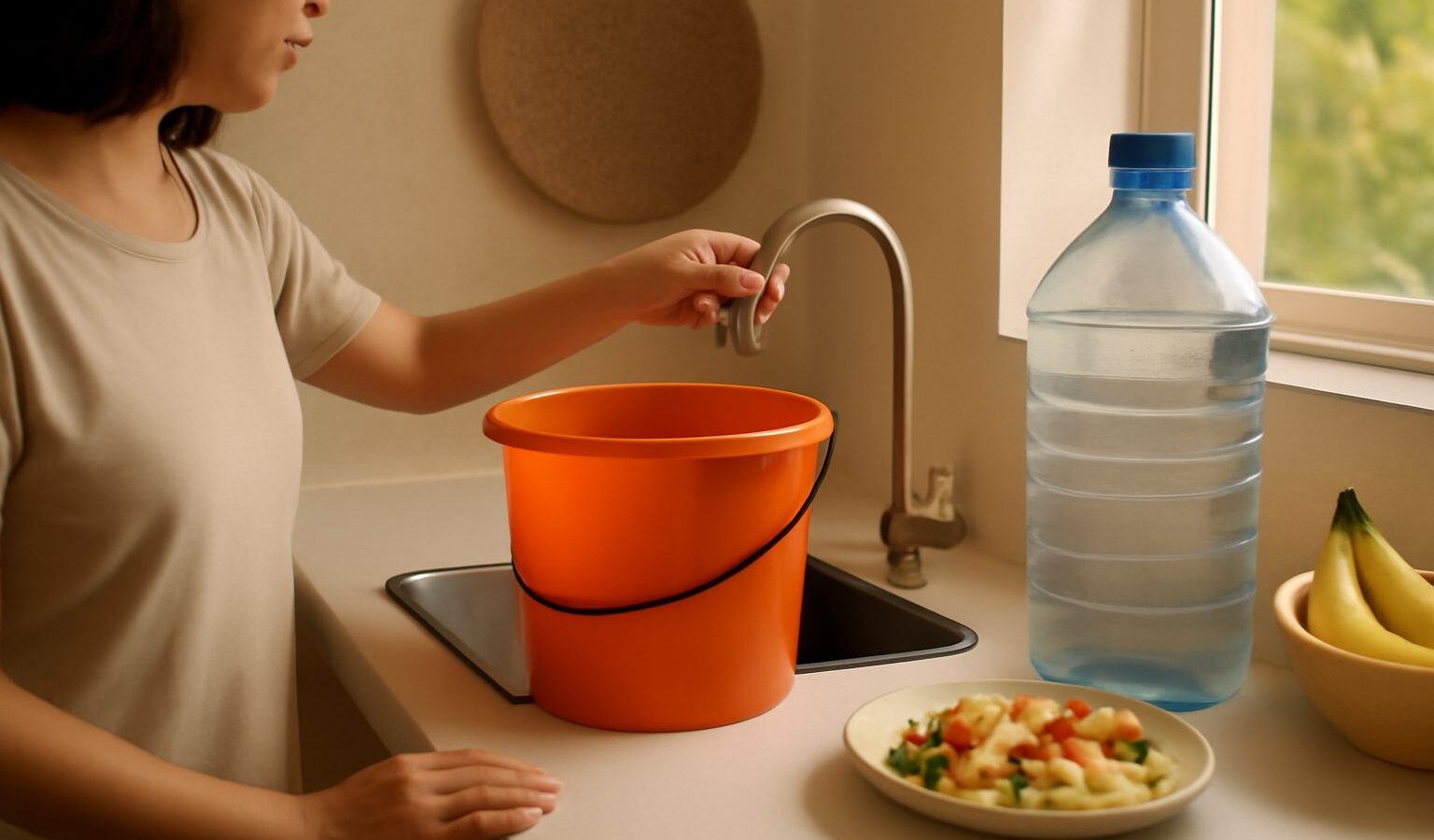
A water supply interruption in Singapore is usually short and well signposted, but it still catches households off guard. One morning you turn the tap and nothing comes out, or a notice in the lift lobby tells you the water will be off for most of a weekday. Either way, a little preparation turns a stressful day into a minor inconvenience.
This guide covers what to do before a planned shutoff, how to cope during one, and what to check once the water is back. It applies to HDB flats, condominiums and landed homes, though who you contact differs by housing type.
Why the Water Gets Shut Off
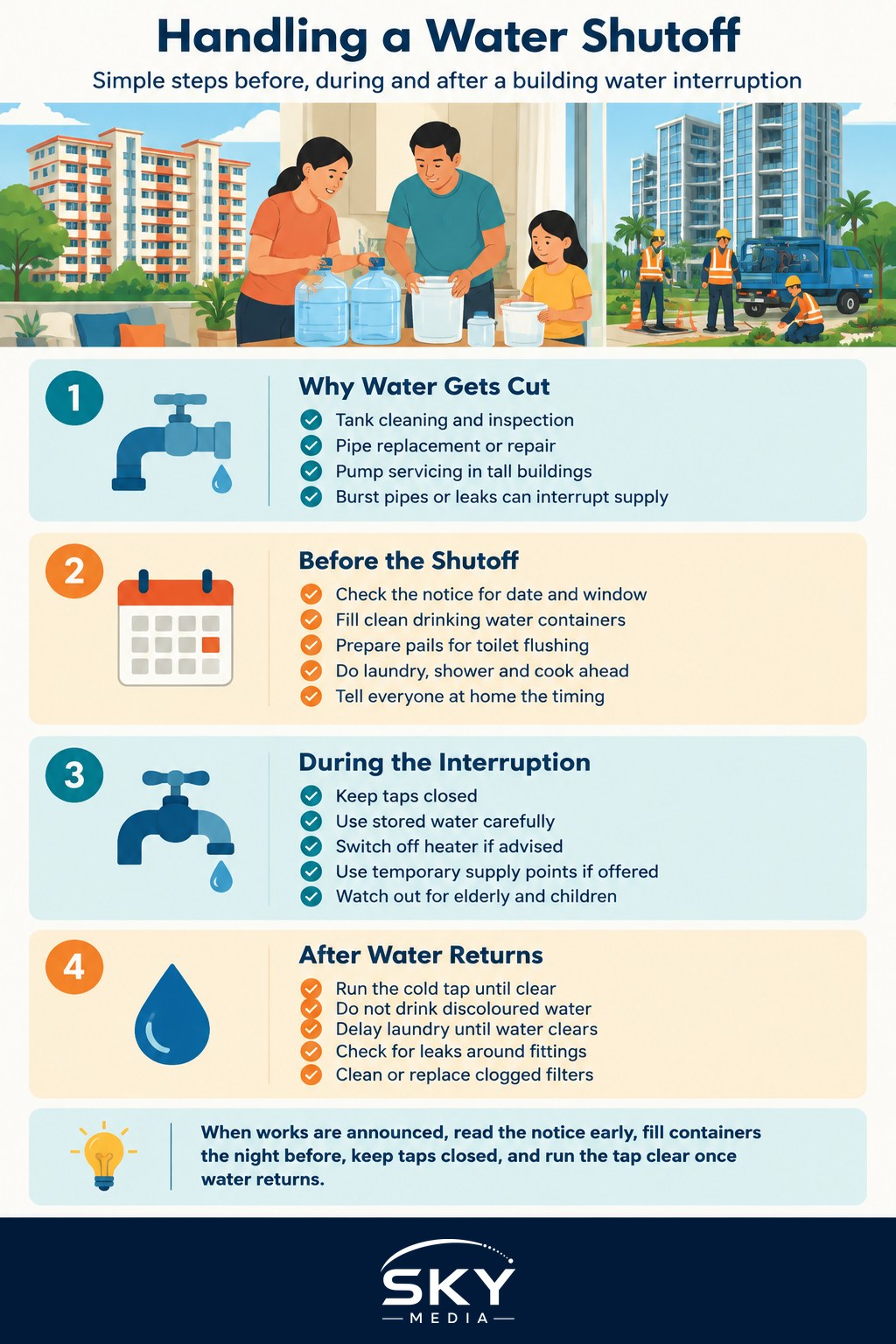
Singapore’s water network is reliable, so most interruptions are planned maintenance rather than failures. Common reasons include:
- Water tank cleaning. HDB blocks and many condominiums store water in rooftop or ground-level tanks that are cleaned and inspected periodically.
- Pipe replacement or repair. Ageing pipes inside a block, or the main pipe feeding it, may be replaced. Town councils run many of these works for HDB estates.
- Pump servicing. Taller buildings rely on pumps to push water up, and these need routine maintenance.
- Unplanned bursts or leaks. A burst pipe in the estate or a fault in the building’s supply can cut water with little or no warning.
For HDB flats, the town council (the body that manages common property in your estate) usually handles building works. For condominiums, it is the MCST, the Management Corporation Strata Title, often working through a managing agent. PUB, the national water agency, manages the public supply network up to your building. Landed home owners are generally responsible for the pipes inside their own property.
If you want the bigger picture of where your tap water comes from, our explainer on Singapore’s water story and the four national taps covers how the national supply is built.
Before a Planned Shutoff: A Practical Checklist
Planned works are usually announced in advance through notices in lift lobbies, letterboxes, the condo management app or noticeboards. The notice should state the date and the expected window.
Once you know the date, work through this list the day before:
- Fill drinking water containers. Clean bottles, a large jug or a food-grade water container are ideal. Plan for drinking, cooking and making baby formula if relevant.
- Fill a pail or two for flushing. A full pail poured quickly into the toilet bowl will flush it. A bathtub, if you have one, can also be filled for this purpose.
- Do the laundry and run the dishwasher early. Clear anything that needs a lot of water.
- Shower the night before or early that morning. Water often stays on until the stated start time, but do not count on it.
- Cook ahead or plan simple meals. Rice, soups and anything that needs rinsing are harder without running water.
- Stock wet wipes, hand sanitiser and paper plates. These cut down on washing up.
- Tell your household. Make sure helpers, older relatives and children know the timing so nobody is surprised mid-shower.
If someone at home has medical needs that depend on water, such as home dialysis or wound care, contact your town council or management early to ask about the works and arrange alternatives with your healthcare provider.
What to Do During the Interruption
When the water is off, a few habits make the day smoother.
Keep taps closed. If you leave a tap open to check, you may come home to a running tap, or worse, a flooding sink, when supply returns. Check once, then shut it.
Switch off the water heater if advised. Many households switch off storage water heaters during a shutoff as a precaution, since some heaters are not designed to run without a steady supply. Check your heater’s manual or ask the installer what applies to your model, and follow any instruction on the notice.
Ration stored water sensibly. Use drinking water only for drinking and cooking. Use pail water for flushing and rough cleaning.
Use the common facilities only if offered. For longer works, some town councils or condo managements arrange a temporary supply point or water truck. The notice will say if this is available.
Look after vulnerable family members. Elderly parents and young children may need extra help. Keep plenty of drinking water within easy reach on hot days, since Singapore heat can dehydrate people quickly.
If a planned shutoff also involves electrical works, such as pump replacement, you may face a short power interruption too. Households that rely on a home server, aquarium pump or medical device may find our guide to choosing an uninterruptible power supply (UPS) helpful.
Planned Versus Sudden Shutoffs
Not every interruption comes with a notice. Here is how the two situations differ and what to do first in each.
| Situation | How you find out | Who to contact first | First thing to do |
|---|---|---|---|
| Planned building works (HDB) | Notice in lift lobby or letterbox | Town council | Note the date and store water the night before |
| Planned building works (condo) | Management notice, app or email | MCST or managing agent | Check the window and prepare containers |
| Sudden outage across the block | Taps run dry with no warning | Town council or condo management | Ask neighbours if they are affected too |
| Outage only in your own unit | Neighbours still have water | A licensed plumber | Check your own valves and meter area |
| Wider outage across the area | Several blocks or streets affected | PUB | Check PUB’s official channels for updates |
The quickest way to narrow down a sudden outage is to ask a neighbour. If the whole block is dry, it is a building or network issue. If only your unit is affected, the problem is likely inside your home, such as a closed valve or a leak, and you will need a plumber. PUB lists its contact channels on its official website, and town councils display their hotlines in lift lobbies and on their websites.
When the Water Comes Back On
Supply often returns with a burst of air and some discoloured water. This is common after pipe works, because sediment or rust gets stirred up. Here is what to do:
- Run the cold tap for a few minutes until the water runs clear.
- Do not use discoloured water for drinking or cooking until it clears.
- Hold off on laundry until the water is clear, so white clothes do not get stained.
- Turn the water heater back on only after water flows normally from the hot tap, following your heater’s instructions.
- Check for leaks around sinks, toilet cisterns and the washing machine inlet. Pressure changes can loosen old fittings.
- Clean or replace filters. If you use a water purifier or a tap filter, sediment from the works can clog it sooner. Our guide to choosing a water purifier in Singapore explains how different filter types handle sediment.
If the water stays discoloured for a long time, or smells or tastes unusual, report it to your town council or management, and to PUB if the issue seems wider than your building.
Building a Simple Water Shutoff Kit
Since interruptions happen every so often, keeping a small kit ready saves a scramble later. Store it somewhere easy to reach, such as under the sink or in the household shelter.
- Two or three clean, food-grade water containers with lids
- A sturdy pail for flushing
- Wet wipes, hand sanitiser and a pack of disposable plates and cutlery
- The contact details of your town council or management and a trusted plumber
Rinse and refill stored containers periodically so the water stays fresh, and rinse them thoroughly before each use.
Making the Next Shutoff Easier
A water supply interruption is rarely more than a day of minor hassle if you plan ahead. Read notices as soon as they go up, fill containers the night before, keep taps closed while the water is off, and run the tap clear once it returns.
Because procedures, contact channels and notice periods can change, check the latest guidance from PUB, your town council or your condo management whenever works are announced.
Official sources: PUB
Further reading: Keeping a Sensible Emergency Food and Water Stock at Home