
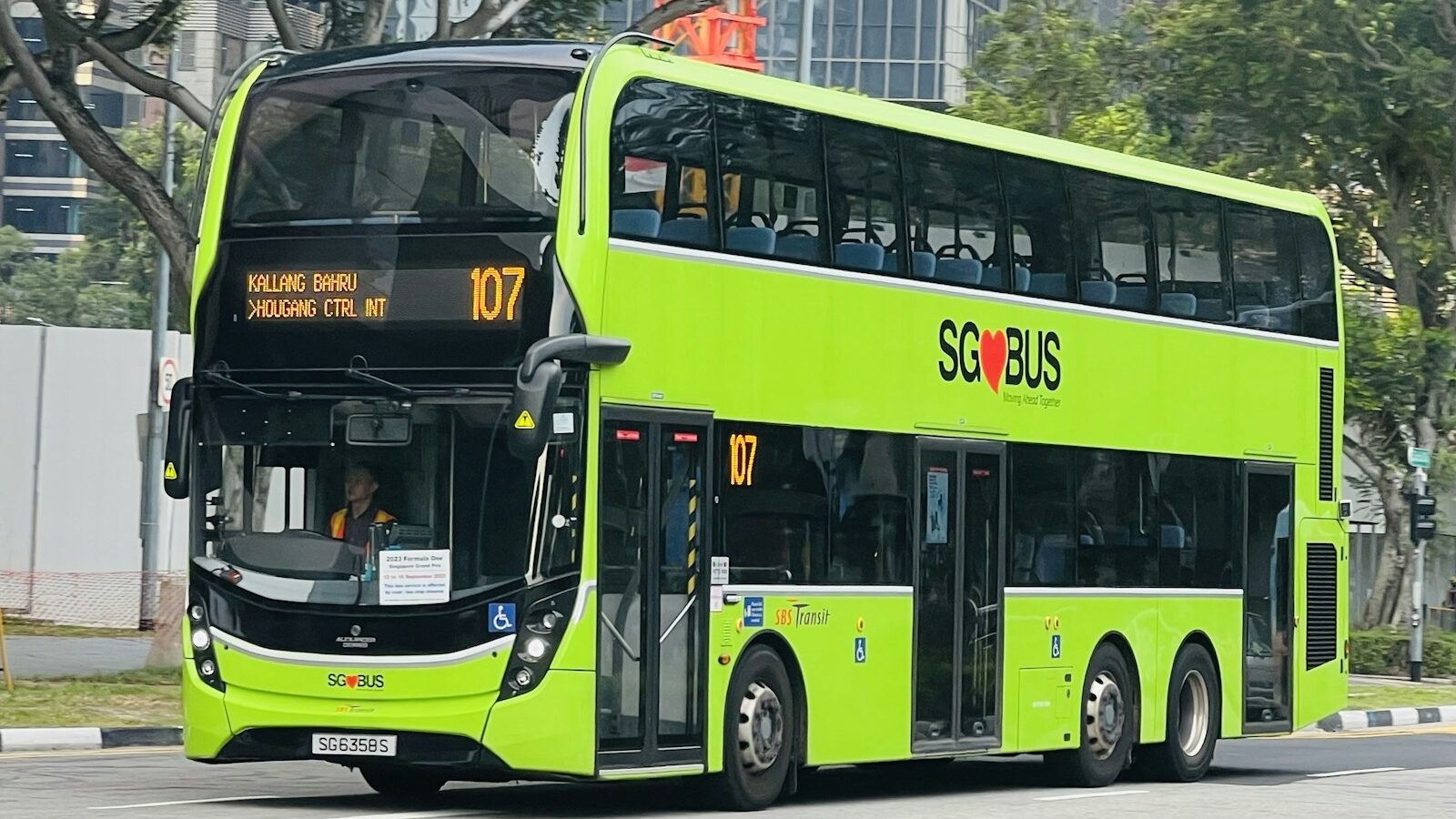
Packed MRT trains at 8am are a daily reality for many commuters. For some, a City Direct bus in Singapore offers a different option: a seat, fewer stops and a straighter run from the heartlands to the Central Business District (CBD). Alongside these sit premium bus services, run by private operators on a subscription or booking basis.
This guide explains how both work, how they differ from regular buses, how to find a route and pay, and when they make sense. Routes, timings and fares change, so check current details with the Land Transport Authority (LTA), your bus operator or a transit app before you ride.
What City Direct Buses Are
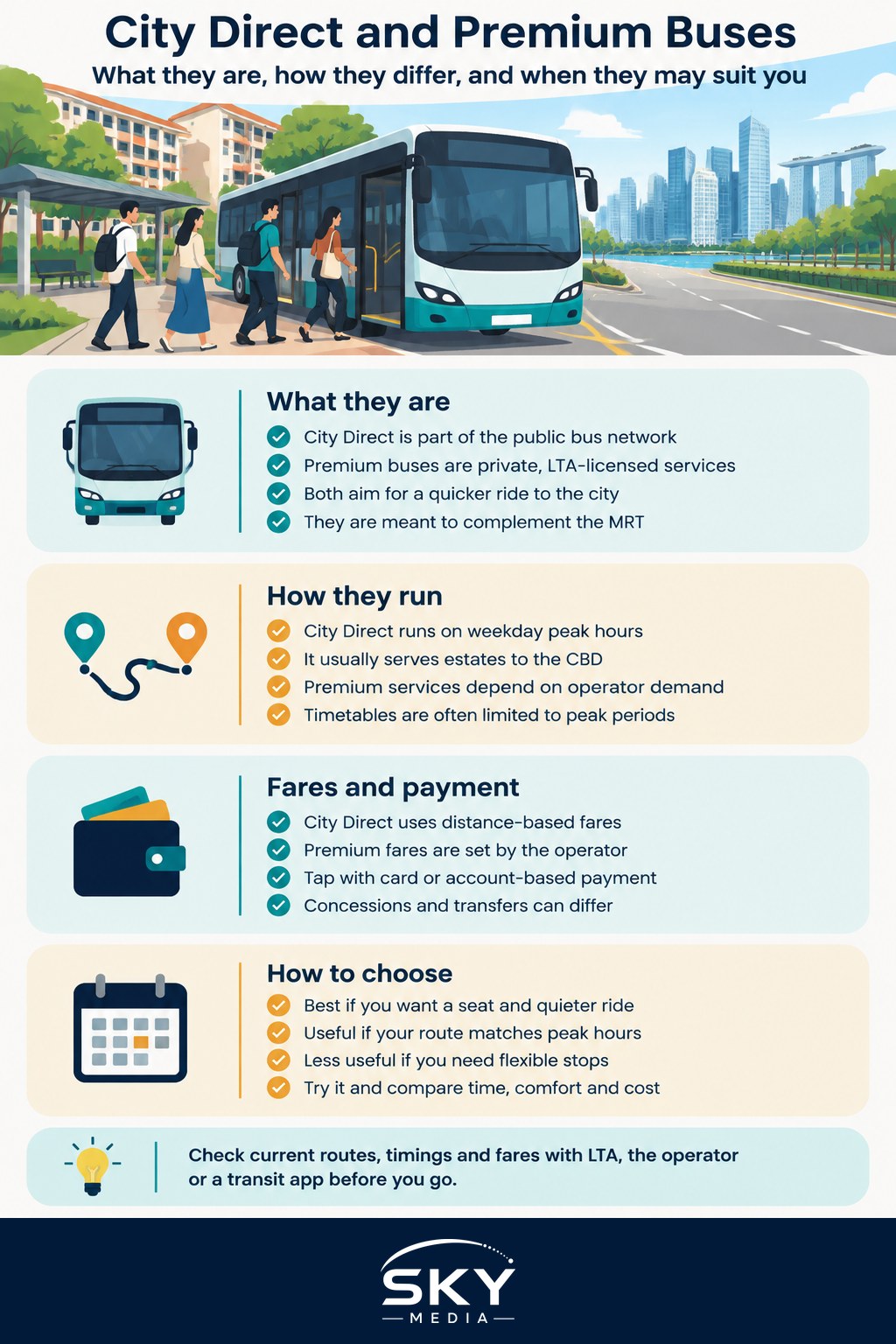
City Direct services are part of Singapore’s public bus network, introduced to give residents of housing estates further from town a faster peak-hour link to the city. They are typically identified by service numbers in the 600s.
Key features usually include:
- Peak hours only. They run on weekday mornings towards the city and weekday evenings back to the estates. They generally do not run on weekends or public holidays.
- Limited stops. The bus picks up passengers at a series of stops in a residential area, then takes an expressway or main road with few or no stops until it reaches the CBD.
- Fixed direction by time of day. Morning trips head into the city; evening trips return.
- Run by public bus operators under the government’s bus contracting model, so they appear in normal bus apps and journey planners.
They are designed to complement the MRT, not replace it, especially in areas where the train journey involves a long detour or a crowded transfer.
What Premium Bus Services Are
Premium bus services are a separate category. They are run by private bus companies under a licence from LTA, not as part of the regular public network. The idea is a more comfortable, often seat-guaranteed ride for people willing to pay more.
Common traits:
- Routes often link specific estates, condominiums or business parks to the city or to large employment areas
- Many require booking through an app or a monthly subscription, while some accept card tapping
- Fares are set by the operator and are generally higher than regular public bus fares
- Timetables are usually limited to a few departures during peak periods
Because they are private, routes come and go depending on demand. A service that ran last year may have changed or stopped, so always confirm with the operator.
City Direct vs Premium vs Regular Buses
| Feature | City Direct bus | Premium bus service | Regular trunk or express bus |
|---|---|---|---|
| Who runs it | Public bus operators under LTA’s network | Private operators licensed by LTA | Public bus operators under LTA’s network |
| When it runs | Weekday peak hours | Usually weekday peaks, set by operator | All day, most days |
| Stops | Several in the estate, then few or none to the CBD | Limited pickup and drop-off points | Many stops along the route |
| Fares | Distance-based, typically higher than regular fares | Set by operator, often subscription or per trip | Standard distance-based fares |
| How to pay | Card or account-based tapping, check current options | Operator’s app, subscription or card, varies | Card, account-based tapping or other accepted methods |
| Seat certainty | Not guaranteed, but often easier to get one | Often guaranteed with booking | Not guaranteed |
How Fares and Payment Work
City Direct fares. These follow distance-based fare rules but at a premium tier compared with regular services, reflecting the express nature of the trip. The exact fare depends on the distance and current fare tables, which are reviewed periodically by the Public Transport Council (PTC). Use the fare calculator on official transit apps or check LTA and PTC information for the latest amounts.
Payment. Most riders tap in and out with a stored-value card, bank card or mobile wallet under the account-based ticketing system known as SimplyGo. Tap out when you alight so you are charged correctly for the distance travelled. Cash acceptance on public buses has been changing, so do not count on paying in cash.
Concessions. Students, seniors and persons with disabilities may hold concession cards. How concessions apply on premium-tier services can differ from regular services, so check with TransitLink or your operator if you rely on a concession.
Transfers. Distance-based fares generally allow transfers between buses and trains within set conditions. Whether a premium-tier service fits into this the same way as a regular one is worth checking before you plan a journey around it.
Premium bus fares. These are entirely up to the operator. Some sell monthly passes, some charge per trip, and some offer discounts for longer commitments. Read the terms on cancellations and missed trips.
How to Find a Route Near You
- Use a transit app. Search your home bus stop and look for 600-series services listed with peak-hour timings, or plan a trip to your office and see if a City Direct option appears.
- Check the bus stop panel. Stops served by City Direct buses usually show the service on the information panel, along with operating hours.
- Look up the operator. Each public bus service is run by one of the contracted operators. Their websites list routes and timetables.
- Ask neighbours. Estate chat groups often know which premium bus services currently run in the area and how reliable they are.
- Check LTA updates. LTA announces new routes, amendments and withdrawals. City Direct routes have been adjusted over the years as MRT lines opened and demand shifted.
Is It Worth It? Who Benefits Most
A City Direct or premium bus works best if:
- You live in an estate where reaching an MRT station requires a feeder bus first
- Your workplace is close to a City Direct drop-off point in the CBD
- You value a seat and a quieter ride, perhaps to read, nap or work
- Your hours match the peak window and are fairly predictable
It is less useful if:
- You often leave work late and miss the last evening trip
- Your office is far from the drop-off points
- Traffic on your route is unpredictable; buses can still get stuck on expressways during heavy rain or accidents
- You need flexibility to make stops on the way
A practical approach is to try it for a week and compare total door-to-door time, comfort and cost against your MRT journey.
Tips for Riding Smoothly
- Arrive at the stop a few minutes early. Peak-hour buses run less frequently than regular services, and missing one can mean a long wait.
- Check the direction. Morning trips run towards the city; you will not find one heading out at 8am.
- Tap out when alighting so the fare is calculated correctly.
- Keep a backup plan, such as a nearby MRT station or regular bus, for days the service is disrupted.
- Follow the operator on social media or use app alerts for service changes.
If bus numbering is new to you, our guide to understanding bus service numbers explains what the different number ranges mean. For travel further afield, see our overview of direct ferries from Singapore to Indonesian islands.
Official sources: Land Transport Authority (LTA)
Further reading: Bus Lane and Bus Stop Rules in Singapore