
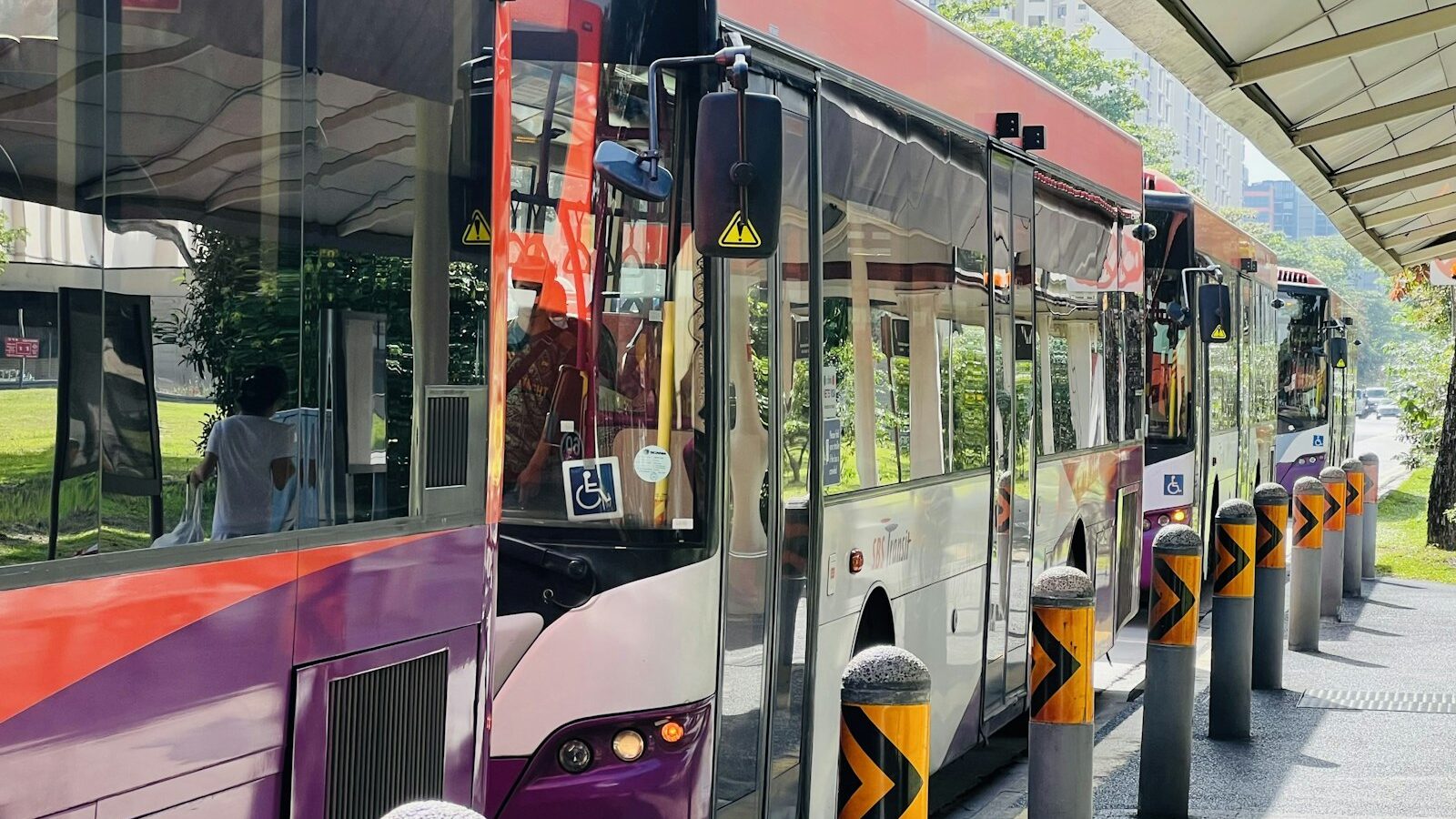
If you drive here, you have seen those yellow words painted on the road and the diamond signs overhead. Getting the bus lane rules singapore drivers rely on right is not just about avoiding a fine. It keeps buses moving, which helps everyone, including you on the days you leave the car at home. This guide explains the general ideas so you know what to look for, then points you to the official source for the exact hours and penalties, which can change.
Full-day versus part-time bus lanes
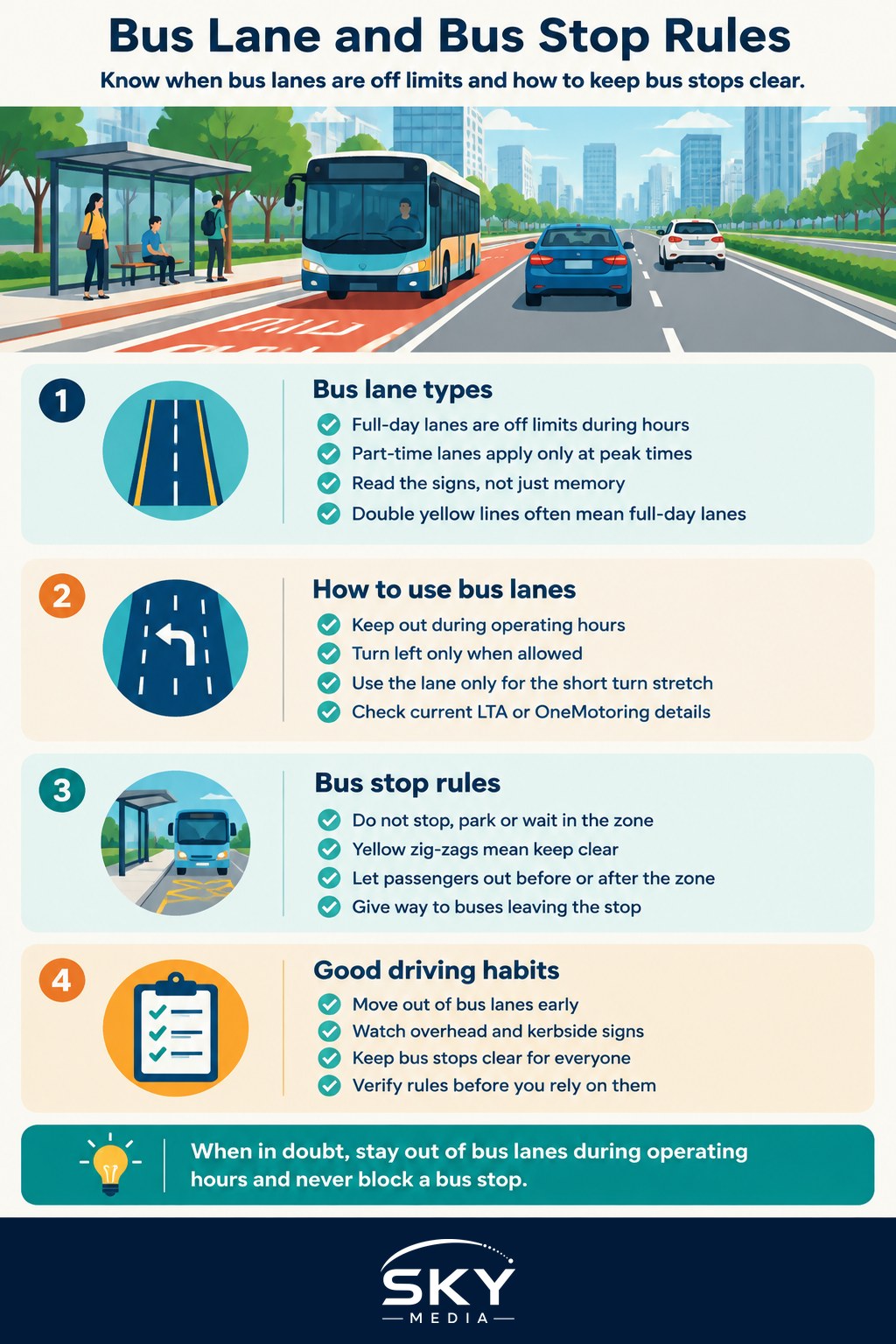
Singapore uses two broad types of bus lanes, and the difference matters. A full-day bus lane is reserved for buses during its posted operating hours on most days, and you should treat it as off limits to your car whenever those hours apply. A part-time or normal bus lane operates only during set peak periods, usually the morning and evening rush, and outside those windows other vehicles may use it.
The trick is that you cannot always tell which is which from memory, so read the signs. Bus lanes are marked by a continuous yellow line along the kerb and the word BUS painted on the road surface, with a sign stating the operating hours. A double yellow line often signals a full-day lane. During operating hours, keep out unless you are turning left into a side road or entrance and only for the short stretch needed to make that turn.
Because the operating hours, the list of affected roads, and the penalty for driving in a bus lane are all set by the Land Transport Authority and the Traffic Police, and because they do get updated, do not rely on figures a friend quoted years ago. Check the current details on the official LTA or OneMotoring channels before you assume a lane is free. This article is general information, not legal advice.
Stopping, parking, and picking up near bus stops
A bus stop is a working space for buses, not a convenient spot to drop off a passenger or wait for someone. In general you should not stop, park, or wait within the bus stop zone, which is often marked by a yellow zig-zag line on the road. Those zig-zags mean the area must stay clear so buses can pull in fully and passengers can board safely. Blocking a bus stop forces buses to stop in the traffic lane, which is exactly the jam the lane was designed to prevent.
If you genuinely need to let someone out, do it well before or after the marked zone, in a spot where stopping is allowed, and only briefly. Never leave your car unattended near a bus stop. Watch for pedestrians stepping out from between buses, and give way to a bus signalling to leave the stop, which is both courteous and expected of considerate drivers.
Practical habits that keep you clear
The simplest habit is to plan your lane early. If you know a road has a bus lane during peak hours, move out of it in good time rather than darting across at the last moment. Keep an eye on overhead gantries and kerbside signs, since these tell you the real rules for that stretch today.
For more on lane discipline and getting around smoothly, these guides help:
Remember that road rules and any fines are decided by LTA and the Traffic Police and can be revised, so treat the numbers you hear casually as a prompt to verify, not as gospel. When in doubt, stay out of the bus lane during its hours and keep bus stops clear. Doing so protects your record, keeps buses on schedule, and makes the road calmer for the cyclists, pedestrians, and fellow drivers sharing it with you. Drive with a bit of patience and these rules mostly take care of themselves.
Frequently Asked Questions
Can I drive in a bus lane to turn left? Generally yes, but only for the short stretch needed to turn left into a side road or entrance during operating hours. Otherwise keep out. Check the signs on that road and the latest rules on the LTA or OneMotoring websites.
How can I tell if a bus lane is full-day or part-time? Read the sign beside the lane, which states the operating hours. A double yellow line often signals a full-day lane, but do not rely on memory. If hours apply, treat the lane as off limits, and check LTA or OneMotoring for current details.
Can I stop briefly at a bus stop to drop someone off? Not within the bus stop zone, which is often marked by yellow zig-zag lines. Stop well before or after it, where stopping is allowed, and keep it brief. Blocking the stop forces buses to halt in the traffic lane.
Who decides the bus lane hours and fines? The Land Transport Authority and the Traffic Police set the operating hours, the roads affected and the penalties, and these can be revised. Do not rely on figures quoted years ago. Verify the current details through official LTA or OneMotoring channels.
What should I do when a bus signals to leave the stop? Give way where it is safe and courteous to do so. Watch for pedestrians stepping out from between buses, and do not squeeze past. Planning your lane early also stops you from darting across at the last moment.
Official sources: OneMotoring
Further reading: Filter Lanes and Discretionary Right Turns in Singapore