
Selling to a dealer is quick, but it usually means accepting a lower price, since the dealer needs room for their own margin. If you choose to sell car direct owner in Singapore, you deal with the buyer yourself and keep more of the value. The trade off is that you handle the listing, the viewings, the paperwork and the risk of time wasters or scammers.
This guide focuses on the private sale process from the seller’s side: getting the car ready, writing a listing, screening buyers, and completing payment and ownership transfer safely. It is general information, so always confirm current rules and fees with the Land Transport Authority (LTA) and your bank.
Check You Are Ready to Sell Privately
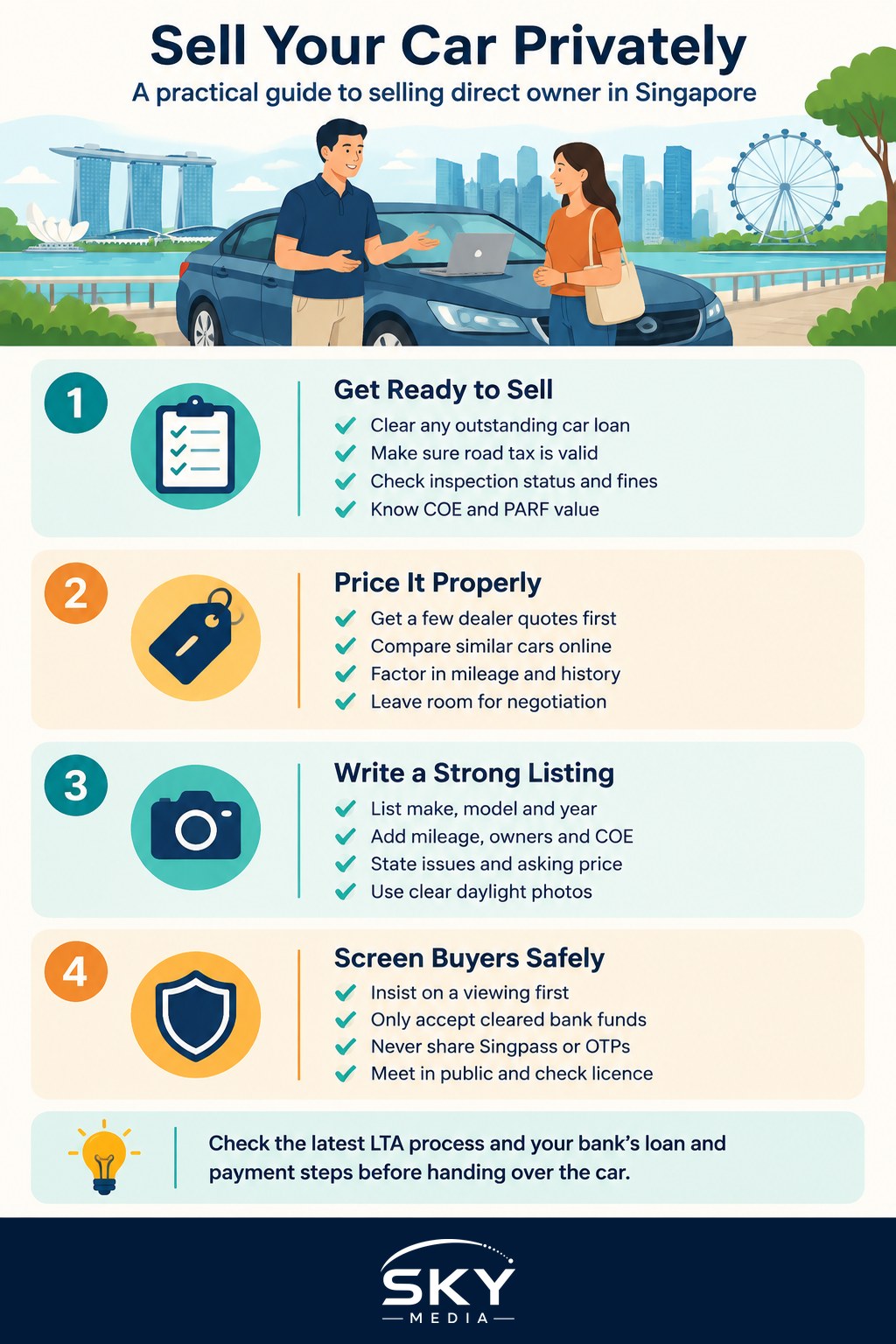
Before you list, make sure nothing will hold up the sale.
- Outstanding car loan. If the car is still under financing, the bank or finance company usually has a claim on it. You will need to settle the loan, or arrange for the buyer’s payment to go towards the settlement, before ownership can transfer. Ask your lender how they handle early settlement and what documents they issue once the loan is cleared.
- Valid road tax. The road tax generally needs to be valid at the point of transfer. Check its expiry on OneMotoring, LTA’s online portal for vehicle matters.
- Inspection status. Depending on the age of the car, it may need to have passed its periodic inspection. OneMotoring shows whether an inspection is due.
- Outstanding fines. Clear any parking or traffic fines tied to the vehicle, since unpaid fines can block the transfer.
- COE and PARF details. Know how much Certificate of Entitlement (COE) life is left and the car’s Preferential Additional Registration Fee (PARF) rebate value, if any. Buyers will ask, and these figures strongly affect price.
You can look up most of these details on OneMotoring using your Singpass.
Pricing Your Car Realistically
Private buyers expect to pay less than a dealer’s retail price but more than a dealer’s trade in offer. To find that range:
- Get a few dealer quotes first. These set your floor price.
- Browse online listings for the same make, model, year and remaining COE. Compare like for like, since a car with more COE left is worth more.
- Factor in mileage, service history, accident history and any modifications.
- Decide your lowest acceptable price before any buyer contacts you, so you do not get talked down on the spot.
Leave a small buffer for negotiation. Most Singapore buyers will try to bargain, and pricing a little above your target gives you room.
Writing a Listing That Attracts Serious Buyers
A clear, honest listing saves you hours of answering the same questions. Include:
- Make, model, variant and registration year
- Remaining COE period and road tax expiry
- Mileage and number of previous owners
- Service history, including whether it was serviced at an authorised centre
- Any known issues, scratches or repairs, stated plainly
- Asking price and whether it is negotiable
- Your preferred viewing area and times
Take clear photos in daylight, from all angles, plus the interior, dashboard with mileage, and engine bay. Wash and vacuum the car first. If your car is a parallel import, say so, since buyers often compare these closely with authorised dealer cars, as explained in our guide to parallel importer vs authorised dealer. For tips on wording a description that persuades without overselling, see how to write copy that sells.
Post your listing on established online car classified platforms and marketplaces. Avoid putting your full NRIC number, home address or vehicle documents in the listing itself.
Screening Buyers and Avoiding Scams
Private sellers are common targets for scams. Some red flags and safer habits:
| Situation | Red flag | Safer approach |
|---|---|---|
| First contact | Buyer offers full asking price without viewing | Insist on a viewing and a proper conversation before agreeing anything |
| Payment | Buyer sends a “payment screenshot” or asks you to refund an “overpayment” | Only accept funds you can see cleared in your own bank account |
| Personal details | Buyer asks for your Singpass, OTPs or login details | Never share these. No genuine buyer or agency needs them |
| Test drive | Buyer wants to drive alone or has no valid licence | Ride along and check their driving licence and insurance cover |
| Paperwork | Buyer wants ownership transferred before paying | Transfer only after full payment is received |
Some other practical checks:
- Speak on the phone, not just over text. Serious buyers are usually happy to call.
- Meet in a public, well lit place for viewings, such as a busy car park, and bring a friend if you can.
- Confirm test drive cover. Check your insurance policy to see whether other drivers are covered, and ask your insurer if unsure.
- Be wary of anyone who pressures you to act fast or who asks you to click links to “verify” a sale. If in doubt, check the Singapore Police Force’s ScamShield resources.
Agreeing the Deal and Collecting Payment
Once you have a buyer you trust and a price you both accept:
- Put the agreement in writing. A simple sale and purchase agreement should state the car’s details, agreed price, deposit, handover date, and that the car is sold in its current condition. Both parties sign and keep a copy.
- Take a deposit if there is a gap between agreement and handover. Agree in writing whether it is refundable.
- Settle any car loan. If the buyer’s money is paying off your loan, coordinate directly with your lender so the payment goes to the right place.
- Receive full payment. Bank transfer is common. Wait until the money shows as cleared in your account before transferring ownership. Treat cash in large amounts with caution, and a cashier’s order should be verified with the issuing bank.
Transferring Ownership Through LTA
Ownership transfer is done online through OneMotoring. In broad terms:
- The seller starts the transfer on OneMotoring with Singpass and enters the buyer’s details.
- The buyer must have valid motor insurance for the car in their own name before the transfer can be completed.
- The buyer then accepts the transfer and pays the transfer fee that applies at the time.
Fees, steps and requirements can change, so check the current process on OneMotoring before the handover day.
After the transfer:
- Cancel your own insurance for the car and ask your insurer about any refund of the unused premium.
- Cancel or update your In-vehicle Unit (IU) linked services, such as season parking or cash card arrangements, and remove your card from the car.
- Hand over all keys, manuals, the service record and any warranty documents.
- Keep copies of the signed agreement and payment proof. These help if any dispute about fines or condition comes up later.
Is a Private Sale Worth It for You?
Selling privately makes most sense if your car is in good condition, popular, and has a reasonable amount of COE left, and if you have time to answer messages and arrange viewings. If you need the money quickly, or the car is near the end of its COE, a dealer or a deregistration route may be simpler.
If you also happen to be on the other side of a deal, the same steps viewed from the buyer’s angle are covered in how to buy a car from a direct owner in Singapore.
Official sources: OneMotoring