
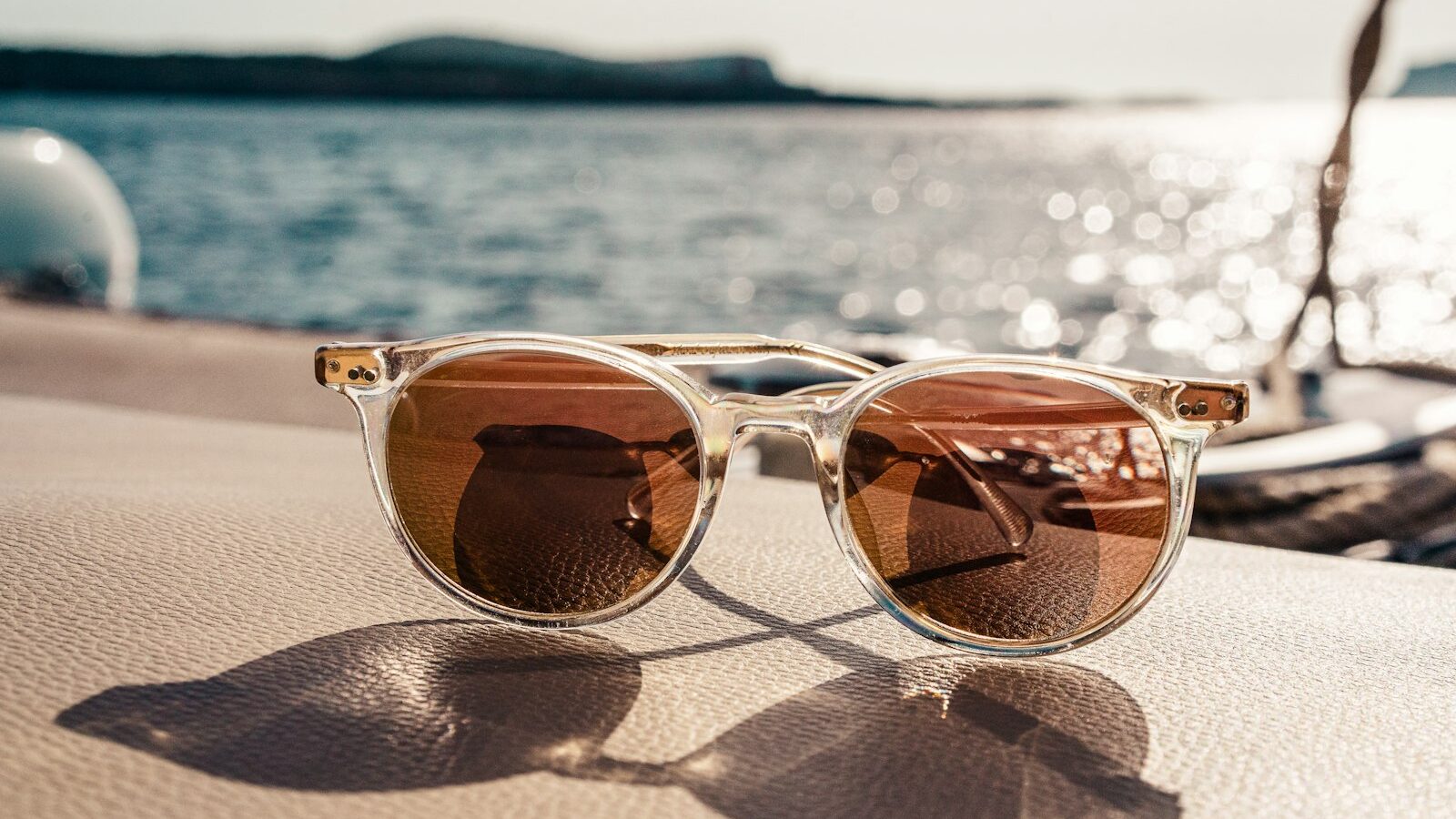
If you wear glasses, Singapore’s strong sun creates a daily dilemma. You can squint behind clear lenses, wear contacts with regular shades, or invest in eyewear that handles both your prescription and the glare. This guide to prescription sunglasses in Singapore compares the three main options, dedicated prescription sunglasses, transition (photochromic) lenses and clip-ons, so you can choose what fits your routine.
This is general guidance. For anything about your eye health or prescription, speak to a registered optometrist or an eye doctor.

Why Glasses Wearers Need a Sun Plan Here
Singapore sits near the equator, so UV levels are high for much of the year, even on hazy or cloudy days. The National Environment Agency publishes a daily UV index, which often reaches high or very high levels around midday.
For people who wear glasses, the practical problems are:
- Glare from roads, car bonnets, glass buildings and water at beaches and reservoirs
- Constant indoor-outdoor switching between air-conditioned malls, MRT stations and bright streets
- Driving and cycling, where sudden glare can be a safety issue
- Outdoor activities like running, golf, hiking and beach days
Most good spectacle lenses already block UV, but they do not reduce brightness. That is where tints and filters come in.
The Three Main Options Explained
Dedicated prescription sunglasses
These are a separate pair of glasses with your prescription built into tinted lenses. You keep your regular clear glasses for indoors and switch when you go out.
- Tint choices usually include grey, brown and green, in different darkness levels.
- Polarised lenses cut reflected glare from horizontal surfaces like roads and water, which many drivers and anglers appreciate.
- Mirror coatings add style and extra glare reduction.
- Wraparound frames for sports can be made with a prescription, although very curved frames may limit stronger prescriptions. Your optician will advise.
The trade-off is carrying and switching between two pairs.
Transition or photochromic lenses
“Transitions” is a brand name, but people use it for all photochromic lenses. These clear lenses darken automatically when exposed to UV light, then fade back indoors.
- One pair for everything, so nothing to swap or forget.
- They darken quickly outdoors but often take longer to clear fully when you walk back inside.
- Most standard versions do not darken much inside a car, because windscreens block much of the UV that triggers them. Some newer types are designed to react behind a windscreen, so ask specifically if you drive.
- In very hot weather, some photochromic lenses may not get quite as dark as in cooler climates.
Clip-on and magnetic sunglasses
These are tinted lenses that clip or magnetically attach over your existing frames.
- Usually the lowest-cost route if you are happy with your current glasses.
- Magnetic clip-ons made for a specific frame fit neatly and look tidy.
- Generic clip-ons can look bulky and may not cover the lenses well.
- They add weight on the nose and are easy to misplace.
Side-by-Side Comparison
| Feature | Prescription sunglasses | Transition lenses | Clip-ons |
|---|---|---|---|
| Number of pairs | Two (clear plus tinted) | One | One frame plus attachment |
| Darkness outdoors | Fixed, can be very dark | Varies with UV, usually medium to dark | Fixed, depends on clip-on |
| Driving | Good, especially polarised | Often weaker behind a windscreen | Fine if the fit is good |
| Indoor use | Must switch back to clear pair | Clear indoors, may lag after coming in | Remove the clip |
| Polarisation | Widely available | Limited options | Often available |
| Relative cost | Highest overall, as you buy a second pair | Upgrade on one pair of lenses | Usually lowest |
| Best for | Drivers, outdoor sport, style | Busy commuters who want one pair | Budget, occasional sun use |
Prices vary widely between opticals, lens brands and coatings, so ask for an itemised quote that shows the frame, lens type and each coating separately.
Which Option Suits Your Lifestyle
Think about how you actually spend your day.
- You drive daily. Polarised prescription sunglasses are usually the most comfortable. If you prefer one pair, ask about photochromic lenses designed to activate behind a windscreen.
- You commute by MRT and bus and walk a lot. Transition lenses suit frequent in-and-out movement, as long as you accept a short delay in clearing.
- You are outdoorsy. A sports frame with prescription tinted lenses stays put and protects from wind and dust.
- You change glasses often or are on a tight budget. A magnetic clip-on that fits your frame is a practical start.
- You care about style. Dedicated sunglasses let you choose a fashion frame that differs from your everyday pair. Our guide to choosing sunglasses for your face shape helps with frame shapes.
- You wear contact lenses sometimes. Non-prescription sunglasses over contacts can be a flexible combination; see our guide to everyday sunglasses and eyewear.
Some people combine options, for example transition lenses for daily wear plus a pair of polarised prescription sunglasses kept in the car.
Getting Your Prescription Sunglasses Made
A few steps help you get it right:
- Use a current prescription. If your last eye test was a while ago, get one done by a registered optometrist first. Our guide to getting spectacles and contact lenses explains how eye tests and optical shops work here.
- Mention your main use. Driving, sport, screen work and fashion each point to different tints and coatings.
- Ask about lens material. Higher prescriptions may need thinner, high-index lenses, especially in larger sunglass frames.
- Check UV protection is stated as full UV400 or 100 percent UV protection.
- Ask about varifocals. If you wear progressive lenses, confirm the sunglass frame is deep enough for the reading zone.
- Clarify timing and warranty. Tinted, polarised and photochromic lenses are often ordered from a lab, so ask when they will be ready and what happens if you cannot adapt.
Care tips for tinted and coated lenses
- Rinse off sand and dust before wiping.
- Use a microfibre cloth and lens cleaner, not your shirt.
- Do not leave glasses on a hot car dashboard, as heat can damage coatings and warp frames.
- Store them in a hard case in your bag.
A Note on Eye Health
Tinted lenses reduce glare and UV exposure, but they do not replace regular eye checks. If you notice sudden changes in vision, eye pain, flashes or floaters, see an eye doctor or go to a polyclinic or hospital promptly. Children and older adults who spend a lot of time outdoors also benefit from UV protection, so ask your optometrist what suits them.