
When a loved one spends most of the day in bed or a chair, the skin needs extra attention. Pressure sores, also called pressure injuries or bed sores, form when constant pressure on one area of skin reduces its blood supply. They can start quietly and turn into painful, slow-healing wounds, yet many can be prevented with steady daily care. This guide to pressure sores in seniors singapore explains how they form, practical prevention and skin care steps for families and caregivers, and when to call a doctor. It is general information, not medical advice, so please work with the person’s care team for their own situation.
How pressure sores form and where to watch
A pressure sore develops where skin and soft tissue are squeezed between bone and a surface such as a mattress or chair. Without regular movement, blood cannot flow well to that spot, and the skin begins to break down. Moisture from sweat or incontinence, friction from sliding, thin fragile skin, poor nutrition, and reduced sensation all raise the risk, which is why frail and bedbound seniors need particular care.
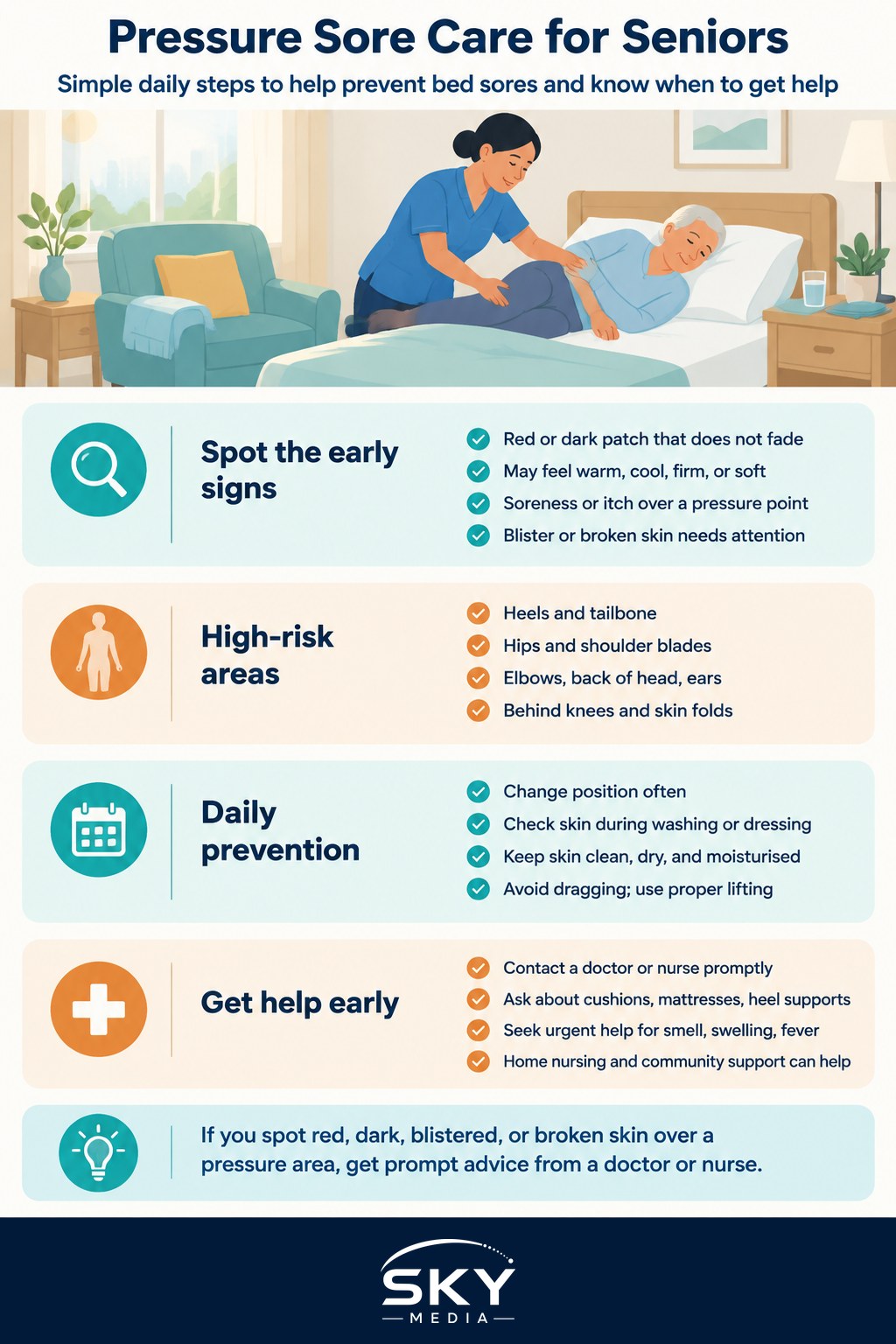
The areas most at risk are the bony parts of the body that carry weight or rest against a surface. These include the heels, the base of the spine and tailbone, the hips, the shoulder blades, the elbows, the back of the head, and the ears. Behind the knees and between skin folds also deserve a look.
Early warning signs are worth learning, because catching a sore at the start makes a real difference. On lighter skin an early pressure area may look red and may not fade when you press it gently, and on darker skin it may look purplish or darker than the skin around it. The spot may feel warmer or cooler, firmer or softer, or the person may say it is sore or itchy. Any broken skin, blister, or open wound over a pressure point needs prompt attention.
Daily prevention and skin care
Prevention is a team effort and mostly comes down to relieving pressure, keeping skin clean and dry, and supporting good nutrition. The steps below are general good practice, and you should follow any plan the person’s doctor, nurse, or occupational therapist has set.
- Change position often. Helping the person shift their weight regularly, whether turning in bed or easing position in a chair, takes pressure off vulnerable spots. A nurse can advise on a schedule and safe turning that protects your own back.
- Check the skin every day, especially over the bony areas above, during washing or changing. Report any new red, dark, or broken area early.
- Keep skin clean and dry. Gently wash and pat dry, manage moisture from sweat or incontinence promptly, and use moisturiser on dry skin. Our guides to managing incontinence in older age and skin care and skin health in older age offer gentle, practical help.
- Reduce friction and shearing. Avoid dragging the person across the sheet, use proper lifting techniques or aids, and keep bedding smooth and free of crumbs and creases.
- Consider pressure-relieving equipment. Special mattresses, cushions, and heel supports can help, and an occupational therapist can assess what suits. Our overview of a hospital bed and home care equipment guide explains the options, and funding help may be available through the Agency for Integrated Care, so check with AIC on current schemes and eligibility.
- Support good nutrition and hydration. Eating and drinking well helps skin stay resilient. A doctor or dietitian can advise if appetite is poor.
Caring for someone who is bedbound is demanding, and looking after your own health matters too. Our note on the caregivers own health and burnout is a gentle reminder that support exists for you as well.
When to call a doctor
Please contact a doctor or nurse promptly if you notice a red or dark area that does not fade, any broken skin or blister, or an open wound over a pressure point. Early treatment can stop a small problem from becoming a deep, slow-healing one. Also seek advice if an existing sore looks larger, deeper, or is not improving.
Some signs need urgent medical care. Call a doctor quickly, or 995 or A&E, if a wound has a bad smell or discharge, if the surrounding skin is hot, swollen, and spreading in redness, or if the person develops a fever, becomes confused, or seems unwell, as these can point to infection.
For ongoing care, a home nursing service or your regular doctor can guide wound care and prevention, and you can ask about community nursing support. Pressure sores are common in frailty, but with attentive daily care and the right advice, much suffering can be prevented. You do not have to manage it alone, and reaching out early is a sign of good care, not failure.
Frequently Asked Questions
Which parts of the body get pressure sores most often in bedbound people? The bony areas that bear weight or press on a surface, including heels, tailbone, hips, shoulder blades, elbows, the back of the head and ears. Behind the knees and skin folds also deserve a look during daily checks.
How do I spot an early pressure sore on darker skin? Redness can be hard to see on darker skin, so look for an area that appears purplish or darker than the skin around it. It may also feel warmer, cooler, firmer or softer. Report any such spot to the nurse or doctor early.
Can special mattresses and cushions prevent bed sores? They can help relieve pressure, and heel supports are also useful. An occupational therapist can assess what suits the person. Funding help may be available through the Agency for Integrated Care, so check AIC for current schemes and eligibility.
How often should I turn a bedbound parent to prevent pressure sores? There is no one-size schedule, because it depends on the person’s skin, condition and equipment. A nurse can set a routine and teach safe turning that protects your own back as well. Follow that plan and check the skin daily.
What signs of a pressure sore infection should I watch for? A bad smell or discharge, hot swollen skin with spreading redness, fever, confusion or the person seeming unwell can all point to infection. Contact a doctor quickly, and call 995 if the person is seriously unwell.