

If you look after an elderly parent, you may have noticed that a light knock against a table leaves a large purple bruise, or that pulling off a plaster takes a layer of skin with it. Skin tears in elderly people are very common, and they can happen with surprisingly little force. This guide explains why older skin is so fragile, how to care for a skin tear or bruise gently at home, how to prevent them, and when a doctor needs to take a look.
This is general information, not medical advice. If you are unsure about any wound, or if your loved one has diabetes, poor circulation or takes blood thinners, check with their doctor, a polyclinic or a nurse.
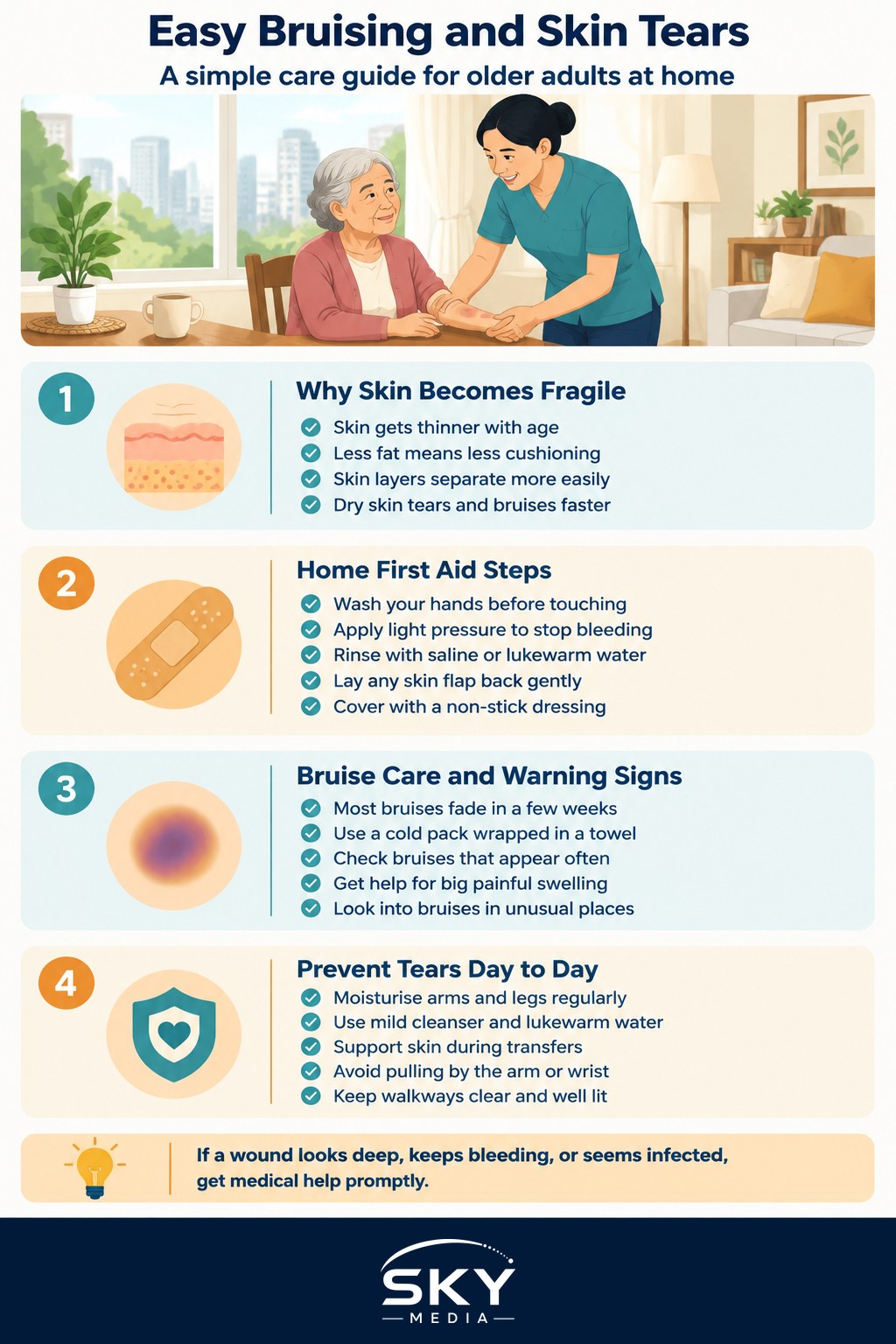
Why Older Skin Bruises and Tears So Easily
As we age, skin changes in several ways that make it more vulnerable:
- Thinner layers. The outer skin and the layer beneath it become thinner, with less cushioning fat.
- Weaker connection. The bond between the skin’s layers loosens, so a shearing or pulling force can separate them and create a flap.
- Fragile blood vessels. Small vessels under the skin break more easily, causing flat purple patches, often on the forearms and backs of hands. Doctors sometimes call this senile purpura. It is common and often harmless, but should still be mentioned to a doctor.
- Drier skin. Less oil and moisture make skin less elastic.
- Medicines. Some medications, such as blood thinners and long-term steroids, can make bruising and tearing more likely. Never stop a medicine on your own; ask the doctor if you are concerned.
Other factors include poor nutrition, dehydration, reduced mobility, unsteady hands and memory problems. Many skin tears happen during everyday activities, such as bumping into furniture, transfers from bed to chair, or removing tape and clothing. For daily routines that keep older skin healthy, see our guide to skin care and skin health in older age.
First Aid for a Skin Tear at Home
A skin tear may be a simple split, a flap of skin that is still attached, or an area where the top layer has come off completely. For a small, shallow tear, these general steps can help. Wash your hands first and work gently.
- Stop any bleeding. Apply light, steady pressure with a clean, non-fluffy cloth or gauze. Raise the arm or leg if comfortable.
- Clean the wound. Rinse gently with saline or clean, lukewarm water. Pat the surrounding skin dry; do not rub.
- Ease the flap back. If there is a skin flap, try to lay it back over the wound in its original position, using a damp cotton bud or gloved finger. Do not stretch it. If it will not lie flat easily, leave it and seek help.
- Cover with a gentle dressing. Use a non-stick dressing suitable for fragile skin, such as soft silicone types sold at pharmacies. Ask a pharmacist which product suits.
- Avoid sticky tapes on the skin. If you need to secure a dressing, use a tubular bandage or light wrap rather than adhesive tape.
- Mark the direction. Draw a small arrow on the dressing showing the direction of the flap. When removing it, peel in that direction so you do not lift the flap again.
- Leave it alone. Many dressings can stay on for a few days. Follow the product instructions or nurse’s advice rather than checking it constantly.
Do and don’t at a glance
| Do | Don’t |
|---|---|
| Use non-stick, silicone-type dressings | Use strong adhesive plasters or tape on the skin |
| Gently reposition the flap if it moves easily | Pull or stretch the flap into place |
| Peel dressings off low and slow, in the flap’s direction | Rip a dressing off quickly |
| Keep surrounding skin moisturised | Apply creams directly into an open wound unless advised |
| Watch for signs of infection | Ignore increasing redness, warmth or pus |
Caring for Bruises
Most bruises fade on their own over a couple of weeks, changing colour as they heal. For a fresh bruise after a bump, a cold pack wrapped in a towel for short periods can ease swelling. Do not put ice directly on fragile skin.
Pay closer attention when:
- Bruises appear often without a clear cause. This should be checked by a doctor, as it may relate to medication, blood problems or other health issues.
- There is a large, painful swelling, especially after a fall. It could be a collection of blood or a hidden injury.
- Bruises are in unusual places, such as the face, neck, inner arms or back. Usually there is an innocent explanation, but unexplained injuries in a vulnerable person should be gently looked into, including by asking the person and their carers. Support is available through official channels if you are worried about their safety.
When to See a Doctor or Nurse
Get medical help promptly, or call 995 in an emergency, if:
- Bleeding does not stop with gentle pressure
- The tear is large, deep, or the flap is missing or dark in colour
- The wound was caused by a dirty object or a fall with other injuries
- There are signs of infection, such as spreading redness, warmth, swelling, pus, bad smell or fever
- The wound is not improving after several days
- The person has diabetes, poor circulation or takes blood thinners
- You are unsure whether their tetanus protection is up to date
A family doctor, polyclinic or home nursing service can dress wounds and teach you techniques. If your parent sees a specialist for several conditions, our guide on how to find a geriatrician in Singapore explains how geriatric care can help coordinate things.
Preventing Skin Tears and Bruises Day to Day
Prevention is where carers make the biggest difference.
Skin care
- Moisturise arms and legs regularly with a gentle, fragrance-free moisturiser, ideally after a bath.
- Use mild cleansers and lukewarm water, and pat dry.
- Encourage fluids and a balanced diet, with enough protein, unless a doctor has advised otherwise.
Protect vulnerable areas
- Long, soft sleeves and trousers give a light barrier.
- Pad bed rails, wheelchair arms and sharp furniture corners.
- Keep the person’s nails, and your own, short and smooth.
- Remove rings or watches with rough edges when helping with care.
Safer handling
- Never pull by the arm or wrist. Support under the shoulders and back during transfers.
- Use a slide sheet or ask an occupational therapist about transfer aids if moving someone is difficult.
- Take clothing off slowly, especially tight sleeves and compression stockings.
A safer home
- Good lighting along walkways and in the bathroom
- Clear clutter and secure loose cables and mats
- Furniture arranged so there is space to move with a walking aid
Skin integrity is also linked to continence care. Damp skin breaks down more easily, so if your parent uses pads, choosing well-fitting, absorbent products helps. Our guide to choosing an adult diaper covers what to look for.
Looking After Yourself as a Carer
Fragile skin can make carers anxious about every touch. With a few habits, such as gentle handling, regular moisturising and the right dressings at home, most minor injuries can be managed calmly. Ask the doctor, nurse or pharmacist to show you techniques, and do not hesitate to seek help when a wound worries you.
Frequently Asked Questions
Can I use antiseptic or hydrogen peroxide on an elderly person’s skin tear? It is generally better to rinse gently with saline or clean lukewarm water, as strong antiseptics can irritate fragile skin and delay healing. Ask a nurse or pharmacist what is suitable, especially for larger wounds. See a doctor if there are signs of infection.
How long does a skin tear take to heal? It varies with the size of the tear, the person’s health, nutrition and medication, and whether the dressing is left alone. Small tears may heal within a couple of weeks, while larger ones or those in people with diabetes can take longer. See a doctor if there is no improvement after several days.
What if my parent keeps picking at the dressing? Cover it with a tubular bandage or light wrap rather than tape, and keep nails short. Distraction and calm reassurance can help, especially for people with memory problems. If the habit continues, ask the nurse or doctor about other dressing options, as constant disturbance slows healing.
Should I take photos to track a wound at home? Yes, dated photos help you see whether a wound is improving and give the doctor or nurse a clear record. Take them in the same light, with a ruler or coin for scale if possible. Always seek advice if the wound looks larger, redder or smelly.
Do vitamin supplements help prevent easy bruising in older adults? Do not assume so. A balanced diet with enough protein and fluids supports skin health, but supplements are not a proven fix and some can interact with medicines such as blood thinners. Ask the doctor before starting any, especially if bruising is frequent or unexplained.
Official sources: HealthHub
Further reading: Itchy Skin in Older Adults: Causes and Relief · Cellulitis in Older Adults: Red, Swollen Legs and When to Go to A&E