
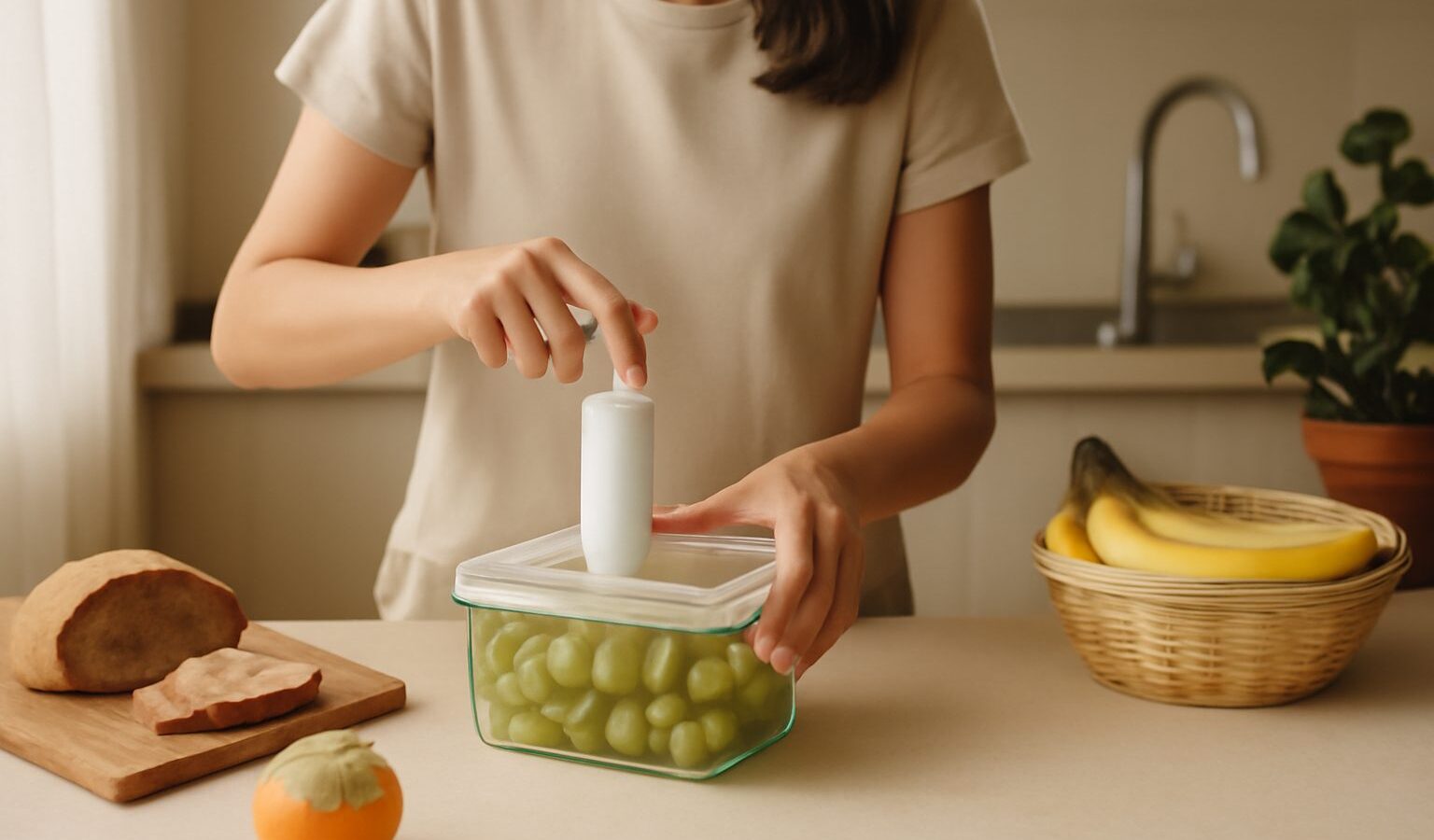
If you have ever bought a loaf of bread on Monday and found green spots by Thursday, you already know how quickly food mould grows in Singapore. Year-round warmth and high humidity are ideal for mould spores, which are always floating in the air. Your kitchen cannot be made spore-free, but you can make it a much harder place for mould to settle.
This guide focuses on food: bread, fruit, sauces and pantry staples. For mould on walls, ceilings and cabinets, see our separate guide to preventing mould and mildew at home.

Why Food Goes Mouldy So Fast Here
Mould needs three things: moisture, warmth and food. A Singapore kitchen offers all three. A few local habits make it worse:
- Condensation forms when cold items from the fridge sit out in warm air, or when warm food is sealed in containers before cooling.
- Closed kitchens with little airflow trap steam from cooking and washing.
- Plastic bags and sealed packaging trap moisture released by bread, fruit and vegetables.
- Bulk buying means opened packets sit around for weeks.
Understanding this helps you target the real problem, which is usually trapped moisture rather than a dirty kitchen.
Bread, Buns and Baked Goods
Bread is often the first thing to turn. Local soft loaves and buns are moist and usually made to be eaten within a few days.
- Buy smaller quantities or a half loaf if your household eats slowly.
- Freeze what you will not finish soon. Slice the loaf first, then freeze in a sealed bag. Toast slices straight from frozen.
- Avoid storing bread on top of the fridge or near the stove, where it is warm.
- Keep it dry. Never put bread back in its bag while it is still warm from toasting or with crumbs from wet hands.
- Refrigerating bread slows mould but makes it go stale faster. It is a reasonable short-term option in very humid weeks if you will toast it anyway.
Cakes with cream, custard or fresh fruit fillings should go in the fridge and be eaten quickly.
Fruit and Vegetables
Fruit spoils fast in tropical heat, and one mouldy piece can spread spores to its neighbours.
- Check fruit bowls daily and remove anything soft, bruised or spotty.
- Do not wash produce before storing it. Wash just before eating, since leftover water speeds up mould.
- Store berries and grapes in the fridge, unwashed, in a container lined with a paper towel to absorb moisture.
- Keep ripening fruit like bananas and mangoes separate from fruit you want to last longer, as they release gases that speed up ripening.
- Use the crisper drawer for leafy greens, wrapped loosely in paper towel inside a bag or box.
- Onions, garlic and potatoes prefer a cool, dry, dark spot with airflow, not a sealed plastic bag. In a hot kitchen, buy smaller amounts.
Sauces, Condiments and Opened Jars
Opened sauces are an easy place for mould to start, especially thick, sweet or low-salt ones.
- Read the label. Many sauces say “refrigerate after opening”. In Singapore’s climate it is sensible to follow this closely.
- Use a clean, dry spoon every time. A spoon that has touched other food or water introduces both moisture and spores.
- Wipe the rim and lid before closing so sticky residue does not build up.
- Write the opening date on the jar with a marker, so you know how long it has been open.
- Homemade sambal, pastes and stocks should be cooled quickly, stored in the fridge and used within a short time, or frozen in small portions.
Pantry Storage in a Humid Climate
Dry goods are not immune. Flour, rice, nuts, spices and dried foods can absorb humidity, clump and grow mould or attract pests.
- Transfer opened packets into airtight containers with good seals.
- Keep the pantry away from the sink, stove and kettle, where steam collects.
- Store nuts, seeds and wholegrain flour in the fridge if you go through them slowly, as their oils can spoil in heat.
- Use food-safe moisture absorbers in the cabinet if it feels damp, and replace them as directed.
- Rotate stock: put newer items at the back, older items in front.
The table below compares common storage spots for everyday foods.
| Food | Best storage in Singapore | Common mistake |
|---|---|---|
| Sliced bread | Freezer for anything not eaten in a few days | Leaving it on top of the warm fridge |
| Berries and grapes | Fridge, unwashed, in a lined container | Washing before storing |
| Opened sauces and jams | Fridge with lid wiped and sealed | Keeping in a warm cabinet after opening |
| Rice, flour, oats | Airtight container in a cool, dry cabinet | Clipping the original bag shut near the stove |
| Cooked leftovers | Cooled quickly, then fridge in sealed containers | Leaving out on the counter for hours |
Keeping the Fridge Working for You
The fridge is your main defence, but only if it is cold, clean and not overstuffed.
- Keep the temperature cold enough. Food safety agencies generally recommend a fridge at or below about 4 to 5°C. A cheap fridge thermometer helps you check.
- Do not overpack it. Cold air needs to circulate.
- Wipe spills promptly and clean shelves regularly with mild detergent, then dry them.
- Clear out leftovers on a regular day each week.
- Check door seals. A worn seal lets warm, moist air in.
For a fuller routine covering chopping boards, sponges and surfaces, see our kitchen cleaning and food safety basics.
When to Throw Mouldy Food Away
It is tempting to cut off a spot and eat the rest, but mould often grows roots and threads you cannot see. General food safety guidance suggests:
- Throw away soft foods with any mould, such as bread, cakes, soft fruit, cooked rice, sauces, jams, yoghurt and soft cheese.
- Hard foods like firm cheese or hard vegetables such as carrots can sometimes be salvaged by cutting well around the spot, but if in doubt, throw it out.
- Do not sniff mouldy food closely, as you may breathe in spores.
- Check nearby items, since mould spreads to neighbouring food.
- Clean the storage spot where the mouldy item sat before putting anything back.
Some moulds can produce substances that are harmful, and people with allergies, asthma or weakened immunity may react more strongly. If anyone feels unwell after eating something questionable, seek advice from a doctor. The Singapore Food Agency (SFA) also publishes consumer food safety tips worth checking for current guidance.
A Simple Weekly Routine
A few minutes a week makes a big difference:
- Check bread, fruit and leftovers every couple of days.
- Freeze anything you will not finish in time.
- Clear and wipe one fridge shelf each week.
- Top up airtight containers and check the pantry for damp.
- Keep the kitchen ventilated, especially after cooking.
Food mould in Singapore is a constant, but it is manageable. Control moisture, store foods in the right place and buy in amounts you will actually use, and you will throw away far less.
Further reading: How to Keep Cockroaches Out of Condo and HDB Kitchens · How to Prevent Laundry From Smelling Musty in Singapore