
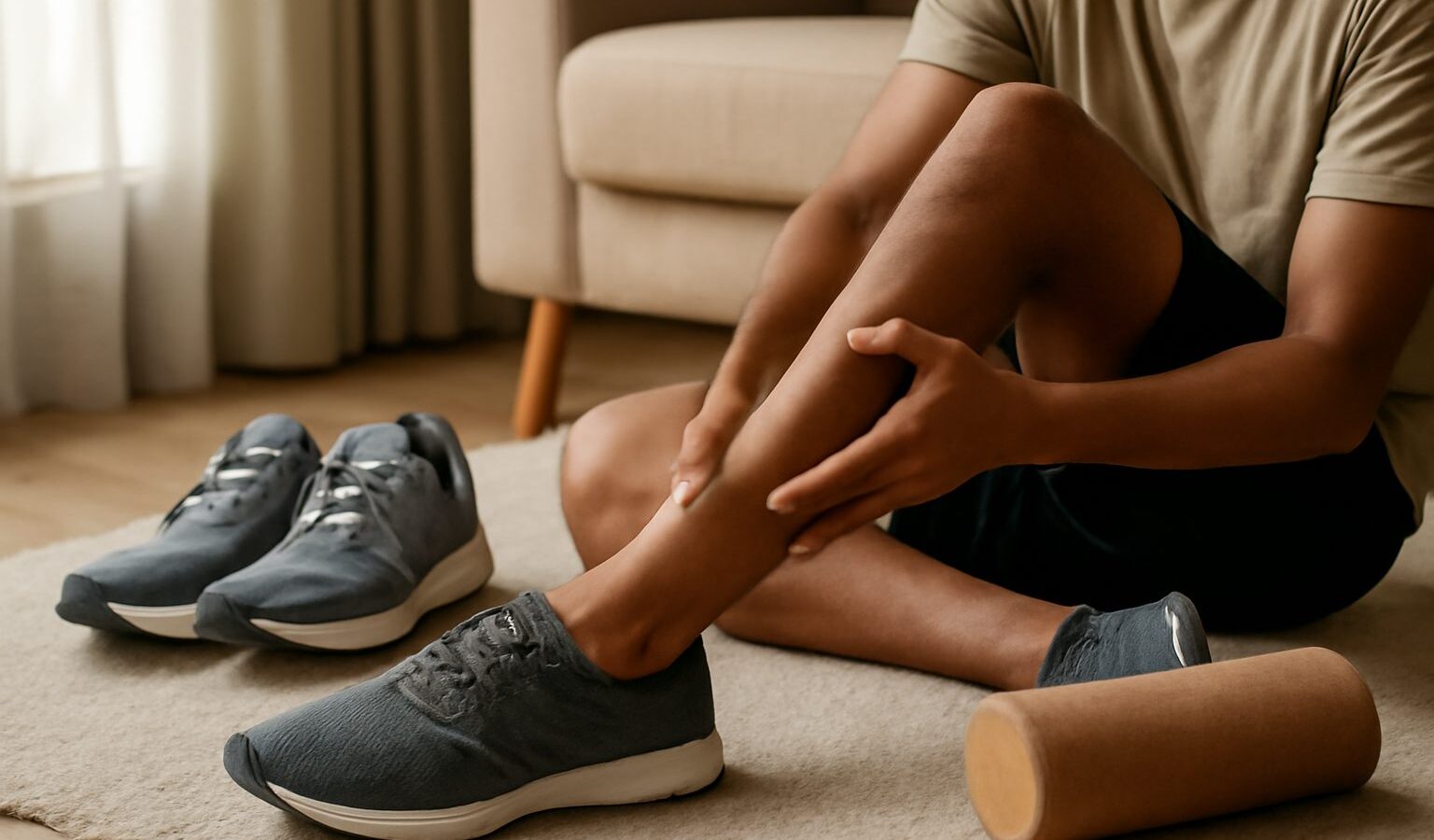
Shin splints are one of the most common complaints among new runners, and plenty of people meet them the hard way after ramping up their mileage too quickly. The term describes pain along the front or inner edge of the shin bone, usually brought on by running, brisk walking or jumping. In Singapore, where many people start running along park connectors, reservoirs or the void deck loop near home, shin splints often appear a few weeks into a new habit, just as motivation is building. The good news is that they are largely preventable, and understanding why they happen makes it much easier to keep training without pain.
This is general wellbeing information, not medical advice. Shin pain has several possible causes, and severe, persistent or worsening pain deserves a proper assessment. See a doctor or physiotherapist if the pain is sharp, does not settle with rest, or is focused on one small spot.
What Shin Splints Actually Are
“Shin splints” is an everyday name for medial tibial stress syndrome, an overuse condition affecting the muscles, tendons and bone tissue around the shin. When you increase how far, how fast or how often you run before your body has adapted, the repeated loading irritates these tissues faster than they can recover. The result is a dull, aching or tender feeling along the shin, often on both legs.
Several things raise the risk. Doing too much too soon is the classic trigger, but hard surfaces, worn-out shoes, tight calves, weak hip and foot muscles, and flat or high-arched feet all play a part. Running the same route at the same pace every day, with no easy days, gives the tissues no chance to recover. In our climate, heat and humidity can also push you to run with poor form as you tire, which changes how your legs absorb impact.
It is worth taking shin pain seriously rather than running through it. Ignored shin splints can progress, and persistent bone pain in one spot can point to a stress fracture, which needs medical attention and proper rest.
How to Lower Your Risk
Prevention comes down to loading your legs gradually and giving them what they need to adapt. None of this is complicated, but it does ask for patience.
- Build up slowly. A common guideline is to increase your weekly running distance by only a modest amount at a time rather than in big jumps. If you are brand new, alternate running and walking before you run continuously.
- Respect easy days and rest days. Your body adapts during recovery, not during the run itself. Read more on why this matters in our guide to why rest days matter.
- Warm up properly. A few minutes of brisk walking and some gentle mobility before you run prepares the muscles. Our guide to warming up and cooling down properly walks through a simple routine.
- Strengthen your calves, feet and hips. Calf raises, single-leg balance work and hip exercises help your legs absorb impact. Stronger muscles take load off the shin.
- Check your shoes. Running shoes lose cushioning over time. If yours are old or worn unevenly, they may be contributing. Replace them before they are completely flat.
- Vary your surfaces and pace. Mixing softer surfaces such as a track or park path with your usual route, and including slower runs, spreads the load.
Cross-training helps too. Swimming at an ActiveSG pool, cycling or using an elliptical keeps your fitness up while giving your shins a break from repeated impact.
Training Smart in Singapore’s Climate
Heat and humidity change how running feels and how your body copes. When you overheat, your pace slows, your form slips and you fatigue sooner, all of which can nudge you towards poor mechanics and higher injury risk. Run in the cooler parts of the day, early morning or after sundown, and use shaded park connectors and reservoir paths where you can.
Hydration matters for overall performance and safety, though it is not a direct cause of shin splints. Be alert to the signs of heat exhaustion, such as dizziness, nausea, a pounding heart or feeling faint, and stop, cool down and rehydrate if they appear. Heat stroke is a medical emergency. Building your running habit gradually, rather than chasing distance in the midday sun, protects both your shins and your overall wellbeing.
If you are just starting out, pairing sensible progression with a proper plan makes a real difference. Our guide to building your first workout routine can help you structure the week so running is only one part of a balanced approach.
Managing Shin Splints If They Appear
If your shins are already sore, the first response is to ease off. Relative rest, meaning cutting back on the activity that hurts rather than stopping all movement, gives the tissues time to settle. Gentle low-impact activity such as swimming or cycling usually keeps you moving without aggravating the shin.
Simple self-care measures many people find helpful include ice on the sore area for short periods, gentle calf and foot stretching once the acute soreness eases, and comfortable, supportive footwear. Give it time; shin splints often take a couple of weeks or more to calm down, and returning to full training too soon tends to bring them straight back.
The table below outlines the general difference between ordinary muscle soreness and pain that warrants professional attention. It is a rough guide, not a diagnosis.
| Sign | Likely ordinary soreness | Worth getting checked |
|---|---|---|
| Location | Spread along the shin, both legs | Sharp, one small spot on the bone |
| Timing | Eases with rest and warm-up | Persists at rest or wakes you at night |
| Trend | Improves over one to two weeks | Stays the same or worsens |
| With activity | Dull ache that fades | Pain that stops you mid-run |
When to See a Doctor or Physiotherapist
Most shin splints settle with sensible rest and a gradual return, but some do not, and a few point to something more serious. See a doctor or physiotherapist if the pain is severe, sharp, or focused on one small area of bone, if it does not improve after a couple of weeks of rest, if there is swelling or redness, or if it returns every time you resume running. A physiotherapist can assess your gait, strength and footwear, and give you a tailored plan, which is far more effective than guessing.
Coming back from any layoff also needs care. Rather than picking up where you left off, rebuild gradually, as we describe in returning to exercise after a long break. Treat shin splints as a signal to train a little smarter, not as a reason to give up running altogether. With patient progression, sensible recovery and a bit of strength work, most people leave them behind for good.