
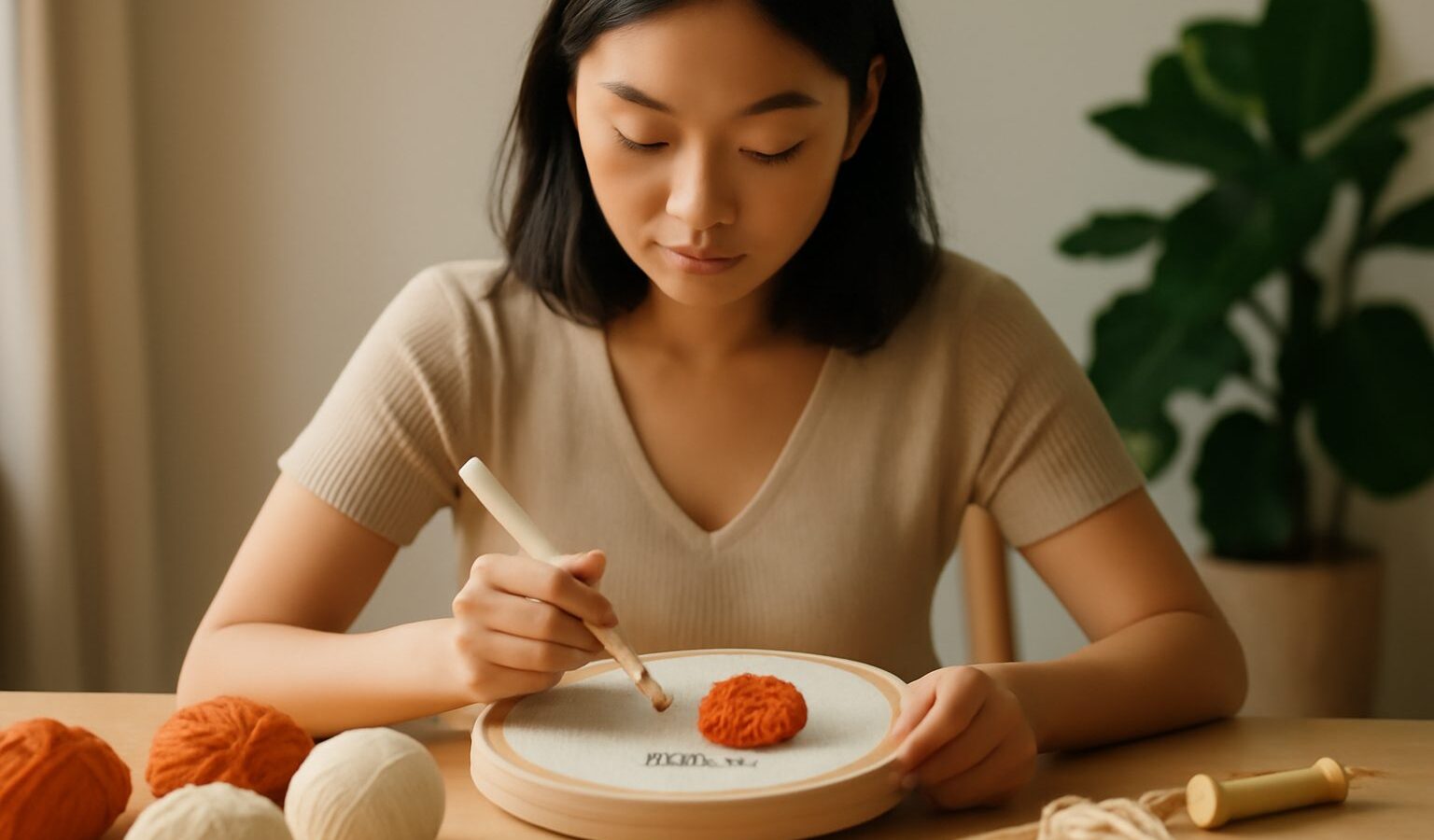
Buying punch needle supplies in Singapore can feel confusing the first time. Craft shops, online marketplaces and kit sellers all offer needles, fabrics and frames, but the terms vary and not every combination works together. A fine embroidery punch needle will not handle chunky rug yarn, and the wrong fabric can make loops fall straight out. This guide is a shopping companion: what each tool does, how to match needle, yarn and fabric, where people in Singapore tend to buy, and which purchases can wait. If you are brand new to the craft and want the basic technique first, start with our punch needle for beginners guide.
The Core Kit: What You Actually Need
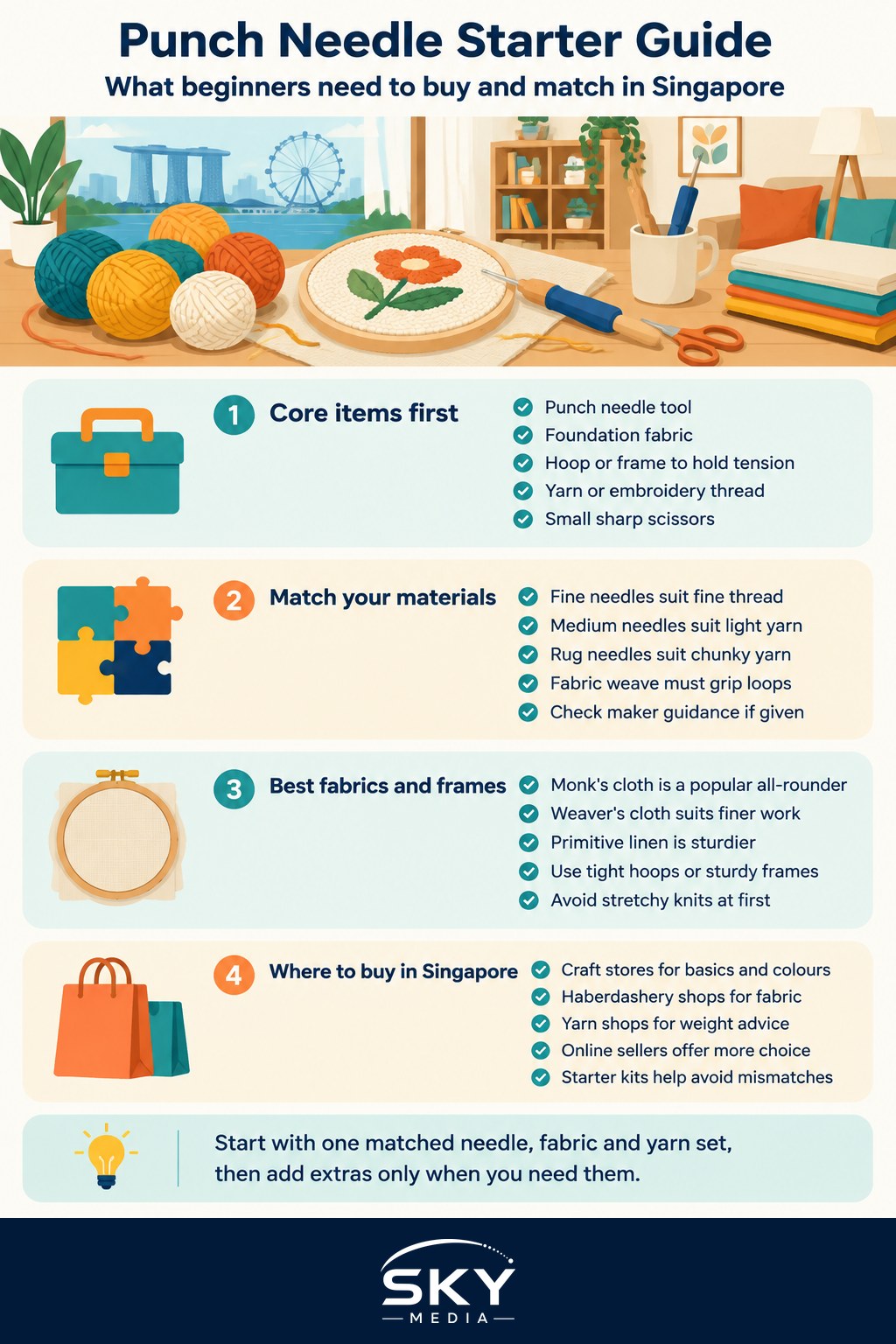
For a first project, you need only a handful of items:
- A punch needle. The tool that pushes yarn through fabric to form loops.
- Foundation fabric. The woven base cloth you punch into.
- A hoop or frame. Something to hold the fabric drum-tight.
- Yarn or embroidery thread. Sized to suit your needle.
- Small sharp scissors for trimming tails.
- A pen or marker to transfer your design.
That is it. Extras such as glue for backing, a needle threader and finishing materials can come later.
Matching Needle, Yarn and Fabric
The most common beginner mistake is buying pieces that do not suit each other. Think of the three as a set.
| Punch needle type | Yarn it suits | Best foundation fabric | Typical projects |
|---|---|---|---|
| Fine embroidery punch needle | Embroidery floss or fine thread | Tightly woven cotton or weaver’s cloth | Small hoop art, patches, detailed designs |
| Medium punch needle | Light to medium weight yarn | Weaver’s cloth or a medium monk’s cloth | Wall hangings, coasters, cushion panels |
| Rug punch needle (large) | Chunky or rug yarn | Monk’s cloth or primitive linen | Rugs, mug rugs, bold wall pieces |
| Adjustable punch needle | Depends on size setting | Match to the yarn thickness chosen | Varying loop heights in one piece |
A few rules of thumb:
- Yarn should flow freely through the needle without snagging, but not be so thin that loops pull out.
- Fabric weave must grip the loops. If the holes are too big, loops slip out. If the weave is too tight, the needle struggles to pass through.
- Buy the fabric your needle maker recommends if they list one. Many tools come with guidance printed on the packaging or seller listing.
Choosing the Right Foundation Fabric
Fabric is where beginners often save money in the wrong place. The main types you will see:
- Monk’s cloth. A soft, even-weave cotton with evenly spaced holes. It is the popular all-rounder for rug and medium needles. It frays easily at the edges, so leave generous margins and consider stitching or taping the edges.
- Weaver’s cloth. A tighter cotton or poly-cotton blend that suits finer needles and smaller hoop projects.
- Primitive linen. A sturdier woven linen used for rug hooking and punching, durable but usually more expensive.
Avoid stretchy knits and loosely woven craft hessian for your first project. They distort under tension and make it hard to keep loops in place.
Hoops and Frames
Your fabric needs to be drum-tight. If it sags, the needle will not form loops properly.
- Embroidery hoops. Fine for small projects with fine needles. Choose a hoop with a screw that can be tightened firmly. Some crafters wrap the inner ring with tape for extra grip.
- No-slip punch needle hoops. These have a lip or grooved edge to hold fabric more securely. They are worth it for medium needle work.
- Gripper strip or carpet tack frames. Wooden frames lined with small metal teeth that hold fabric under high tension. They are the usual choice for rug punching and larger pieces. The teeth are sharp, so store them covered and keep them away from children.
- Stretcher bars. A simple wooden frame you staple fabric onto. Inexpensive and useful for one-off pieces.
Choosing and Buying Yarn
Yarn is the fun part, and the easiest place to overspend.
- Fibre. Wool and wool blends give soft, full loops. Acrylic is affordable and easy to find, which is fine for practice. Cotton yarn can work but tends to be less springy.
- Weight. Check the needle’s recommended yarn weight. Labels may use terms such as fingering, DK, worsted, bulky or chunky.
- Quantity. Punching uses more yarn than people expect, because every loop doubles the length used. Buy a little extra of your main background colour so you do not run out mid-project.
- Colour matching. Dye lots vary. If a large area uses one colour, buy all of it at the same time.
Try winding your yarn into a ball before starting. Yarn pulled straight from a tight skein can tangle and tug loops out as you work.
Where to Buy Punch Needle Supplies in Singapore
Supplies are spread across several kinds of sellers, each with trade-offs:
- Craft and art supply stores. Larger craft retailers in shopping centres often carry embroidery hoops, floss, basic yarn and sometimes beginner punch needle tools. Good for seeing colours in person.
- Fabric and haberdashery shops. Fabric districts and haberdashery stores can be useful for cotton foundation fabrics, tapes and notions. Ask staff for monk’s cloth or weaver’s cloth by name, and take a sample needle to test the weave.
- Yarn specialists. Independent yarn shops tend to stock higher-quality wool and can advise on weight.
- Online marketplaces. Local and overseas sellers list punch needles, frames and kits, often at lower prices. Quality varies, so read reviews, check the listed needle size and fabric type, and allow time for overseas shipping.
- Workshop studios. Craft studios that run punch needle classes sometimes sell starter kits and leftover materials.
- Starter kits. Kits bundle a needle, fabric, hoop and yarn chosen to work together. For a first project, a kit is often the simplest way to avoid mismatched pieces.
Stock, opening hours and prices change, so check with the shop before making a trip for a specific item.
Common Beginner Buys to Skip or Delay
- Large sets of many needle sizes. Start with one needle that matches your first project.
- Huge yarn hauls. Buy for the project in front of you, then expand.
- Expensive gripper frames for tiny hoop art. A good hoop is enough at small scale.
- Specialist finishing products. Learn how you want to finish pieces first.
Tips for Newcomers Setting Up a Craft Corner
If you have recently moved to Singapore, a few local points help:
- Humidity. Store yarn and fabric in sealed containers with moisture absorbers, especially wool, which can attract pests and mould in damp cupboards.
- Small spaces. A lap frame or medium hoop works well in compact flats.
- Community. Craft groups, community centre classes and library programmes are good places to meet fellow crafters. If you enjoy fibre textures, you might also like needle felting for beginners, which uses wool roving in a different way.
Start small, match your tools, and your first punch needle piece will be far more enjoyable to make.
Further reading: Art and Craft Supply Shops in Singapore Worth Knowing · Where to Buy Yarn and Knitting Supplies in Singapore