
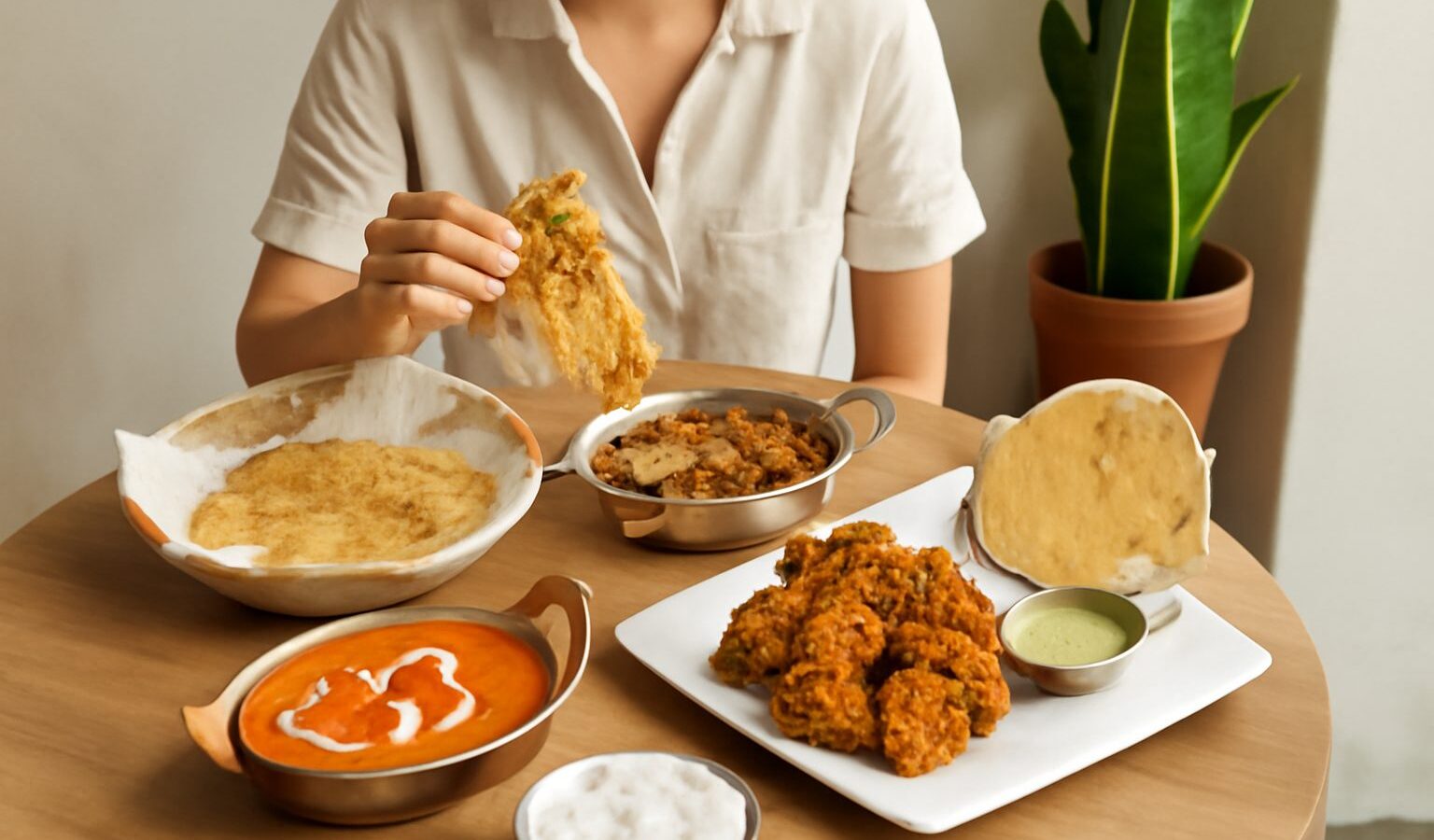
When most people in Singapore think of Indian food, they picture roti prata, thosai, nasi briyani and banana leaf rice. Those dishes come largely from South Indian and Indian Muslim traditions that shaped the island’s hawker culture. Punjabi food in Singapore is a different, equally rewarding world: rich dals, buttery breads, tandoor-cooked meats, tangy chaats and milky sweets from the north of the Indian subcontinent.
Vaisakhi, the spring harvest festival celebrated by Punjabi and Sikh communities around mid-April, is a natural time to explore it. This guide covers what to order, where to look, and how to enjoy Punjabi food respectfully, whether you are a curious local or a newcomer missing North Indian flavours.
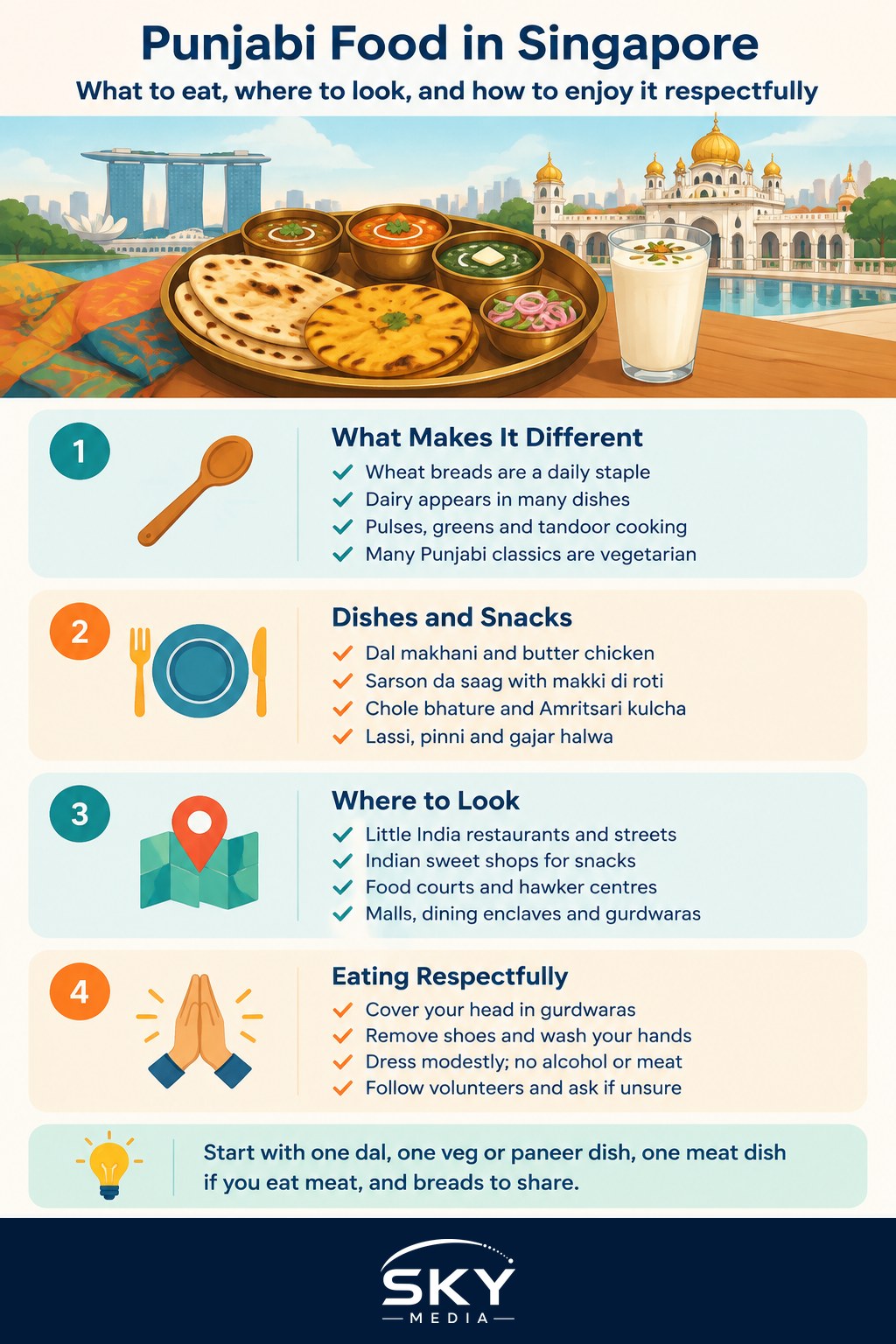
What Makes Punjabi Food Different
Punjab is a fertile farming region that spans both India and Pakistan, and its food reflects that. Wheat is the staple more than rice, dairy is everywhere, and dishes are often slow-cooked and hearty.
A few hallmarks to look for:
- Wheat breads. Roti, paratha, naan and kulcha are the everyday base, often cooked in a tandoor (a clay oven) or on a flat griddle.
- Dairy. Ghee, butter, yoghurt, paneer (a fresh cheese) and cream appear in curries, breads and drinks.
- Pulses and greens. Black lentils, kidney beans, chickpeas and mustard greens form many of the most loved dishes.
- Tandoori cooking. Marinated meats and paneer roasted in the tandoor give a smoky char.
- Many vegetarian classics. Plenty of Punjabi home cooking is vegetarian, which makes it a good choice for mixed groups.
Dishes and Snacks Worth Ordering
If you are new to the cuisine, these are good places to start. Menus vary, and spellings differ from place to place.
Mains
– Dal makhani. Black lentils and kidney beans simmered slowly with butter and cream. Rich, comforting and very Punjabi.
– Butter chicken. Tandoori chicken in a mild, creamy tomato gravy. Familiar, but worth trying at a North Indian specialist.
– Sarson da saag with makki di roti. Mustard greens cooked down into a thick, earthy dish, served with a cornmeal flatbread. A winter favourite in Punjab, so not always on menus.
– Rajma chawal. Kidney bean curry with rice, a home-style staple.
– Kadhi pakora. Fritters in a tangy yoghurt and gram flour gravy.
– Paneer dishes. Palak paneer, paneer tikka and kadai paneer are reliable vegetarian picks.
Snacks and street food
– Chole bhature. Spiced chickpeas with a large puffed fried bread. A classic weekend breakfast.
– Amritsari kulcha. Stuffed, crisp-edged bread from Amritsar, often served with chole.
– Samosa. The North Indian style is larger, with a thick crust and spiced potato filling.
– Aloo tikki and chaat. Potato patties and sweet, sour and spicy chaat plates with chutneys and yoghurt.
– Pakoras. Vegetable fritters, popular with tea on a rainy afternoon.
Sweets and drinks
– Lassi. Sweet, salted or mango yoghurt drink. Thick Punjabi-style lassi is almost a meal.
– Pinni. Rich sweets made with wheat flour, ghee and nuts.
– Gajar halwa. Carrots cooked slowly with milk and sugar.
– Jalebi. Bright, crisp, syrupy spirals, often eaten warm.
– Masala chai. Spiced milk tea to finish.
Where to Look for Punjabi Food in Singapore
Rather than naming specific restaurants, which change often, here is where Punjabi and North Indian food tends to be found.
| Where to look | What to expect | Good for |
|---|---|---|
| Little India restaurants | North Indian menus alongside South Indian ones, especially around Race Course Road and the streets off Serangoon Road | A sit-down meal with tandoori dishes and curries |
| Indian sweet shops | Trays of mithai (Indian sweets), samosas and other snacks, busier before festivals | Takeaway snacks and festival gift boxes |
| Food courts and hawker centres | Some stalls offer naan, tandoori chicken and North Indian curries | A casual, budget-friendly taste |
| North Indian restaurants in malls and dining enclaves | More polished settings, often with set menus and tandoori platters | Group dinners and celebrations |
| Gurdwara langar | Free community vegetarian meal served to all visitors | A respectful cultural experience, especially around Vaisakhi |
When choosing a restaurant, look at the menu for dishes such as dal makhani, chole bhature, kulcha or sarson da saag. A menu that goes beyond butter chicken and naan is a good sign of a North Indian specialist. Ask staff which dishes are their own favourites, and check recent reviews and opening hours before you go.
For a sense of the community behind the cuisine, read our piece on The Punjabi Community Heritage.
Experiencing Langar Respectfully
Sikh gurdwaras (temples) in Singapore, such as the Central Sikh Temple near Boon Keng, are known for langar: a free community kitchen that serves a simple vegetarian meal to anyone, regardless of background. Around Vaisakhi, gurdwaras are often especially busy with celebrations and visitors.
If you would like to visit, practices commonly seen include:
- Cover your head. Both men and women cover their heads inside. Head scarves are often available at the entrance.
- Remove your shoes and wash your hands before entering.
- Dress modestly, with shoulders and knees covered.
- No alcohol, tobacco or meat on the premises.
- Sit where you are guided. Langar is often served while seated on the floor in rows, which reflects equality among all diners.
- Take only what you will eat, and accept food with both hands where shown.
- Offer to help or donate if you wish. Volunteering and donations are welcomed but never required.
Customs vary between gurdwaras, so follow the lead of volunteers and ask if you are unsure. Visitors are generally welcomed warmly.
Tips for Ordering and Sharing a Punjabi Meal
- Order family style. Pick one dal, one vegetable or paneer dish, one meat dish if you eat meat, and a mix of breads to share.
- Ask about spice levels. Punjabi food is often rich rather than fiery, but kitchens vary.
- Balance the richness. Add raita (yoghurt with vegetables), onion salad or pickle to cut through buttery dishes.
- Try breads beyond naan. Laccha paratha, kulcha and tandoori roti each bring a different texture.
- Check dietary needs. Many dishes contain dairy, nuts or ghee, so mention allergies or vegan preferences.
- Pack sweets for later. Sweet shops often sell mixed boxes, which make thoughtful gifts during festive periods.
Punjabi food rewards curiosity. Whether you start with a plate of chole bhature, a lassi after a long walk through Little India, or a quiet langar meal at a gurdwara, it adds another layer to Singapore’s Indian food scene.
Explore more: Local Street Snacks You Should Try and Local Desserts in Singapore You Have to Try