
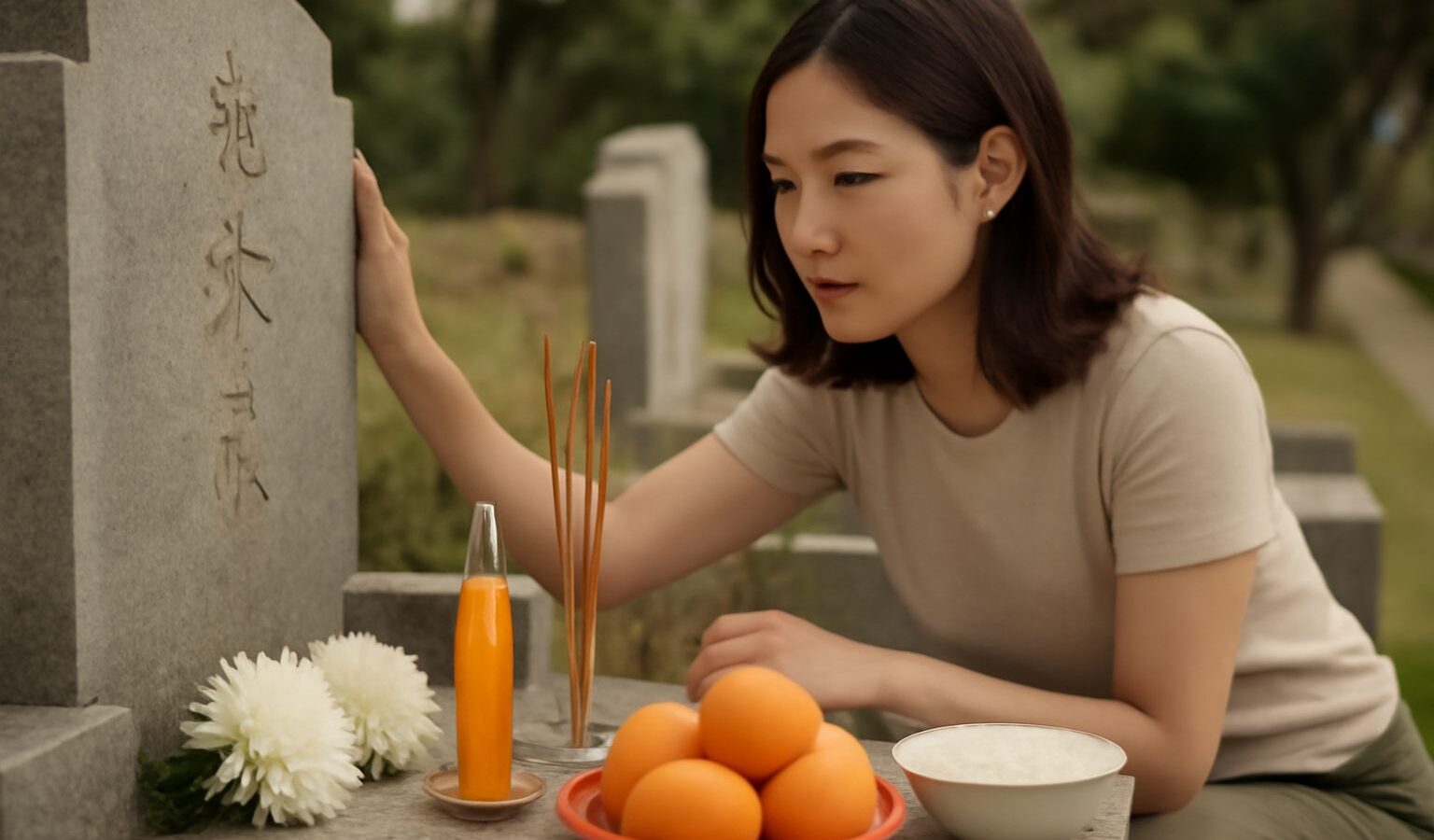
Each spring, many Chinese families here set aside a morning to visit a grave or a columbarium, tidy the resting place of a parent or grandparent, and lay out offerings. This is qingming singapore observes as Qingming, often called Tomb-Sweeping Day, one of the most widely kept customs of remembrance in the Chinese community. It is not a religious festival so much as a season of filial duty and family memory. This guide explains what Qingming is, how families mark it locally, when it falls, and how to plan around the busiest weekends at the cemeteries and columbaria.
What Qingming Is About
Qingming, sometimes written Qing Ming and translated as the Clear and Bright festival or Tomb-Sweeping Day, is a traditional Chinese occasion for honouring ancestors and the recently departed. At its core it is an act of filial piety: descendants visit the resting places of family members to clean and maintain them, pay respects, and remember those who came before. The emphasis is on care and continuity across generations rather than on doctrine, and families of different beliefs, or none in particular, may still observe it as a matter of heritage.
We describe these customs as they are practised locally. Households vary a great deal in how, and how elaborately, they observe Qingming, and the notes below reflect common practice rather than any fixed set of rules.
How Families Honour Ancestors Here
A typical visit blends practical upkeep with quiet ritual. Common elements include:
- Cleaning and tending the site. Families sweep and wipe down a headstone or a niche, clear weeds and leaves, and generally tidy the resting place, which is where the name “tomb-sweeping” comes from.
- Offerings of food and drink. Fruit, cooked dishes, tea, or wine are laid out for the departed, along with flowers. The specifics differ from family to family.
- Incense and prayers. Joss sticks are lit and family members pay their respects in turn, often oldest to youngest, sometimes with a short prayer or a few words of remembrance.
- Burning joss paper. Some families burn paper offerings, folded “money” and paper goods, in designated bins, sending comfort to ancestors in keeping with custom.
- A shared meal. Many families round off the morning with breakfast or lunch together, turning the visit into an occasion that reconnects relatives across generations.
Because most burials have given way to cremation in land-scarce Singapore, a large share of visits today are to columbaria, where ashes are kept in niches, rather than to graves. The gestures of cleaning, offering, and remembrance carry over naturally to a niche.
Where People Go: Cemeteries and Columbaria
The main gathering points are the cemeteries and columbaria that hold family members’ remains. The Choa Chu Kang area in the northwest is Singapore’s principal cemetery ground and is one of the busiest destinations during the season, drawing large numbers of visitors on peak weekends. Government-managed columbaria, temple and clan-association columbaria, and private facilities across the island also see heavy footfall.
It is worth remembering that burial practice has changed over the years. Older cemeteries have been progressively exhumed and redeveloped as the country’s land needs have shifted, and the National Environment Agency, which manages public after-death facilities, has also introduced newer options such as the scattering of ashes at designated gardens and at sea. Whatever the setting, the intent of Qingming, remembering and honouring family, stays the same.
When Qingming Falls and How Long It Lasts
Qingming is tied to the traditional solar terms of the Chinese calendar rather than to a fixed Western date, so it lands at roughly the same time of year but not on the same day annually. It typically falls in early April, around the 4th or 5th, though the exact date shifts. In practice, families rarely all turn up on the single day. Observance spreads across a window of several weekends before and after, so the busy period stretches over a few weeks rather than one date. The table below lays out the essentials.
| Aspect | What to know |
|---|---|
| What it marks | Honouring and remembering ancestors, an act of filial piety |
| Typical timing | Around early April each year, with the date shifting slightly |
| Observance period | Spread over several weekends before and after the day itself |
| Where families go | Graves and columbaria, including the Choa Chu Kang cemetery area |
| Public holiday status | Not a gazetted public holiday in Singapore |
| Where to check | Confirm the current year’s public holidays on the Ministry of Manpower list |
Note that Qingming is not a public holiday in Singapore, so workplaces and schools run normally and families usually plan their visits around weekends. For the official holiday dates in any given year, the Ministry of Manpower publishes the public-holiday list.
Crowd and Traffic Tips
Because so many families converge on the same sites over the same few weekends, the peak periods can be crowded, and roads near the major cemeteries and columbaria get congested. A little planning makes the day smoother:
- Go early or off-peak. The earliest hours of the morning are calmer. If your family customs allow flexibility, visiting on a weekend away from the exact date, or on a weekday, avoids the worst crush.
- Consider public transport. Parking near popular sites like Choa Chu Kang fills quickly. Shuttle services are sometimes arranged during the season, and buses or the MRT can be less stressful than driving.
- Allow extra travel time. Build in a buffer for slow traffic and full car parks near the cemeteries on peak weekends.
- Bring the essentials. Sun protection, water, and any cleaning materials or offerings you need, since facilities can be busy and stretched.
- Be tidy and fire-safe. Use the bins and designated braziers provided for burning offerings, clear up after your visit, and keep children away from lit joss sticks and hot ashes.
- Be patient and considerate. Space is shared and emotions can run close to the surface, so give other families room at neighbouring plots and niches.
Qingming is one of the quieter, more personal moments in Singapore’s calendar of customs, a family morning of memory and care that most people simply make room for. Understanding it is part of appreciating the country’s mix of traditions, which you can read more about in our guide on racial and religious harmony in Singapore.
Explore more
Qingming, or Tomb-Sweeping Day, is a widely kept season of remembrance in Singapore’s Chinese community, with families tending graves and columbaria such as those at Choa Chu Kang over several spring weekends, though it is not a public holiday. To see how such customs fit into the wider picture, read our overview of racial and religious harmony in Singapore and our guide to Singapore public holidays.