

Most parents want the same quiet thing: a child who notices what they have, says a genuine thank you, and does not treat the world as owed to them. Yet raising grateful children can feel like swimming against the current, between birthday goodie bags, group-chat comparisons and the constant pull of the next toy. The good news is that gratitude is not a lecture you deliver. It is a habit a family grows into, slowly, through everyday life.
This is a warm, general guide to nurturing thankfulness in a Singapore home. There is no perfect script and no guaranteed result, so treat these as gentle ideas to adapt, not rules to enforce.
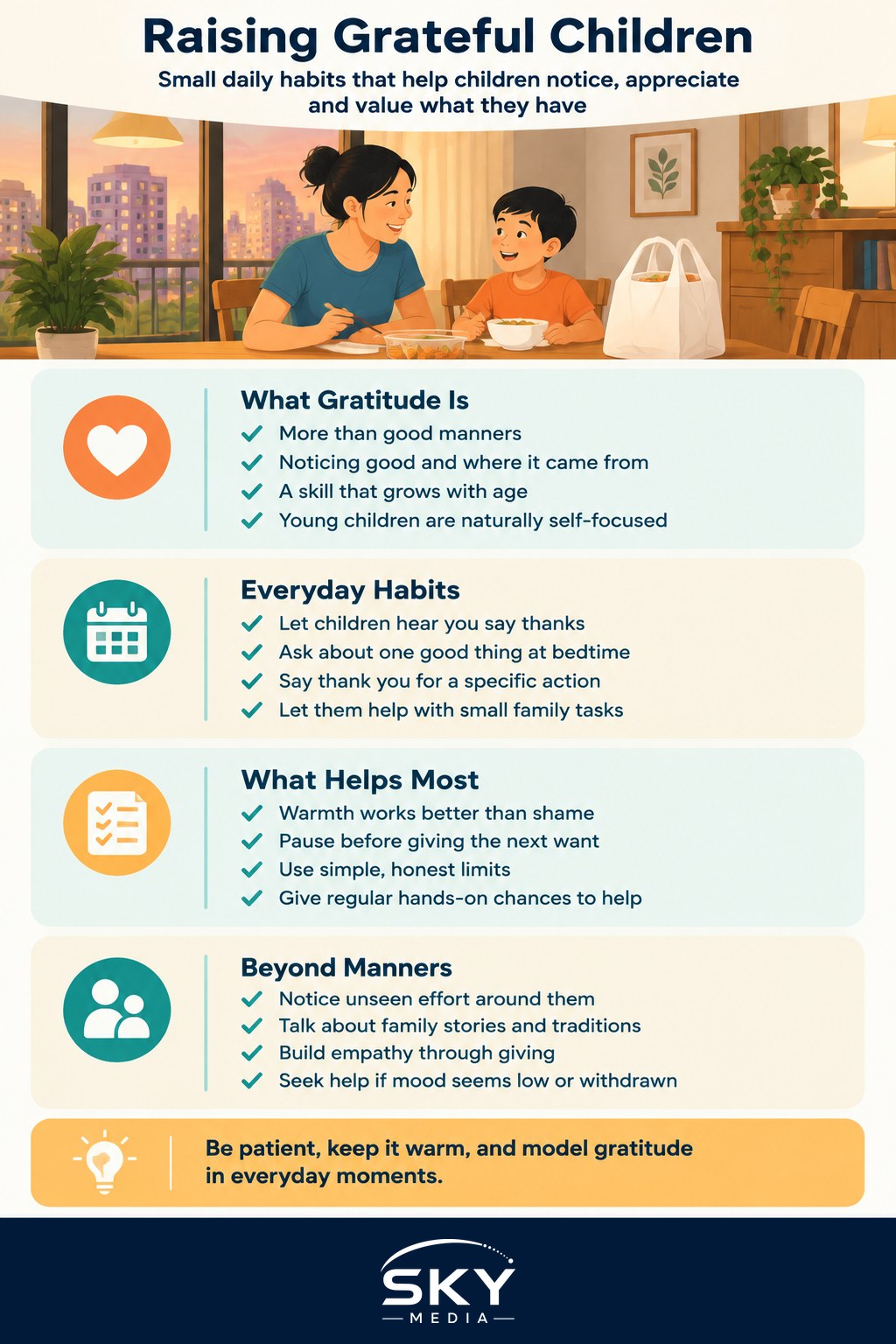
What Gratitude Really Is (and Is Not)
Gratitude is more than good manners. A child can be trained to parrot “thank you” without feeling much at all. Real thankfulness is the ability to notice something good, understand that it came from somewhere or someone, and feel warmed by it. That is a skill that develops with age, and young children are naturally focused on their own needs. This is normal, not a character flaw.
It also helps to let go of guilt. If your child seems demanding or unimpressed by their good fortune, you have not failed. Perspective grows over years, and it grows fastest in a home that is warm rather than shaming. Gratitude cannot be forced, and pressure tends to produce compliance, not feeling.
One gentle caution: an ordinary phase of “I want” is very different from persistent, deep unhappiness. If your child seems genuinely low, anxious or withdrawn over time, that is worth raising with your doctor or a professional rather than treating it as an attitude problem, and support such as mindline (1771) is there for families who need it.
Everyday Habits That Grow Thankfulness
Gratitude is caught more than taught. Small, repeated moments do far more than any single talk.
- Model it out loud. Let your child hear you appreciate real things: a cool breeze on a hot day, the auntie who kept your usual hawker order ready, help from Ah Ma. Children copy what they see.
- Name the good at bedtime. A simple nightly question, such as “what was one good thing today?”, builds the habit of noticing. Keep it light and skip it on rough nights.
- Say thank you specifically. “Thank you for waiting so patiently” teaches more than a vague “good boy” because it points to the exact thing you valued.
- Let them contribute. Children who help set the table, water the plants or carry the groceries feel part of the family effort, which quietly builds appreciation.
- Slow down the wanting. A short pause between wanting something and getting it, such as adding it to a birthday list, helps a child savour rather than expect.
Cooking together is a lovely, low-pressure way to build appreciation for effort and food. Our guide on teaching children to cook simple meals has gentle starting points.
Choosing Approaches That Actually Build Gratitude
When we try to teach thankfulness, some instincts backfire while others quietly work. It helps to see the difference side by side.
| Situation | Approach that tends to backfire | Approach that tends to help |
|---|---|---|
| Child forgets to say thank you | Shaming them in front of others | Quiet reminder, then praising the effort later |
| Child wants the newest toy | “You are so spoilt and ungrateful” | Acknowledge the wish, explain waiting and choices |
| Comparing with wealthier friends | Guilt-tripping about the less fortunate | Focus on what your family enjoys and values |
| Giving to others | One-off obligation with no context | Regular, hands-on giving they can understand |
| Receiving a gift they dislike | Forcing loud enthusiasm | Coaching a kind, honest response beforehand |
The pattern is clear: gratitude grows through warmth, patience and involvement, and it shrinks under shame and pressure. Aim to guide the feeling, not to demand the words.
Handling Entitlement and Comparison Without Shame
In a fast-moving, high-comparison environment, some entitlement is almost inevitable. The aim is not to eliminate every “I want”, which is unrealistic, but to keep it from becoming the default setting.
- Reduce the flood. Fewer, more meaningful things tend to be more valued than a constant stream of small treats. Boredom is also where creativity and appreciation grow, a theme in our guide on encouraging screen-free play at home.
- Talk about money simply. Age-appropriate honesty (“that is not in our budget this month”) teaches limits without fear, and normalises that families make choices.
- Rethink over-celebrating. Big, competitive parties can raise expectations sharply. A simpler, warmer gathering often lands better, as our piece on planning a child’s birthday party on a budget explores.
- Address comparison kindly. When your child notices a friend has more, resist both guilt and dismissal. Acknowledge the feeling, then gently steer back to what your family has and enjoys.
Try not to weaponise the less fortunate to induce guilt. Comparison downward can breed pity rather than genuine gratitude, and children sense the difference.
Building Empathy and a Wider View
True gratitude is bound up with empathy: seeing that others have feelings, effort and needs of their own. This is where thankfulness becomes character rather than manners.
- Point out unseen effort. The cleaners who keep the void deck tidy, the bus driver, the grandparent who cooked. Noticing invisible work builds appreciation for people.
- Give as a family, regularly. Choosing items to donate, helping a neighbour, or a small recurring act of kindness teaches more than a single grand gesture. Let your child take part in the doing.
- Encourage independence. Children who do things for themselves come to appreciate what is done for them. Our guide on helping your child build independence connects closely here.
- Honour where they come from. Traditions, festivals and family stories give children a sense of belonging and inheritance, which naturally feeds gratitude.
Keep it age-appropriate. A toddler cannot grasp abstract fairness, while an older child can handle richer conversations about privilege, effort and fortune. Meet your child where they are.
Be Patient and Kind to Yourself
Gratitude is a long game. You may spend years modelling thankfulness and see little, then one day your child comforts a friend or thanks a helper unprompted, and you realise it took root after all. Consistency matters far more than intensity, and warmth matters most of all.
Go gently on yourself as well. No child is grateful all the time, and no parent gets this fully right. A home that is loving, honest about limits and generous in noticing the good is already doing the real work.
This article is general information for family life, not psychological or professional advice. If you are worried about your child’s mood, behaviour or wellbeing, please speak to your doctor, a counsellor or another qualified professional. Raising grateful children is really just the slow, everyday practice of helping a child see the good already around them, one small, sincere moment at a time.
Frequently Asked Questions
At what age can children start to understand gratitude? Real thankfulness develops with age, and young children are naturally focused on their own needs, which is normal rather than a flaw. You can start modelling it early. Saying specific thanks and noticing good things out loud plants the seeds long before they truly understand.
What should I do if my child does not like a gift they receive? Coach a kind, honest response beforehand rather than forcing loud enthusiasm. Thanking the giver for the thought is enough, and you can talk about feelings in private. Shaming a child in front of others tends to backfire.
Do chores help children become more grateful? They can, because children who help set the table or carry the groceries feel part of the family effort, which quietly builds appreciation. Keep the tasks age-appropriate and the tone warm. Praise their effort rather than treating chores as free labour.
How can I teach thankfulness without making my child feel guilty? Avoid guilt-tripping about the less fortunate, since comparing downward can breed pity rather than real gratitude. Focus on what your family enjoys and values, and point out unseen effort by people around you. Warmth works better than shame.
How do I handle my child comparing what they have to friends? Acknowledge the feeling without guilt or dismissal, then gently steer back to what your family has and enjoys. Age-appropriate honesty such as that is not in our budget this month teaches limits calmly. Fewer, more meaningful things also help.
Further reading: The Joys and Challenges of Raising an Only Child