
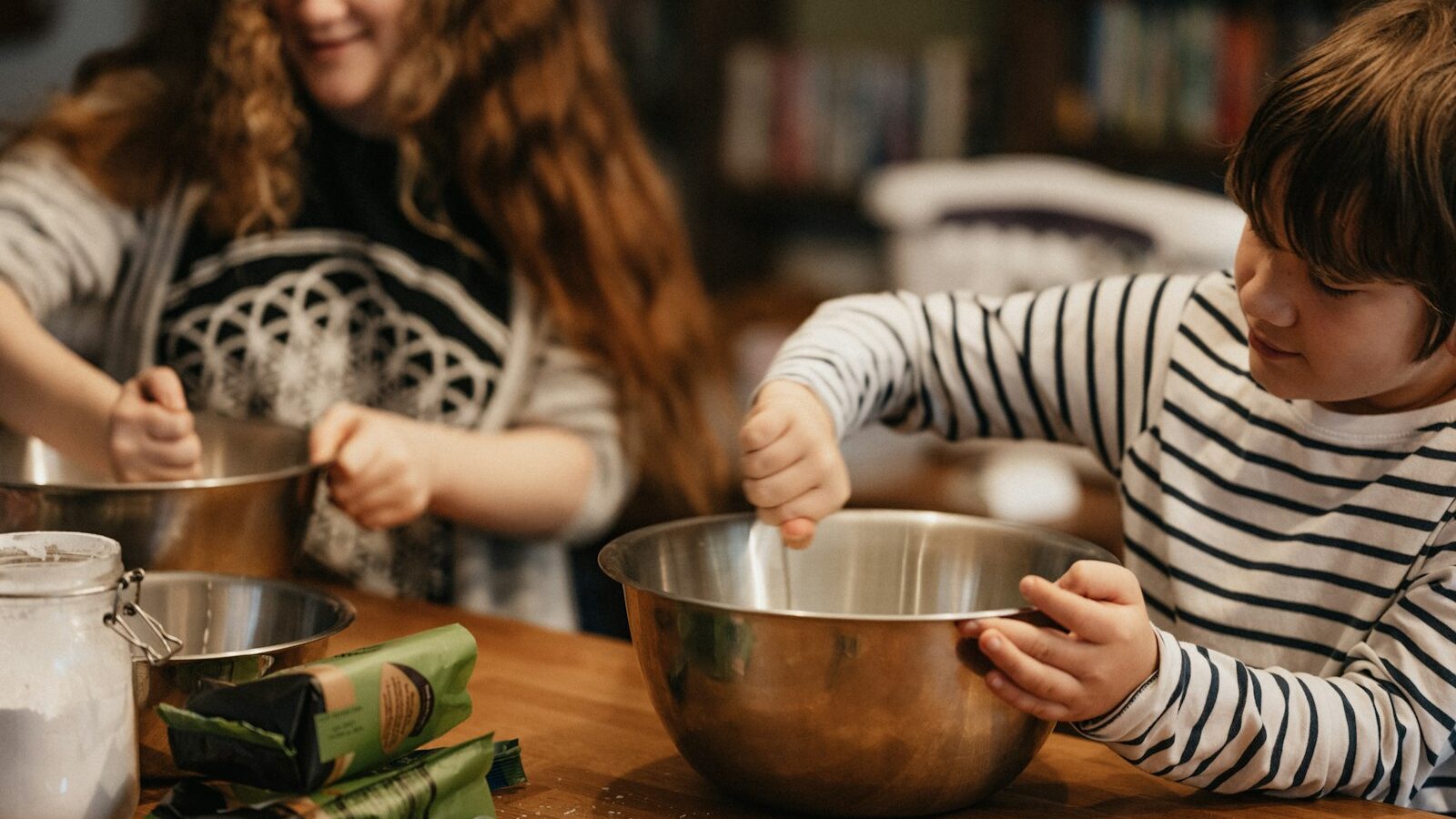
If your kitchen feels too small, too hot, or too busy for a child underfoot, you are not alone. In a typical HDB flat, the galley kitchen can barely hold two adults, let alone a curious four year old who wants to stir everything. Yet teaching children to cook is one of the warmest, most useful things you can do together, and it rarely needs more space than you already have. This is general guidance to help you start gently, at your own pace, with whatever your family already eats.
Cooking is not really about the food. It is about confidence, patience, counting, reading a simple recipe, and the quiet pride of making something for the people you love. Some days it will be messy and slow. That is part of it. The goal is not a perfect meal but a child who feels capable and included.
Why Cooking Together Is Worth the Mess
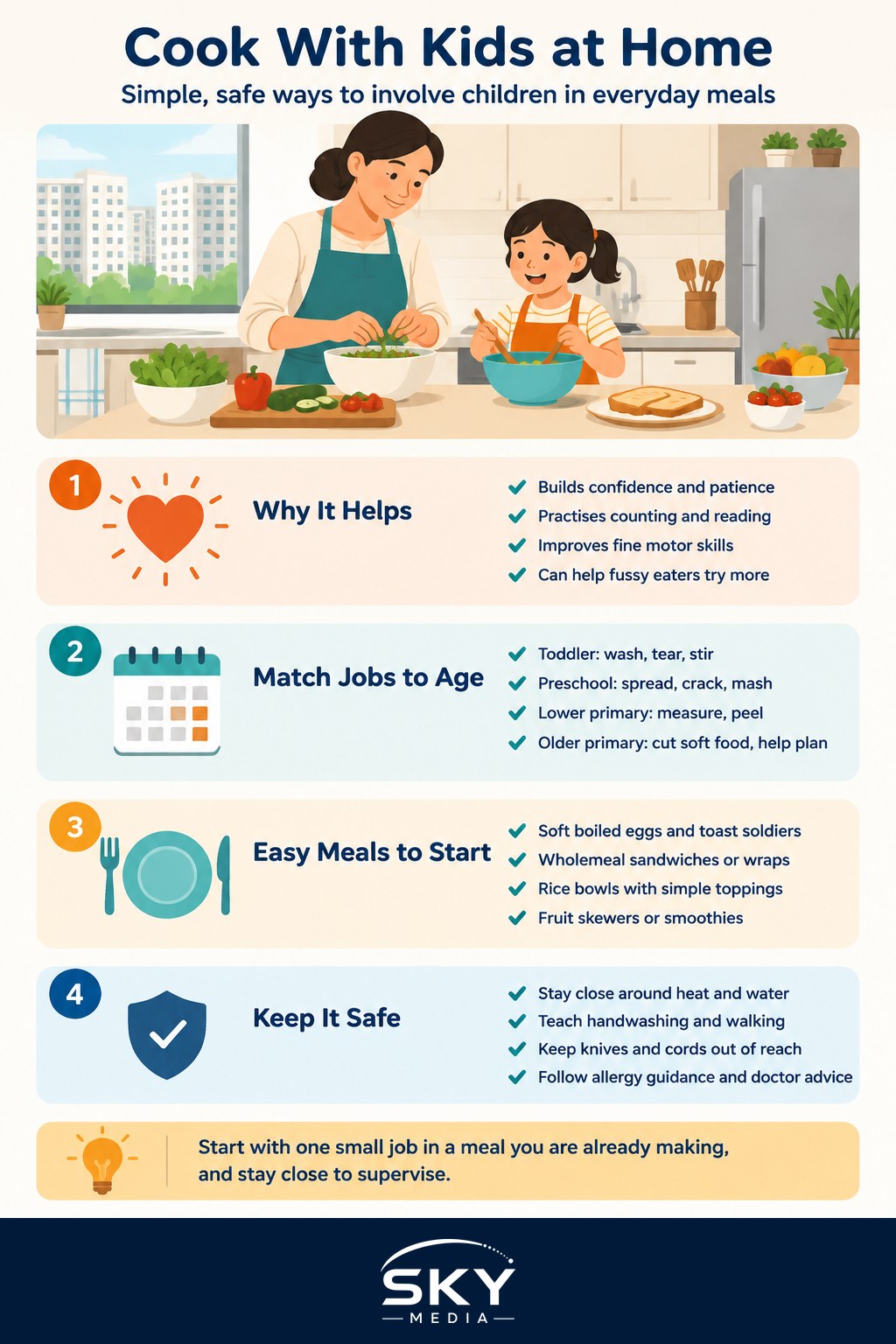
When a child helps make a meal, a lot happens at once. They practise fine motor skills by pinching, pouring and spreading. They meet new words like simmer, knead and season. They learn where food comes from, which makes them far more willing to taste it. Many parents find a fussy eater becomes a little braver at the table simply because they helped stir the pot.
There is a social side too. Standing shoulder to shoulder at the counter is easy, low pressure time to talk. Unlike a screen, cooking invites conversation without demanding eye contact, which suits children who open up more when their hands are busy. If you are trying to build gentle routines around food, our guide to building healthy family mealtimes pairs naturally with cooking together, and this is one lovely way of encouraging screen-free play at home.
Cooking also grows independence in a way children can see and feel. A five year old who can make their own toast in the morning stands a little taller. It is a small, real contribution to family life, and children thrive when they know their help matters.
Matching Kitchen Jobs to Your Child’s Stage
Children can help long before they can cook. The trick is to offer jobs that fit where they are now, then add harder tasks as their coordination and attention grow. Every child is different, so treat ages as a rough guide, not a rule, and always stay close and supervising.
| Rough stage | Kitchen jobs that often suit them | What you are building |
|---|---|---|
| Toddler (around 2 to 3) | Washing vegetables, tearing lettuce, stirring cool bowls, pressing buttons with you | Curiosity, simple following of steps |
| Preschool (around 4 to 5) | Spreading kaya or butter, cracking eggs, mashing, scooping rice, arranging on plates | Coordination, counting, confidence |
| Lower primary (around 6 to 8) | Measuring, peeling with a safe peeler, using a butter knife on soft food, timing on the clock | Reading a recipe, sequencing, care |
| Older primary (around 9 plus) | Supervised stove and kettle tasks, cutting soft items, planning a simple meal | Judgement, safety habits, ownership |
Let your child set some of the pace. If a task frustrates them, step back to an easier one and try again another day. Praise the effort and the helping, not just the result. A wonky sandwich made with pride is a success.
Simple Meals Children Can Help Make
Start with food your family already loves, then find the child sized job inside it. Local favourites work beautifully and cost little.
- Breakfast: soft boiled eggs with toast soldiers, wholemeal sandwiches, or a bowl of oats with sliced banana that they stir and top themselves.
- Lunch or dinner: helping shape and fill wholemeal wraps, stirring a simple tomato pasta, or assembling a rice bowl with cooked rice, cucumber, egg and a favourite protein.
- Local classics: spreading kaya toast, rolling popiah with pre cooked filling, or arranging ingredients for a DIY porridge with toppings.
- No cook snacks: fruit skewers with soft fruit, yoghurt with cut fruit, or blitzing a fruit smoothie together.
Keep portions and ambitions small at first. One or two child jobs inside a meal you are already making is plenty. As their skills grow, hand over more of the steps.
Keeping the Kitchen Safe
Safety is the part that lets you relax and enjoy the time. The kitchen holds real hazards, so active, close supervision matters more than any single rule. Never leave a young child alone with heat, water, sharp tools or electrical appliances.
- Set the ground rules first: we wash hands, we walk in the kitchen, and we ask before we touch the stove or kettle.
- Turn pot handles inwards, keep hot drinks and boiling water well back from the edge, and mind the humidity and heat that already make a Singapore kitchen warm.
- Introduce cutting with a butter knife on soft food like banana before anything sharper, and keep knives, graters and peelers out of reach until you are guiding them hand over hand.
- Teach that the stove, kettle and rice cooker are hot even when switched off, and keep cords tucked away.
- Wash hands well, keep raw and cooked food apart, and store leftovers promptly in the fridge.
Food allergies deserve special care. If your child or a young sibling is trying new ingredients, follow current guidance and your doctor’s advice, and learn the signs of a reaction. For a severe reaction such as trouble breathing, swelling of the face or lips, or a child going floppy, call 995 for emergency help straight away. Our companion pieces on starting solids and baby led weaning and introducing allergenic foods safely go into this gently for younger children.
Making It a Habit They Enjoy
The families who keep cooking together are usually the ones who keep it easy. Pick a regular slot, perhaps a slower weekend morning, and protect it from rush. Lower your standards for tidiness on purpose, lay newspaper or a mat, and expect spills.
Give your child real ownership. Let them choose between two options, name their creation, or plan a simple meal for the family once they are ready. Cooking for others is a natural way of raising grateful children and of helping your child feel like a capable member of the household, which sits close to helping your child build independence in everyday life.
Above all, keep it light. If a session turns tense, wrap up and eat what you have made. The point was never the meal. It was the hour spent side by side, learning a skill they will carry for life.
This article offers general information for family life, not medical, nutritional or safety advice for your particular child. For questions about allergies, diet or your child’s development, speak to your family doctor, paediatrician, or a qualified professional, and follow current guidance from HealthHub and the Health Promotion Board.
Related across Sky Media: Teaching Your Children About Money in Singapore · How to Cook a Simple Curry at Home
Further reading: Teaching Kids Responsibility With Chores