
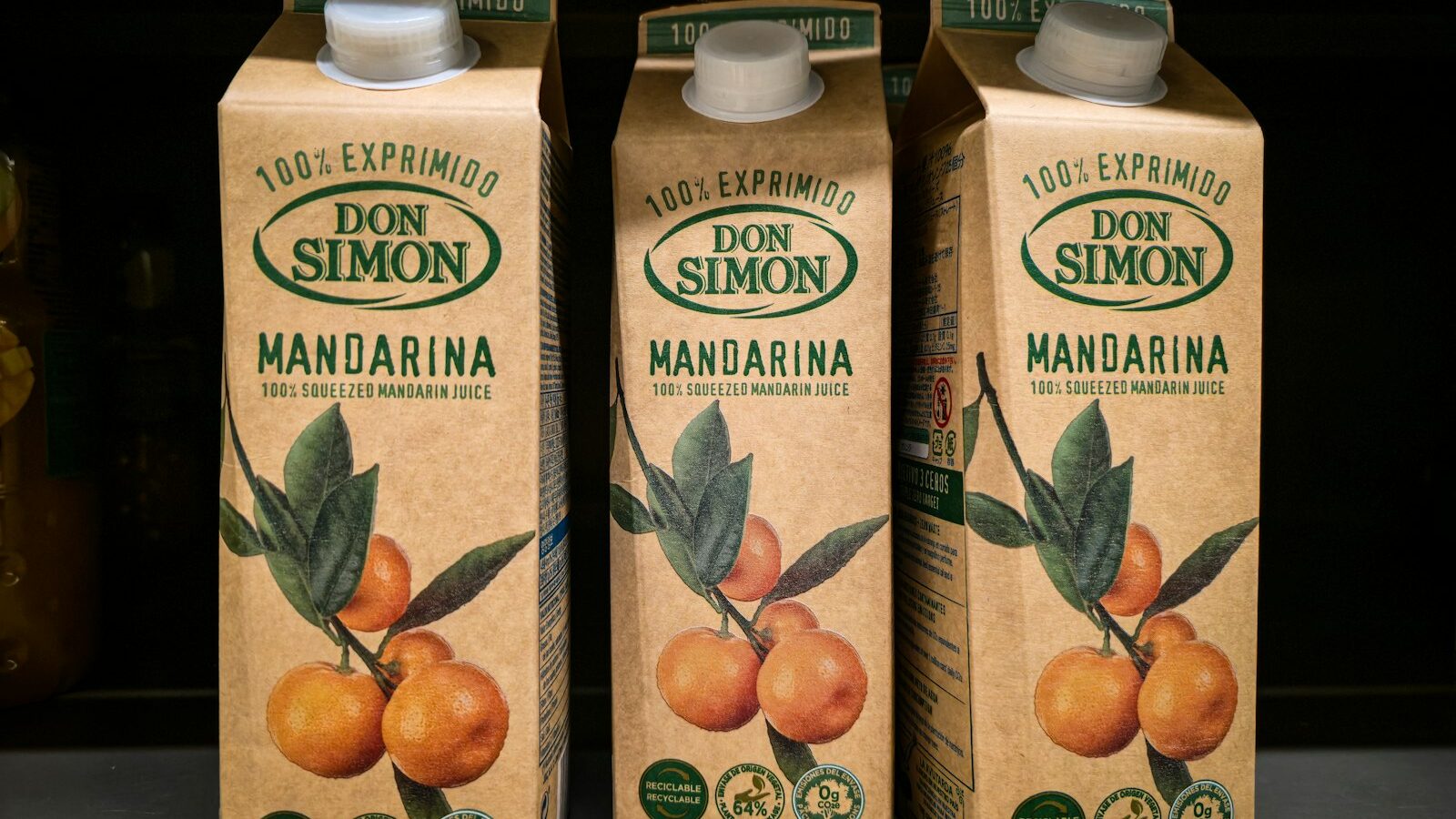
Packet drinks are everywhere in Singapore: chocolate milk in school bags, soy bean milk in the fridge, lemon tea at the void deck, coconut water after a run. If you have ever stood over the blue bin wondering whether that carton counts as paper, plastic or rubbish, you are not alone. The good news is that you can recycle Tetra Pak cartons in Singapore through the regular blue bin, as long as you prepare them properly.
This guide focuses on one material: drink cartons, including the well-known Tetra Pak brand and similar packs. It covers what they are made of, how to prepare them, what to do with straws and caps, and the common mistakes that turn a recyclable carton into contamination.
Do Drink Cartons Go in the Blue Bin?
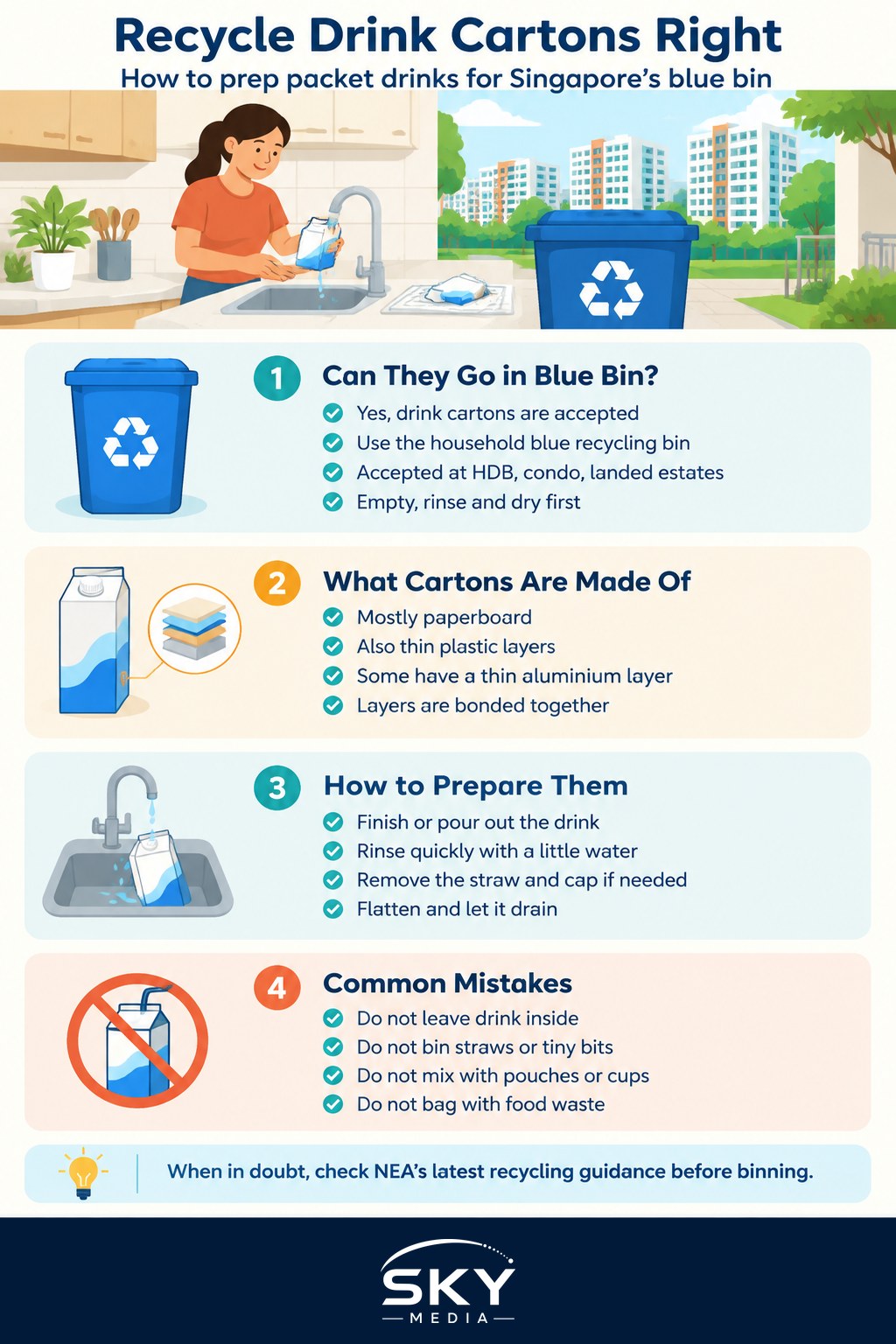
Yes. The National Environment Agency (NEA), which runs Singapore’s household recycling programme, lists beverage cartons among the items accepted in the blue recycling bins found at HDB blocks, condominiums and landed estates. Milk cartons, juice packs and packet drinks all fall into this group.
There are conditions, though. NEA’s guidance is that recyclables should be clean and free from food and liquid. A carton with leftover milk or juice can leak onto paper and cardboard in the same bin, making them harder or impossible to recycle. So the real answer is “yes, if it is empty, rinsed and dry enough”.
Rules and accepted items can be updated over time, so check NEA’s website or its recycling resources for the latest list if you are unsure.
What a Drink Carton Is Actually Made Of
Understanding the material explains why preparation matters. A typical drink carton is not just paper. It is usually made of layers:
- Paperboard makes up most of the carton and gives it its shape. This is the most valuable part for recyclers.
- Thin plastic layers keep liquid in and moisture out.
- A thin aluminium layer is found in many long-life (shelf-stable) cartons, protecting the drink from light and air so it keeps without refrigeration.
Because these layers are bonded together, cartons need specialised processing to separate the paper fibres from the plastic and aluminium. That is why they are treated as their own category in many recycling systems, even though they look like paper. Your job at home is simple: send them to the recycler clean, so the fibres are usable.
How to Prepare Cartons for Recycling, Step by Step
This takes less than a minute per carton once it becomes a habit.
- Finish or pour out the drink. Shake out the last drops into the sink.
- Rinse quickly. Add a little water, swirl, and pour it out. For milk and soy milk especially, a rinse stops sour smells and mould, which can spoil the other items in the bin.
- Remove the straw. Thin plastic straws are too small to be sorted and should go in the general waste.
- Deal with the cap. For cartons with a plastic screw cap, follow current NEA guidance. If in doubt, remove the cap and put it in general waste rather than risk contaminating the batch.
- Let it drain. Stand cartons upside down on the dish rack for a while so they are not dripping.
- Flatten it. Open the folded corners, then press the carton flat. Flattened cartons take up far less space in your home bag and in the blue bin chute or container.
- Drop it in the blue bin loose. Do not tie recyclables up in a sealed plastic bag of rubbish. If you collect recyclables in a bag at home, empty them into the bin or use a clean bag that is itself recyclable, following your estate’s instructions.
The difference between a good habit and a bad one is shown below.
| Do this | Avoid this | Why it matters |
|---|---|---|
| Empty and rinse the carton | Throwing in cartons with leftover drink | Liquid soaks paper and cardboard in the same bin |
| Remove straws and tiny plastic bits | Leaving straws pushed inside | Small items cannot be sorted and become waste |
| Flatten before binning | Putting in full-shaped cartons | Saves space and makes collection more efficient |
| Put cartons in loose or with clean recyclables | Bagging them with food waste | Mixed waste contaminates the whole bag |
Common Mistakes With Packet Drinks
A few habits are especially common in Singapore homes.
- Recycling packets from takeaway drinks with ice and sweet drink inside. Sugary residue attracts ants and pests in the bin room. Rinse first.
- Mixing up cartons with cups. Paper cups for hot coffee and bubble tea cups are different items. Many disposable cups have linings or food residue that make them hard to recycle, so check current NEA guidance before binning them. Our guide to how to recycle correctly in Singapore covers the general list.
- Throwing in drink pouches. Foil and plastic drink pouches, such as some juice pouches for kids, are not the same as paperboard cartons. If it does not have a paper feel and fold like a carton, do not assume it is recyclable.
- Assuming “wet” means “no”. Some people bin all cartons as rubbish because they once held liquid. Once emptied and rinsed, they are accepted. A slightly damp carton is fine. A carton full of soured milk is not.
- Stuffing small cartons inside each other. It seems tidy but can trap liquid and makes sorting harder. Flatten them separately.
Making It Easy at Home, at School and at Work
The biggest barrier to recycling cartons is convenience. A few small set-ups help.
At home
- Keep a small container or bag for recyclables next to the kitchen bin, and put flattened cartons there straight after rinsing.
- Teach children to rinse and flatten their own packet drinks. It is a good, simple task, and the school holidays are an easy time to start the habit.
- If you live in a flat where the blue bin is downstairs, empty your recycling container whenever you take out the rubbish.
At school and work
- Encourage a “rinse at the pantry” habit for packet drinks consumed at the desk.
- Where offices have separate recycling bins, check with the building management what is accepted. Commercial buildings may use different collectors from the household blue bin system.
When you are out
- Recycling bins at public places can be easily contaminated by drinks. If there is no sink nearby, consider taking the carton home to rinse rather than dropping a half-full pack in a recycling bin.
Where Else Drink Cartons Can Go
For most households, the blue bin is the simplest and best option. Occasionally, schools, community groups or retailers run carton collection drives or education programmes. If you hear of one, check what preparation they require, as some may ask for cartons to be cut open and fully dried.
You may also see recycling machines that reward you for returning certain drink containers. Check what each machine accepts before you go, as many are designed for specific items such as plastic bottles and cans rather than cartons. Our article on cash-for-trash and where to recycle explains the wider options for different materials.
For other tricky items, see our guides on how to recycle coffee capsules and how to deal with styrofoam, both of which have their own rules.
Why It Is Worth the Extra Minute
Singapore has limited land for waste disposal, and much of the household waste that is not recycled is incinerated. Paperboard from cartons is a useful material when it reaches recyclers in good condition. Each clean carton you send through the blue bin is a small contribution, and clean recyclables help keep the whole bin’s contents usable.
The routine is short: empty, rinse, remove the straw, flatten and drop it in the blue bin. Once it becomes automatic, you will find it no more effort than throwing the carton away. For the most current list of what goes in the blue bin, always check NEA’s official recycling information.
Official sources: National Environment Agency (NEA)
Further reading: Can You Recycle Medicine Blister Packs in Singapore? · Can You Recycle Takeaway Containers and Aluminium Foil in Singapore? · What to Do With Empty Formula Milk Tins in Singapore