
Takeaway and food delivery leave most Singapore households with a steady pile of plastic boxes, foil trays and paper bowls. Many of these can go into the blue recycling bin, but only if they are the right material and reasonably clean. If you want to recycle takeaway containers in Singapore properly, the rule of thumb is simple: clean and dry goes in, greasy, food-stained or mixed-material packaging usually does not. This guide goes item by item through common food packaging so you know what to do at the sink and at the chute.
Why Clean Matters More Than the Material
Singapore’s blue bins take mixed recyclables, meaning paper, plastic, metal and glass all go into one bin and are sorted later. That convenience has a downside: one container full of leftover curry or oily gravy can soil the paper and cardboard around it, and heavily contaminated loads may end up being disposed of instead of recycled.
The National Environment Agency (NEA), which oversees waste and recycling, has for years run public education on “recycling right”, and the message is consistent:
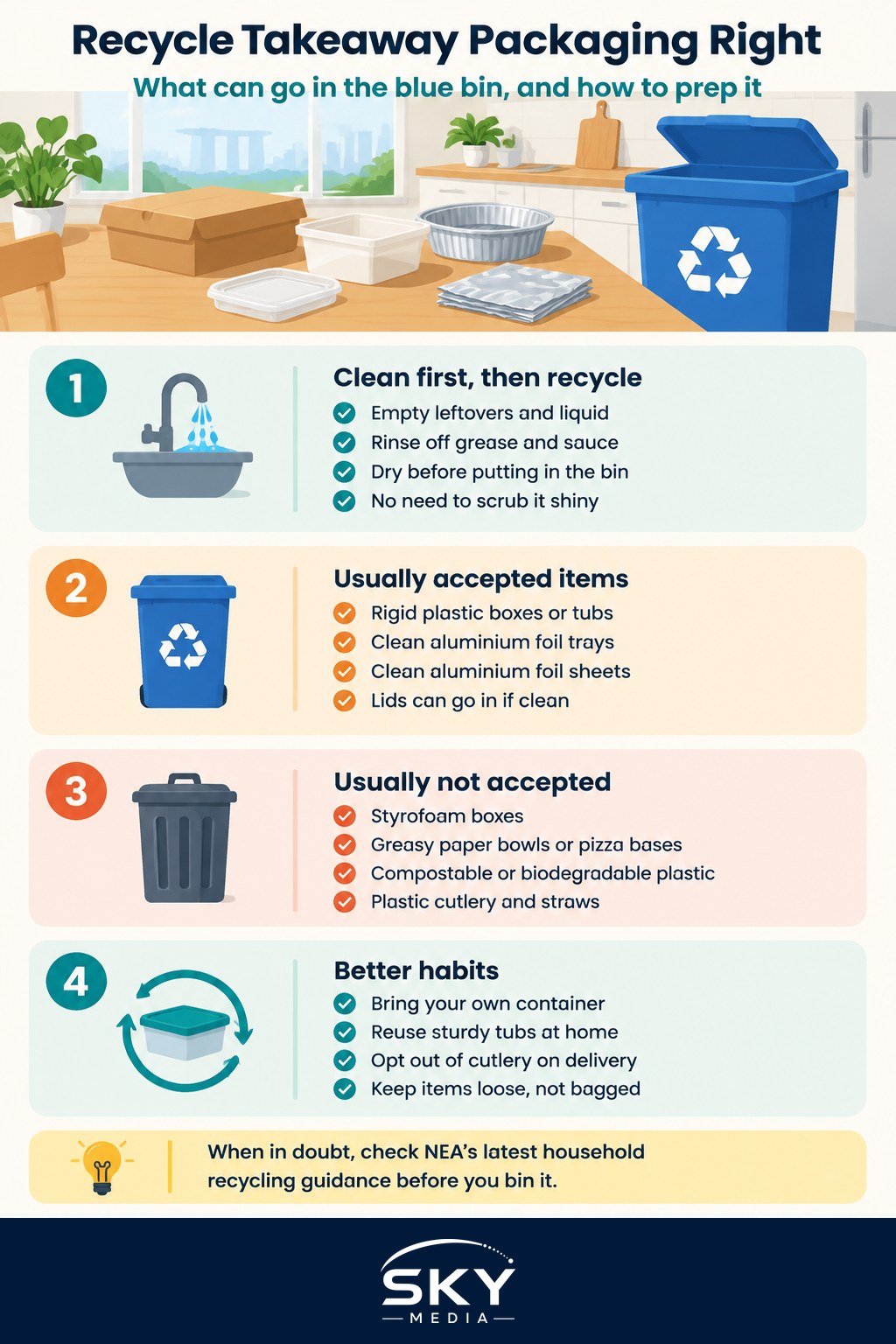
- Empty the container of food and liquid.
- Rinse it quickly to remove grease and sauce.
- Dry it, or at least shake it off, before it goes in the bin.
You do not need to scrub anything until it shines. A quick rinse with the water left over from washing up is usually enough. If a container is so greasy or stained that a rinse will not fix it, it belongs in general waste.
Item by Item: What Goes in the Blue Bin
Here is how the most common takeaway packaging generally fares. Guidance can be updated, so check NEA’s current list of what can and cannot be recycled if you are unsure about a specific item.
| Packaging | Blue bin? | What to do |
|---|---|---|
| Rigid plastic takeaway box or tub | Yes, if clean | Empty, rinse and dry; lids can go in too |
| Aluminium foil tray | Yes, if clean | Scrape off food, rinse and let it dry |
| Aluminium foil sheet | Yes, if clean | Rinse, then scrunch into a ball |
| Styrofoam (polystyrene) box | No | General waste |
| Greasy paper box or pizza box base | No | Tear off clean parts for recycling, bin the rest |
| Paper bowl or cup with plastic lining | Generally no | General waste |
| “Compostable” or “biodegradable” plastic | No | General waste |
| Plastic cutlery and straws | No | General waste, or skip them when ordering |
Plastic takeaway boxes
Rigid plastic containers, like the clear or black boxes used for rice dishes and the round tubs used for soups, are usually recyclable once clean. Many are marked with a recycling number underneath, often 5 (polypropylene). The number tells you the plastic type, but it is not a guarantee that something is accepted, so cleanliness is the bigger factor. Thin film lids and cling wrap are a grey area, as soft plastics are harder to recycle; if in doubt, keep them out.
Aluminium foil trays and sheets
Foil is aluminium, a metal that can be recycled repeatedly. Clean foil trays from bakes, roast meats or catered food can go in the blue bin. Used foil sheets should be rinsed of food and crumpled into a ball about the size of your fist, which makes them easier to sort than loose flat scraps. Foil that is burnt on with cheese or grease, or laminated with paper or plastic (such as some snack wrappers), should go in general waste.
Styrofoam boxes
Expanded polystyrene, the white foam used for many hawker takeaway boxes, is not accepted in the blue bin. It is bulky, very light and hard to clean, and it is not collected through the household recycling system. The best fix is to avoid it, either by bringing your own container or choosing stalls that offer alternatives.
Paper bowls, boxes and cups
Paper seems like the obvious recyclable, but food packaging is tricky. Most paper bowls and cups have a thin plastic lining to stop leaks, and greasy cardboard cannot easily be pulped. Clean outer sleeves, paper bags and the unsoiled lid of a pizza box can go in; the oily base cannot.
“Eco” packaging
Packaging labelled biodegradable, compostable or plant-based (such as PLA plastic) looks greener but is not suited to Singapore’s blue bins. It can contaminate regular plastic recycling and should go in general waste unless a specific collection programme says otherwise.
A Quick Routine That Actually Works
Recycling food packaging only sticks if it is easy. A routine many households use:
- Eat, then empty. Scrape leftovers into the bin straight away so they do not dry on.
- Rinse with the dishes. Give containers a quick rinse when you wash up rather than as a separate chore.
- Dry on the rack. Let them air dry upside down.
- Nest and stack. Stack clean boxes inside each other and keep a small recycling bag or box at home.
- Take them down together. Empty into the blue bin at your block or estate when the bag is full.
If you live in an HDB block, blue bins are usually at the void deck or near the refuse area. Condominiums often have recycling points in the bin centre; ask your management office if you cannot find them.
Better Than Recycling: Reduce and Reuse
Recycling is good, but using fewer disposables is better. A few easy swaps:
- Bring your own container for takeaway at hawker centres and food courts. Our guide to bringing your own container when eating out covers how to ask and what to carry.
- Reuse sturdy plastic boxes at home for leftovers, freezer portions or storing small items, as long as they are food safe and in good condition. For longer term use, see how to choose reusable food containers that last.
- Opt out of cutlery on delivery apps if you are eating at home.
- Turn tubs into planters. Clean takeaway tubs make handy seed starters; poke drainage holes and follow our tips for upcycling containers for your plants.
Common Mistakes to Avoid
- Bagging recyclables in a tied black trash bag. Sorters may treat it as rubbish. Use a clear or reusable bag, or empty items loosely into the bin.
- “Wishcycling”. Putting in items you hope are recyclable, like styrofoam or greasy paper, makes the whole load harder to recycle.
- Leaving liquids inside. Soup or drink residue leaks onto paper and cardboard.
- Tossing tiny items. Very small pieces such as bottle caps on their own, cutlery and sauce packets are often lost in sorting.
- Forgetting the lid. Rinse the lid as well as the base, since sauce tends to collect around the rim.
Where to Check the Latest Rules
Recycling guidance in Singapore evolves as collection and sorting improve, and specific schemes come and go. For the most current list, check NEA’s website on household recycling, or ask your town council or condo management about local arrangements. Your public waste collector may also publish guidance for your area.
Done consistently, a quick rinse and a stack by the door turns a week of takeaway boxes and foil trays into material that can actually be recycled, rather than rubbish with a recycling symbol on it.
Official sources: National Environment Agency (NEA)
Further reading: How to Recycle Drink Cartons and Tetra Paks in Singapore