
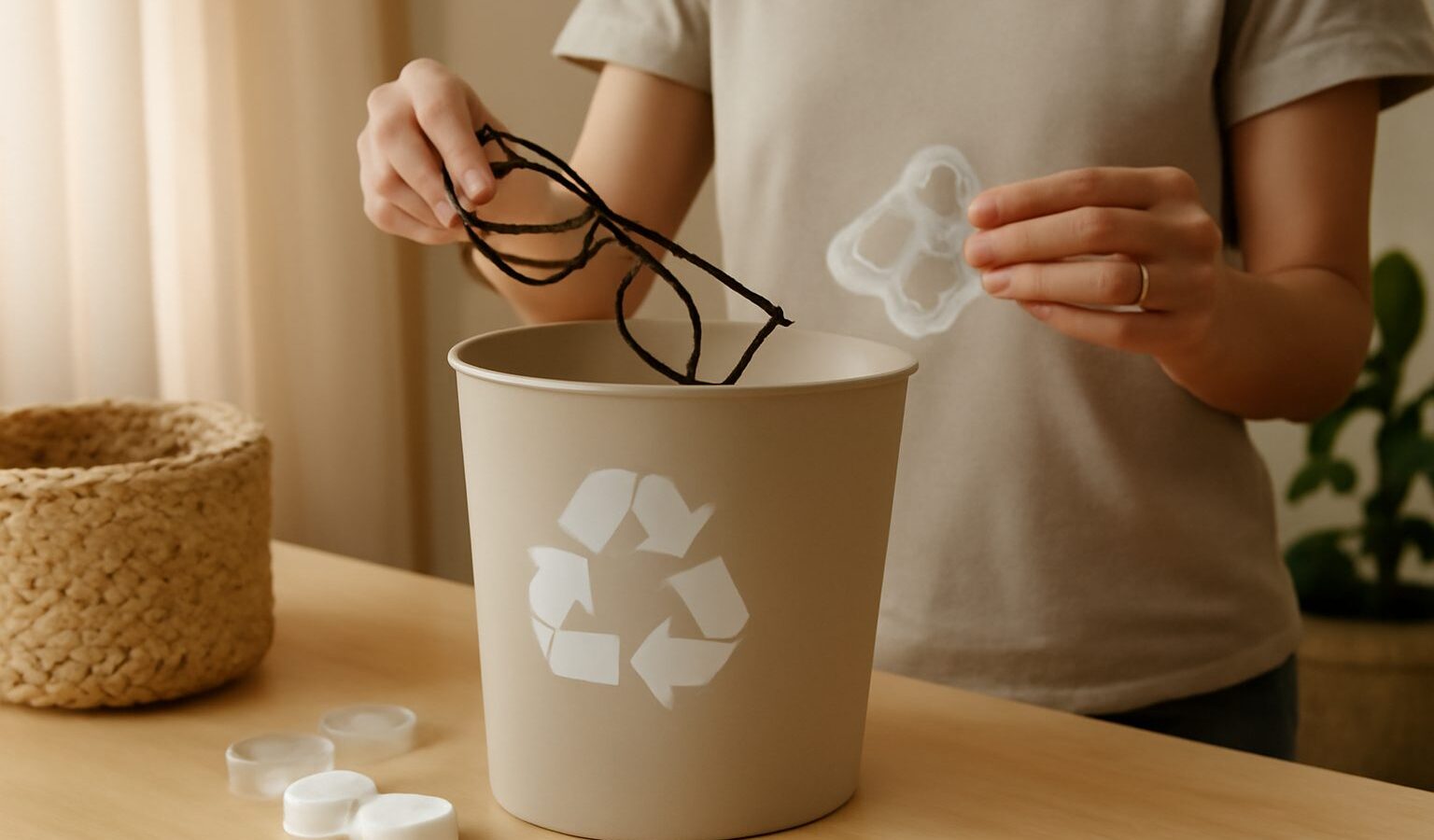
Most of us have a drawer with two or three pairs of old glasses we no longer wear, plus a steady stream of contact lens boxes, blister packs and solution bottles heading for the bin. If you want to recycle old spectacles in Singapore, or at least keep them out of the incinerator, the honest answer is that some eyewear items recycle well, some are better reused, and some simply belong in general waste. This guide sorts them out item by item.
Singapore’s general waste is mostly incinerated, and the ash goes to Semakau Landfill, which has limited space. So the order of priority is simple: reuse first, recycle what the system can actually handle, and avoid contaminating the blue bin with things it cannot.
Why Old Glasses Are Tricky to Recycle
Spectacles look small and simple, but they are made of several materials bonded together:
- Frames in acetate, other plastics, metal alloys, titanium or a mix
- Tiny metal screws, hinges and nose pad arms
- Lenses in plastic or glass, often with coatings for scratch resistance, anti-glare or blue light filtering
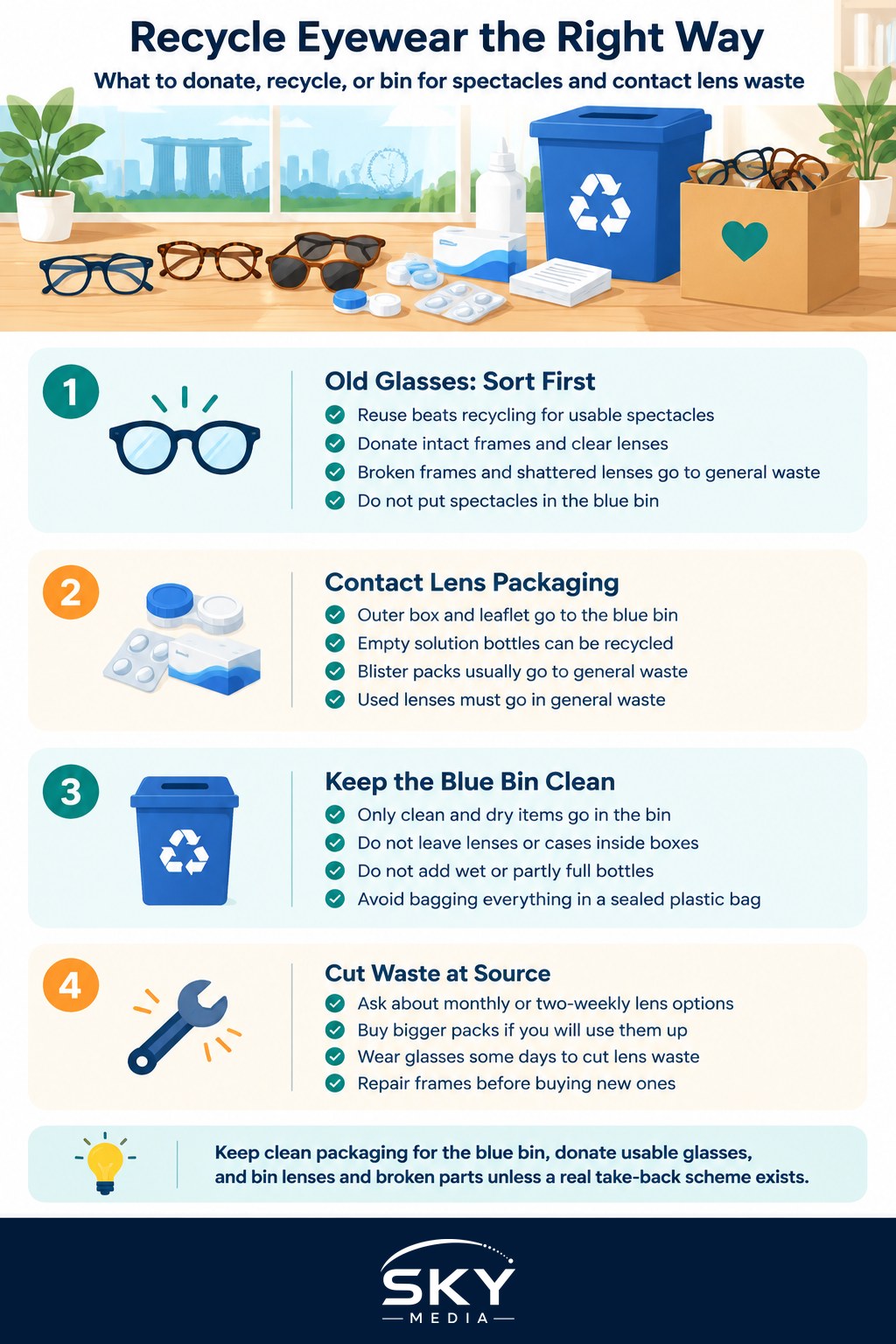
Because these parts are hard to separate, a pair of glasses is not a good fit for the blue recycling bin. Lens glass is also not the same as bottle and jar glass, so it should not go in with your glass recyclables. If you put glasses in the blue bin, they are likely to be sorted out as contamination at best.
That is why, for spectacles, reuse beats recycling. A pair that still works can help someone who cannot easily afford eye care.
Donating Usable Spectacles
Many people around the world lack access to affordable glasses, and some organisations collect used frames and prescription glasses, clean and grade them, and pass them on. In Singapore, collection drives for used spectacles are run from time to time by charities, community groups, service clubs and some optical shops. These change, so:
- Ask your optician whether they accept old glasses for donation, or know who does
- Search for current collection drives by charities or community organisations
- Check community centre noticeboards and town council updates
Before you donate, check that the glasses are worth passing on:
- Frames intact. No cracks, broken hinges or missing arms.
- Lenses not badly scratched. Light marks are usually fine; deep scratches are not.
- Clean and dry. Wipe them down and put them in a case or soft pouch so they are not damaged in transit.
- Reading glasses and sunglasses count too. Many collectors welcome these, but confirm first.
Spare spectacle cases in good condition can go along with the glasses, or to a friend or a reuse group online. If you are buying new glasses, our guide to getting spectacles and contact lenses covers the options, and asking your optician about donation at the same visit is the easiest habit to build.
Glasses that are broken beyond use, with snapped frames or shattered lenses, unfortunately go in general waste. Wrap broken glass lenses before binning to protect cleaners.
Sorting Contact Lens Waste: What Goes Where
Contact lenses create a surprising mix of waste. The table below shows a practical way to sort each item in a Singapore household. Rules and accepted items can change, so check the National Environment Agency (NEA) recycling guidance for the latest list.
| Item | Where it should go | What to do first |
|---|---|---|
| Outer cardboard box and paper leaflet | Blue recycling bin | Flatten, keep dry |
| Solution bottle (empty) | Blue recycling bin, as plastic | Empty fully, rinse, replace cap |
| Blister pack plastic cup with foil lid | Usually general waste, unless a take-back scheme exists | Peel the foil off if you collect them for a scheme |
| Used contact lenses | General waste | Never flush down the toilet or sink |
| Lens case | General waste, or a take-back scheme if offered | Replace regularly, as advised by your optician |
A few points need extra explanation.
Blister packs. The small plastic cup is often made of a recyclable plastic, but it is tiny and attached to a foil lid. Items this small can slip through sorting machinery at recycling facilities, and the mix of foil and plastic adds contamination. For most households, general waste is the realistic option. Some lens makers and optical retailers in various countries run collection programmes for blister packs and used lenses. Ask your optician or lens brand whether anything similar is available in Singapore before assuming one is.
Solution bottles. These are ordinary plastic bottles and are among the easiest items to recycle. Pour out leftover solution, give the bottle a quick rinse and let it dry. Do not put in bottles still half full of liquid, as wet items spoil paper and cardboard in the same bin.
Used lenses. Lenses flushed down sinks and toilets can pass through wastewater systems and add to plastic pollution. Put them in the bin with general waste instead.
Getting the Blue Bin Right for Eyewear Packaging
Singapore’s blue bins take paper, plastic, glass and metal all together, and everything should be clean and dry. For more general rules, our guide on how to recycle correctly in Singapore covers the basics, and soft plastics and what you cannot recycle explains common contaminants.
For eyewear packaging, the main mistakes to avoid are:
- Throwing in boxes with blister packs still inside
- Including wet or partly full solution bottles
- Adding glasses, lens cases or used lenses “just in case”
- Bagging everything in a plastic bag that cannot be opened at sorting
A simple routine helps. Keep a small paper bag next to where you put in your lenses. Collect flattened boxes and empty, rinsed bottles in it, and empty it into the blue bin once it is full.
Cutting Eyewear Waste at the Source
Recycling is only part of the picture. You can reduce what you throw away in the first place:
- Ask about lens types. Daily disposables create the most packaging, while monthly or two-weekly lenses create less. The right choice depends on your eyes, comfort and hygiene habits, so discuss it with your optometrist rather than switching on your own.
- Buy larger packs. Bigger boxes and larger solution bottles mean less packaging per use, as long as you will use them before they expire.
- Wear glasses some days. Many contact lens users alternate, which reduces lens waste.
- Repair before replacing. Opticians can often replace screws, nose pads and hinges, or put new lenses into a frame you like.
- Keep one spare pair, not five. Donate the rest while they are still useful.
Building a Simple Eyewear Recycling Habit
To recycle old spectacles in Singapore well, think of it in three streams. Good glasses go to donation. Clean packaging, boxes and bottles go to the blue bin. Lenses, blister packs and broken frames go to general waste unless you find a genuine take-back scheme. It takes less than a minute a week once the habit is set, and it keeps both the blue bin and the landfill in better shape.
Explore more: How to Recycle Correctly in Singapore · Soft Plastics and What You Cannot Recycle · Getting Spectacles and Contact Lenses
Official sources: National Environment Agency (NEA)
Further reading: How to Recycle Printer Ink and Toner Cartridges in Singapore