
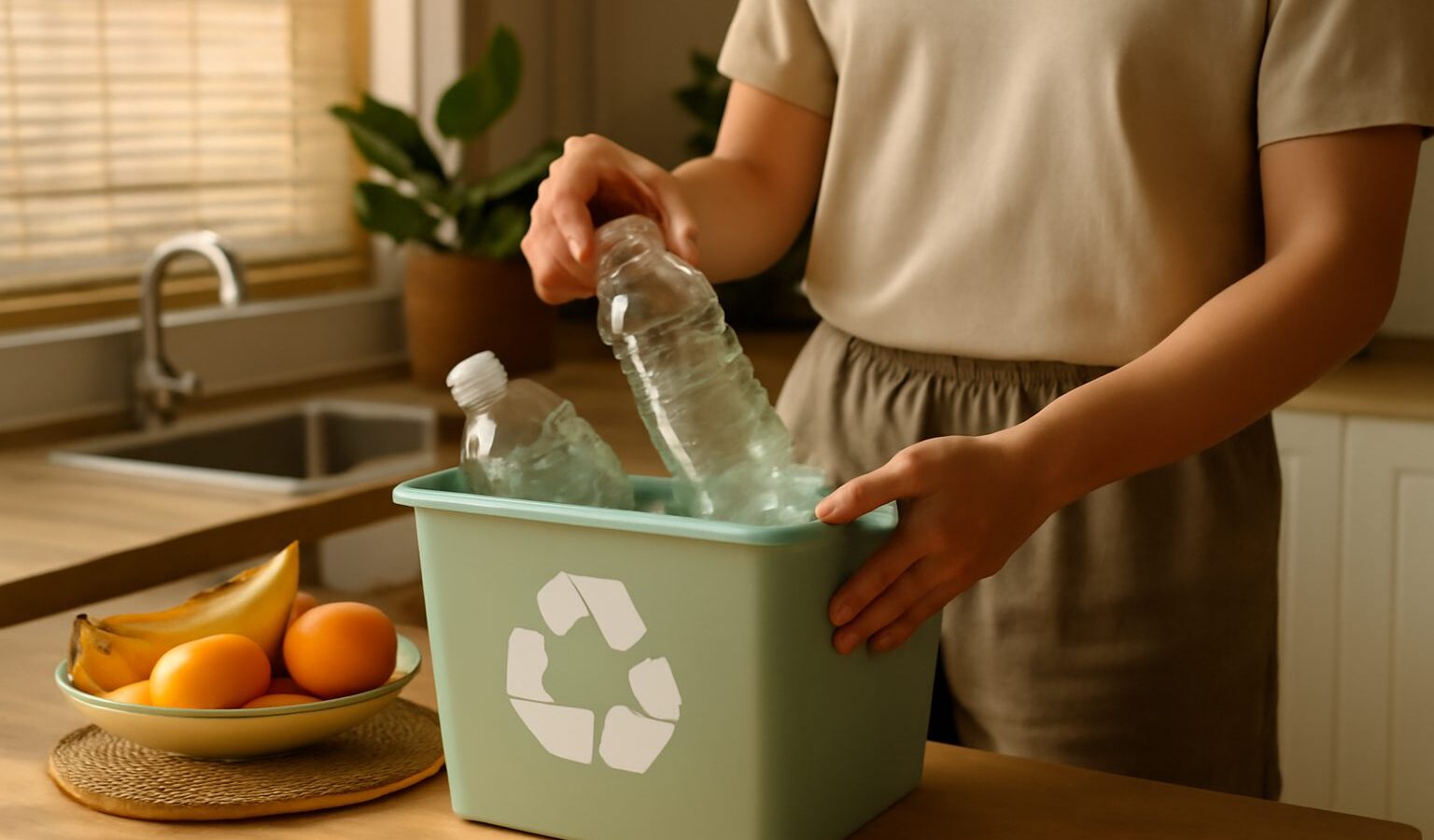
Plastic is the material we feel most guilty about and understand least. We rinse a yoghurt tub, drop it in the blue bin, and hope for the best. The honest truth about recycling plastics in Singapore is more mixed than the recycling symbol suggests, but that is not a reason to give up. It is a reason to get practical: know what actually gets recycled here, put the right things in the bin the right way, and lean harder on reducing and reusing, where the real wins live. This guide lays it out plainly.
What the Numbers Inside the Triangle Mean
Flip most plastic items over and you will find a small triangle of arrows with a number from 1 to 7 inside. This is the resin identification code, and it tells you the type of plastic, not whether the item can be recycled. That distinction trips up a lot of well-meaning people.
- 1 (PET): drink bottles, some food containers. Commonly recyclable.
- 2 (HDPE): milk bottles, detergent and shampoo bottles. Commonly recyclable.
- 3 (PVC): some packaging and pipes. Rarely accepted in household recycling.
- 4 (LDPE): plastic bags, cling film, squeezable bottles. Usually not accepted loose in the blue bin.
- 5 (PP): yoghurt tubs, bottle caps, microwave containers. Sometimes accepted.
- 6 (PS): foam boxes, disposable cutlery. Generally not recyclable here.
- 7 (Other): mixed or layered plastics. Generally not recyclable.
As a rule of thumb, rigid bottles and containers marked 1 and 2 are your safest bets. Because accepted materials can be updated over time, NEA’s guidance is the source to check when you are unsure.
Why the Blue Bin Does Not Take Everything
Singapore’s blue commingled recycling bins accept paper, plastic, metal and glass together, which is convenient but leads to a common mistake: assuming all plastic qualifies. Several kinds of plastic are genuinely hard to recycle. Some are made of layered materials fused together, some are too lightweight or too contaminated with food to be worth recovering, and some have no viable market to be turned into anything useful.
When a non-recyclable or dirty item goes into the bin, it does not quietly get filtered out. It can spoil the clean recyclables around it, which brings us to the biggest practical problem in the whole system.
Rinsing and the Contamination Problem
Contamination is what sends otherwise good recyclables to the incinerator. A single container of leftover curry, a half-full bottle of drink, or a greasy takeaway box can soil the paper and plastic it touches inside a collection bin, and once material is contaminated it often cannot be recovered.
You can prevent most of this with a few seconds of effort:
- Empty the container of any food or liquid.
- Rinse it lightly, a quick swirl of water is enough, it does not need to be spotless.
- Let it dry if you can, so it does not dampen paper in the bin.
- Keep the wrong things out, especially food waste, tissues and soft plastic bags, which do not belong in the commingled bin.
Clean, dry and loose is the mantra. You do not need to scrub; you just need to not leave food behind.
The Trouble With Soft Plastics
Soft plastics are the flexible ones: carrier bags, bread bags, cling film, snack wrappers and bubble wrap. They are among the trickiest to recycle through the household stream. Loose bags tangle in sorting machinery and are frequently not accepted in the blue bin, so putting them there can do more harm than good.
The better moves with soft plastics are to use fewer of them and to reuse the ones you have. A carrier bag reused several times, or a bread bag that lines your bin, earns its keep far better than one that goes straight to recycling and gets rejected. Where dedicated soft-plastic collection points exist, they are worth using, but check what each one actually accepts before making the trip.
Reduce and Reuse Before You Recycle
Here is the part worth internalising: recycling sits at the bottom of the priority list, not the top. The plastic that never enters your home is the easiest kind to deal with. Small, unglamorous habits add up:
- Bring your own bag, bottle and container when you can, without beating yourself up on the days you forget.
- Choose loose produce or larger refill sizes over many small wrapped ones.
- Reuse tubs and jars for storage before they ever become recycling.
- Say no to disposables you will not use, like extra cutlery with a delivery.
None of this requires perfection. Reducing even a portion of your single-use plastic does more good than recycling all of it after the fact.
What Recycling Really Does, and What Happens to the Rest
It helps to be honest about the ceiling. Much plastic recycling is actually downcycling: a bottle rarely becomes another identical bottle, and instead the material is turned into something of lower grade, such as fibres or industrial products. That still has value, but it means recycling is not an endless loop, and each cycle tends to degrade the material.
Plastic that cannot be recycled in Singapore does not simply pile up. As a land-scarce country, Singapore incinerates most non-recyclable waste to generate energy and greatly reduce its volume, with the ash and other residue going to landfill. That is why reducing plastic at the source matters so much: less plastic made and bought means less to burn or bury, regardless of how the recycling turns out.
A Quick Reference for Common Plastics
Use this as a starting point, and defer to NEA’s current guidance when an item is not obvious.
| Plastic type | Recyclable in the blue bin? | Tip |
|---|---|---|
| PET drink bottles (1) | Usually yes | Empty, rinse, replace the cap loosely |
| HDPE bottles (2) | Usually yes | Rinse detergent and milk bottles first |
| PP tubs and caps (5) | Sometimes | Check locally; always clean and dry |
| PS foam boxes (6) | Generally no | Avoid where possible; keep out of the bin |
| Plastic bags and cling film (4) | Usually no | Reuse, or use a dedicated soft-plastic point |
| Multi-layer or “other” (7) | Generally no | Reduce use; these have no easy recycling route |
Doing It Well, Not Perfectly
Recycling plastics in Singapore works best when you treat it as one tool among several. Put clean, dry bottles and containers in the blue bin, keep food waste and loose bags out, and let go of the idea that everything with a triangle can be saved. Then aim higher up the chain by reducing and reusing, where your choices have the most leverage. Progress here is about steady, realistic habits, not guilt over the occasional wrapper.
Explore more
If you want to get the mechanics right, our guide on how to recycle correctly in Singapore covers the blue bin do’s and don’ts in more detail. And because the biggest wins come before the bin, see our practical tips on reducing single-use plastics in Singapore for easy swaps that stick.