
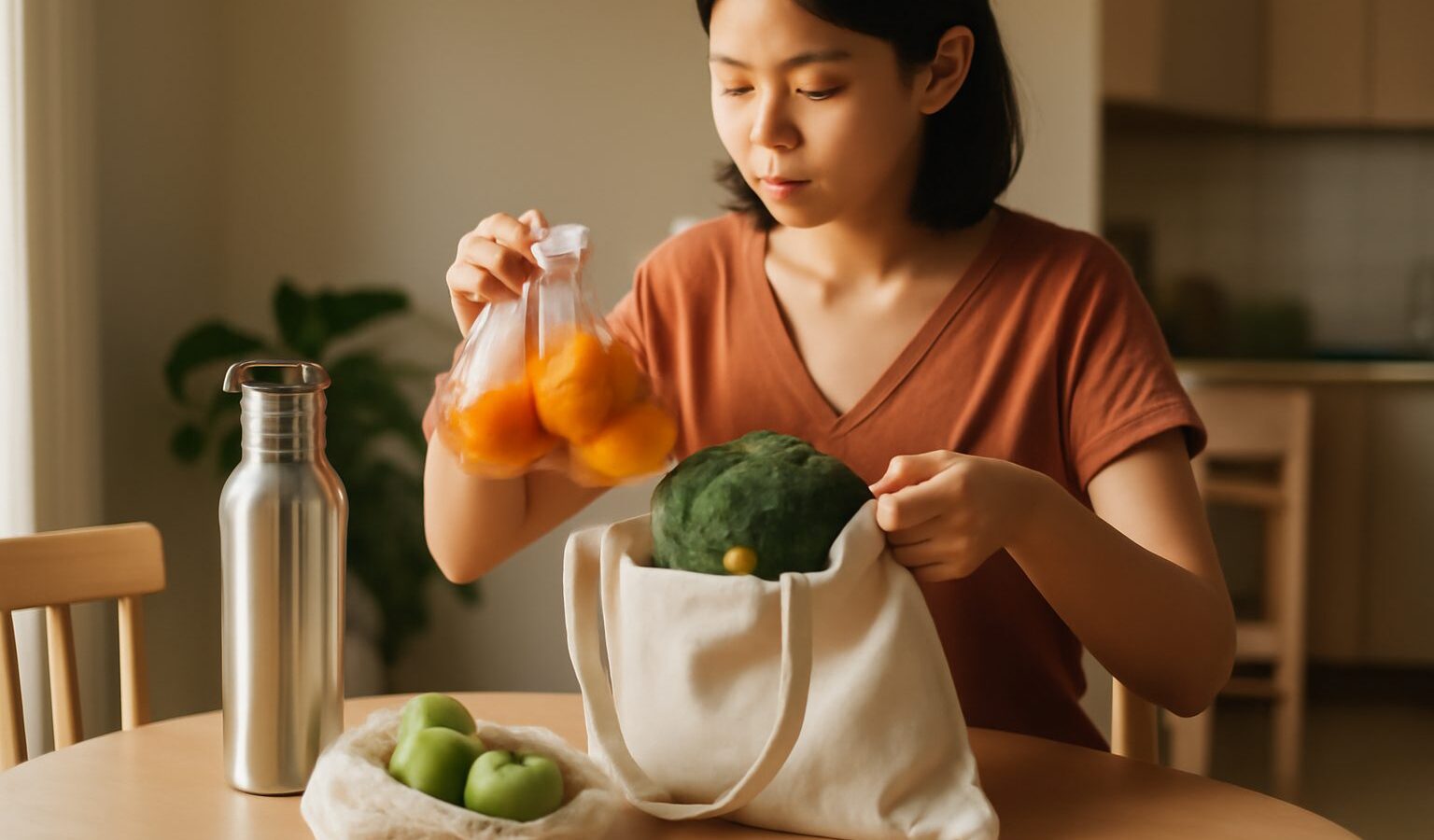
Look at what one ordinary day in Singapore can generate: a plastic bag at the supermarket, a bubble tea cup with a domed lid and a straw, a bag of hawker food with a plastic spoon and a rubber band, and a delivery order wrapped in three layers of packaging with cutlery you did not ask for. Cutting single use plastics Singapore-style is not about guilt or going without. It is about noticing these small moments and swapping in something reusable when it is easy to do so. Our convenient, disposables-heavy takeaway and delivery culture makes plastic feel unavoidable, but a handful of simple habits can quietly remove a large share of it from your week without making life harder. This guide walks through the realistic swaps that actually stick in a hot, busy, hawker-loving city.
Why Single-Use Plastic Piles Up Here
Singapore runs on convenience, and convenience has long meant disposable. Food comes packed to travel, drinks come in cups built for one journey, and everything is bagged for the trip home. Most of this waste is incinerated rather than recycled, because thin films, food-stained containers and mixed materials are hard to recycle cleanly. The National Environment Agency (NEA) manages our waste and recycling system, including the blue recycling bins, and its long-running guidance is simple: reducing what we use in the first place matters more than trying to recycle our way out of the problem.
The encouraging part is that plastic reduction is one of the most beginner-friendly green habits going. You do not need special equipment, a bigger flat or a bigger budget. You mostly need to remember a bag and a bottle, and to say a polite “no” a little more often. Start with one or two swaps, let them become automatic, then add more.
The Supermarket Bag Charge and Bringing Your Own
You will have noticed the disposable carrier bag charge at major supermarkets, introduced under NEA’s framework to nudge shoppers away from taking bags out of habit. The point of the charge is not the money, it is the pause: that small prompt to ask whether you actually need a bag this time. The obvious response is to bring your own.
A few habits make BYO bag effortless:
- Keep a foldable reusable bag in every work bag, and a couple more by the front door.
- Stash a spare in your bag pocket or the car so a spontaneous grocery run is covered.
- Keep a few sturdy tote bags for bigger hauls and wet-market trips.
- Reuse the plastic bags you do end up with as bin liners, so they earn a second life before disposal.
One honest caveat for HDB living: many households rely on supermarket bags to line the rubbish chute or bin. If that is you, do not feel bad about keeping a small supply. The aim is to stop taking bags you do not need, not to run short of the ones you genuinely use.
Drinks on the Go: Bottles, Cups and the Bubble Tea Question
Bottled water and takeaway drinks are a huge source of everyday plastic. Singapore’s tap water is treated by PUB and is safe to drink straight from the tap, so a reusable bottle is one of the easiest wins available. Refill at home, at the office, and at the growing number of public water coolers and refill points around the island. In our climate you will want to stay hydrated anyway, so a good insulated bottle earns its keep.
Coffee and bubble tea are trickier because of how they are served. Some cafes welcome your own cup and a few even offer a small discount, so it is worth asking. Bubble tea is the honest challenge: the sealed-film cup and fat straw are part of how the drink works, and not every shop can accommodate a personal cup. Do what you can. Bring your own cup where the shop allows it, say no to the straw when you are drinking somewhere you can sip from the cup, and carry a reusable straw if you like them. Nobody expects perfection here, and skipping the straw on even half your drinks is a real reduction.
Hawker, Takeaway and Delivery Without the Extra Plastic
Hawker culture is the heart of eating in Singapore, and it comes with its own plastic realities. If you are dining in, use the stall’s crockery rather than asking for takeaway packaging. If you are buying food to go, a reusable container works well for many dry dishes; hand it over politely and many hawkers are happy to oblige, though gravy-heavy or piping-hot dishes are understandably harder, so pick your moments.
Delivery is where small choices add up fast. Most food delivery apps now include an option to decline disposable cutlery, and toggling it on by default is one of the highest-impact, lowest-effort changes you can make. You almost certainly have a drawer full of spoons and forks at home already. A few more delivery habits help:
- Set “no cutlery” as your default in the app, not something you remember case by case.
- Add a note asking to skip napkins and extra sauce sachets if you do not need them.
- Order for a group in one delivery rather than several separate ones to cut packaging.
- Rinse and recycle clean plastic containers where you can, and reuse sturdy ones for storage.
Easy Swaps That Actually Stick
The trick to reducing plastic is not willpower, it is setup. Once the reusable version lives where you need it, the disposable one stops being the default. This table pairs common single-use items with a reusable alternative and a realistic note on making the switch.
| Single-use item | Reusable alternative | Making it stick |
|---|---|---|
| Supermarket carrier bag | Foldable tote or shopping bag | Keep one in every bag and by the door |
| Bottled water | Refillable bottle with PUB tap water | Refill before you leave, carry it everywhere |
| Takeaway coffee cup | Insulated reusable cup | Ask cafes if they accept your own cup |
| Plastic straw | Reusable or no straw at all | Say “no straw” when you order |
| Delivery cutlery | Your own cutlery at home | Toggle “no cutlery” as the app default |
| Cling film and single-use bags | Reusable containers and beeswax wraps | Store leftovers in tubs you already own |
Notice that none of these ask you to buy much. Most use things you already have. Reducing single use plastics is really a series of tiny defaults, remember the bag, carry the bottle, skip the straw, decline the cutlery, that together make a visible dent without ever feeling like a sacrifice. Pick the two that fit your routine, let them become second nature, and build from there.
Explore More
Cutting plastic is one thread in a bigger picture of living lightly here. If you want to go further, read our guide to the zero-waste lifestyle in Singapore for a room-by-room approach to using less. And to see how these everyday choices connect to the wider goal, explore reducing your carbon footprint in Singapore.