
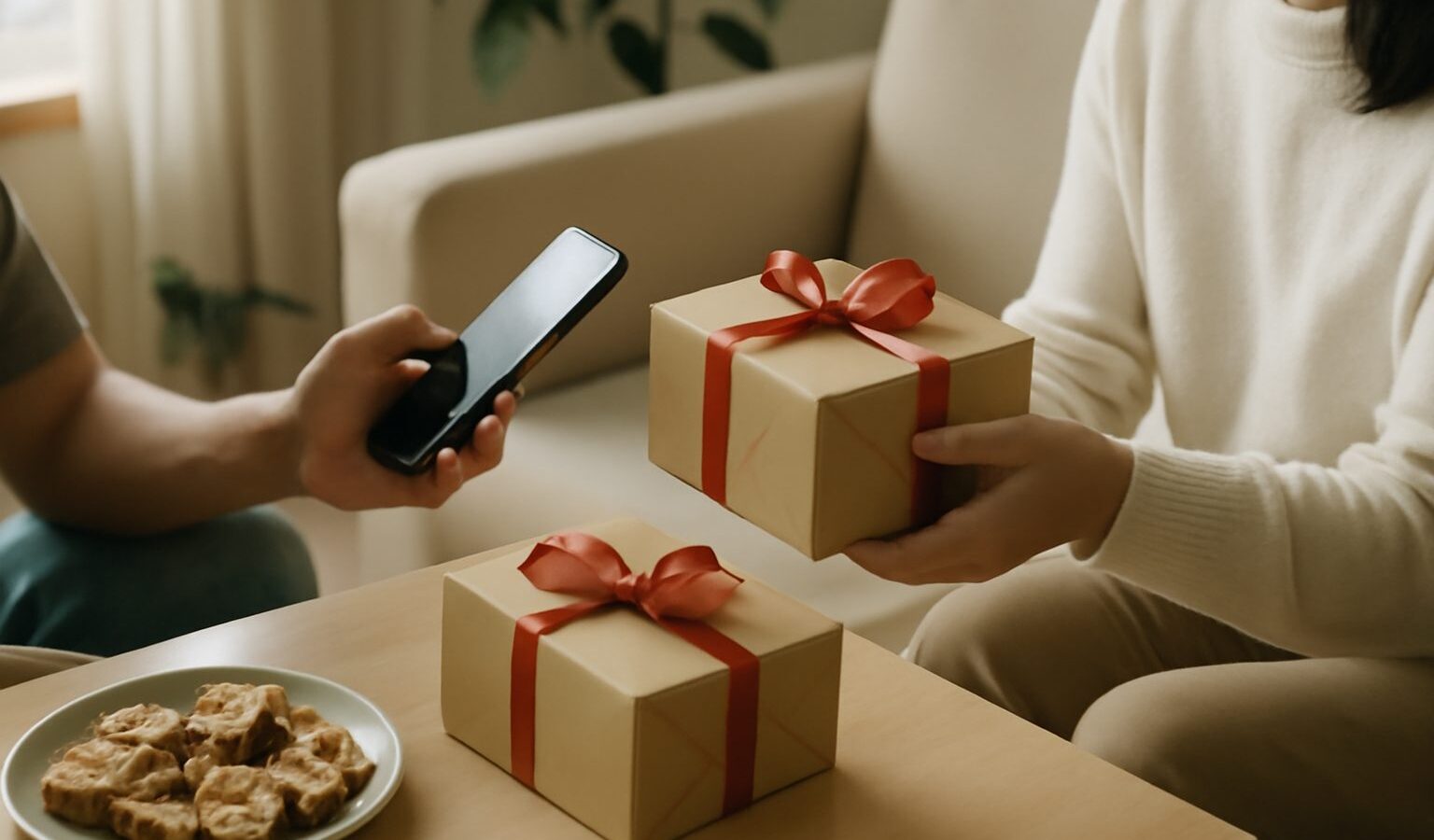
Every January, many households in Singapore face the same quiet question: what to do with unwanted gifts. The scented candle you will never light, the second air fryer, the shirt two sizes too big. Keeping things you do not need clutters a small flat, but getting rid of a gift can feel ungrateful. The good news is there are polite, practical options: regifting thoughtfully, exchanging at the store, reselling safely or donating. This guide walks through the etiquette and the practical steps, so the gift ends up with someone who will use it and nobody’s feelings get hurt.

Start by Sorting What You Received
Before deciding, take a few minutes after the festive season to sort gifts into groups:
- Keep: things you like or will genuinely use.
- Exchange: items you like the idea of but need in a different size, colour or model.
- Regift: new, unopened items that would suit someone else in your life.
- Resell: higher-value items in new or like-new condition that you would rather turn into cash.
- Donate: useful items that are not worth the effort of selling.
- Keep for now: anything from someone close, such as a parent or partner, where you may want to wait or talk it over first.
Being honest at this stage saves you from a cupboard of “maybe” items that you will still be wondering about next December.
Regifting Etiquette That Avoids Awkward Moments
Regifting is common and perfectly acceptable when done with care. The aim is to give something the new recipient will genuinely appreciate, not just to pass along clutter.
Do
– Regift only new, unused items in their original packaging.
– Match the gift to the person. Ask yourself whether you would have bought it for them.
– Rewrap completely, and check inside boxes and bags for old gift tags, cards or handwritten notes.
– Keep a simple note of who gave you what, so you never regift within the same circle.
Don’t
– Regift handmade, personalised or engraved items. These carry the giver’s effort and are easy to recognise.
– Pass on items to someone who knows the original giver, such as a shared colleague or relative.
– Regift food close to its expiry date or anything that has been opened.
– Present a regift as something you chose specially if asked directly. A simple “I thought you’d enjoy this more than me” is honest and kind.
Some families and offices openly enjoy regifting, for example with “white elephant” or Secret Santa swaps. Others may find it hurtful. When in doubt, stay discreet.
Exchanging Gifts With or Without a Receipt
If the gift is right but the size, colour or model is wrong, an exchange is often the simplest fix.
With a gift receipt
A gift receipt usually lets you exchange or obtain store credit without revealing the price. Bring the item in its original condition with tags and packaging.
Without a receipt
Policies differ from retailer to retailer, and there is no general rule that a shop must exchange a gift you simply do not want. Some practical steps:
- Check the retailer’s exchange policy on its website or ask at the counter. Many stores set a time window, often shortly after purchase, and some are more flexible over the festive season.
- Look for clues. The brand tag, packaging or a loyalty sticker may show where it was bought.
- Offer store credit. Without proof of purchase, stores that are willing to help may offer an exchange or credit rather than a refund.
- Ask the giver discreetly if you are close. Something like “I love it, but it’s a bit small. Do you happen to still have the receipt?” usually lands well.
- Accept a no gracefully. Retailers are not obliged to exchange items without proof of purchase, so move on to regifting, reselling or donating.
For faulty items, your position is different: Singapore has consumer protection rules covering defective goods. The Consumers Association of Singapore (CASE) explains your rights, so check its website if a gift turns out to be faulty.
Comparing Your Options
| Option | Best for | Effort | Etiquette risk | Key tip |
|---|---|---|---|---|
| Regift | New, unopened items that suit someone you know | Low | Medium if circles overlap | Remove all old tags and cards |
| Exchange at store | Right item, wrong size or colour | Low to medium | Low | Check the policy and time window first |
| Resell online | Higher-value items in new condition | Medium | Low if done discreetly | Meet safely and use secure payment |
| Donate | Useful items not worth selling | Low | Very low | Check what the charity actually accepts |
| Keep for later | Gifts from close family or partners | None | None | Revisit in a few months |
Reselling Unwanted Gifts Safely
Reselling makes sense for electronics, branded goods, appliances and unopened beauty sets. A few points specific to post-Christmas gifts:
- Wait a little. Listing a gift the day after Christmas can be noticed by the giver, especially if you share friends on the same platform. A few weeks later is more discreet.
- Describe it accurately. Say “brand new, unopened gift” and include clear photos of the sealed packaging. Buyers pay more for sealed items.
- Note the warranty. Some warranties need proof of purchase or registration by the original buyer, so be honest that you may not have a receipt.
- Price realistically. Check what similar new items sell for on the same platform, since many people are selling gifts in January.
- Meet in public. For meet-ups, choose busy places such as MRT stations or mall entrances in daylight, and bring a friend for higher-value items.
- Use secure payment. Prefer the platform’s own payment protection or confirm a PayNow transfer has actually arrived before handing over the item. Be wary of buyers who send links, ask you to “verify” your account or want to pay through unfamiliar methods. These are common scam tactics; the ScamShield resources from the authorities explain the warning signs.
- Avoid restricted items. Do not resell medicines, alcohol or anything that needs a licence to sell.
Donating and Passing On Responsibly
If an item is not worth selling, donating gives it a useful second life.
- Check what is needed. Charities, family service centres and community groups often list what they accept. Many cannot take used clothing or opened toiletries.
- Give in good condition. Clean, working and complete items are far more useful than broken ones.
- Try community giveaway groups. Neighbourhood and freecycle groups are a quick way to pass on household items locally.
- Ask your workplace or school. Some run donation drives in the new year.
Avoiding Unwanted Gifts Next Year
A little communication helps everyone. Share a short wishlist with close family, suggest a spending cap or Secret Santa at work, or propose experience gifts. For inspiration that people actually use, see Budget Christmas Gifts in Singapore That Still Feel Thoughtful, Christmas Gifts for Colleagues in Singapore That Work and Christmas Gifts for Parents in Singapore They’ll Actually Use.